“How long will this take” is usually the second question a brand asks a cat litter factory, right after “what’s the MOQ.” The honest answer depends entirely on how much you’re customizing — a private label order on an existing formula moves in weeks, while a fully custom formula with a new scent and clumping profile can take two months before a single unit ships.
This article breaks the process into its five real stages, with realistic timeframes for each, so you can map it against your own launch date. It’s part of our broader OEM & private label cat litter guide — read that first if you haven’t decided between private label and full customization yet.
Stage 1: Formula & Packaging Brief
Everything starts with a brief, and the more specific it is, the faster the rest of the process moves. At minimum, a factory needs your target material, bag size, target order volume, and destination market. If you already have opinions on clumping strength, dust tolerance, or scent, say so now — vague briefs are the single biggest cause of extra sampling rounds later.
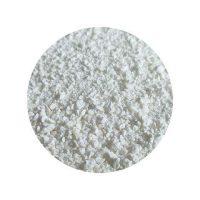
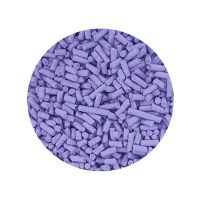
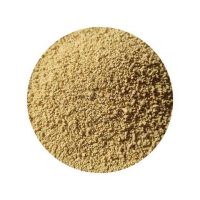
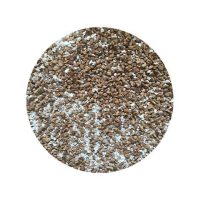
If you haven’t settled on a material yet, it’s worth reviewing the options — cassava, tofu, corn, wheat straw, and walnut shell each behave differently in clumping and dust performance, and picking the wrong starting material is more expensive to fix than picking the wrong bag color.
Practical tip: Send your brief with a target retail price point, not just a material name. A factory can suggest the right formula and packaging combination to hit that price far faster than you can work backward from a spec sheet.
Stage 2: Sample Production
Once the brief is confirmed, the factory produces a sample. This is where the standard-versus-custom distinction really shows up in the timeline:
| Sample Type | Typical Timeframe | What’s Involved |
|---|---|---|
| Standard formula, new packaging | 3–7 days | Existing formula, artwork applied to standard bag stock |
| Custom formula (new scent or clumping ratio) | 2–4 weeks | Lab-level iteration, multiple internal test rounds before it reaches you |
| Custom packaging structure (new bag format) | 2–3 weeks | Tooling or new material sourcing for the packaging line |
Custom formula work takes longer because it isn’t a matter of relabeling — it involves adjusting raw material ratios and testing clumping and dust performance internally before a sample is even worth sending you.
Stage 3: Sample Testing & Approval
This is the stage a lot of first-time buyers rush, and it’s the one that matters most. Test the sample against your own criteria — not the factory’s spec sheet — across three things: clumping time (how fast it forms a solid clump), clump firmness (does it hold together when scooped), and dust generation (shake it over a dark surface and look).
If you’re testing a plant-based formula specifically, ask your factory for mould and aflatoxin test results alongside the physical sample — this matters more for organic materials like tofu, corn, and cassava than most buyers realize, since moisture control during production directly affects shelf stability.
Practical tip: Don’t approve a sample based on a single test. Run the clumping and odor test again after the sample has sat for a week — some formulas perform well fresh but lose clumping consistency after storage, which won’t show up in a same-day test.
Stage 4: Pilot Production Run
A pilot run is a smaller production batch — not hand-mixed like a sample, but not full container volume either — that confirms the approved formula scales consistently on production equipment. This step is often skippable in theory, but skipping it is where most quality surprises in a first container come from: a formula that clumps perfectly by hand doesn’t always behave identically once it’s running through a production-scale mixing and granulating line.
Expect roughly 1–2 weeks between sample approval and a pilot batch being ready for your review.
Stage 5: Full Bulk Order
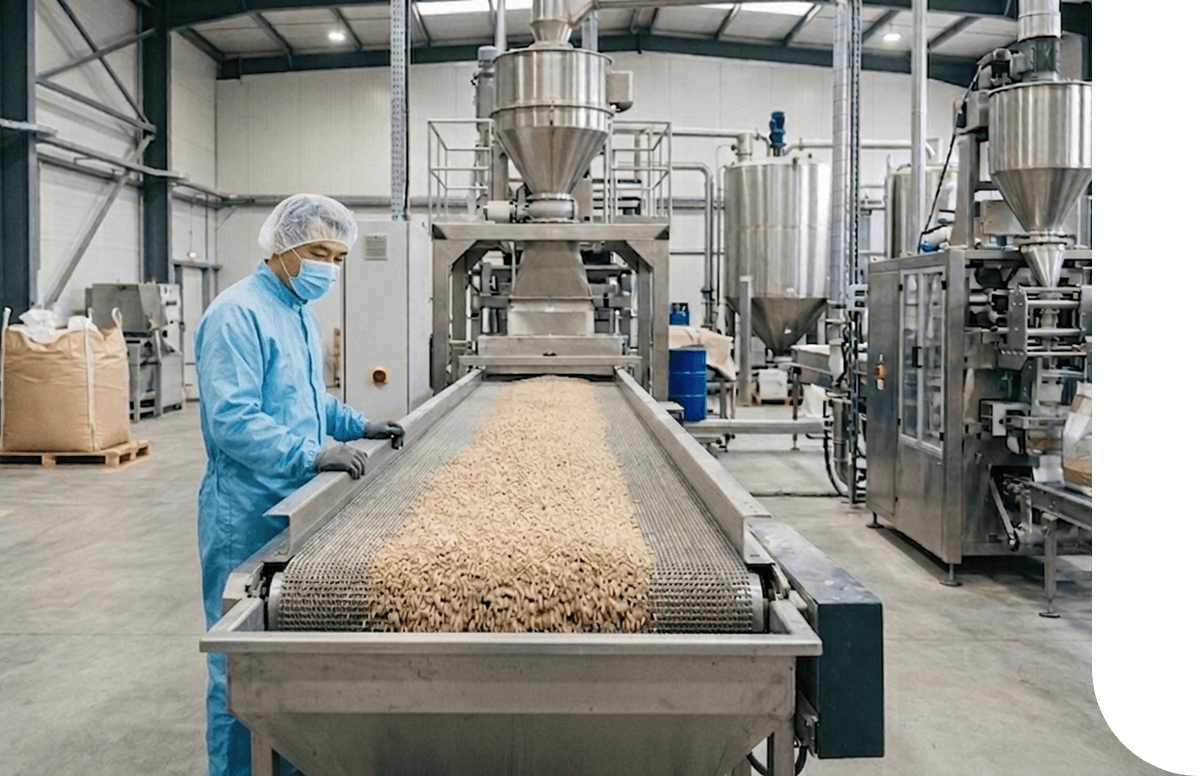
With the pilot run approved, full container production begins. Depending on volume and season, this typically runs 3–5 weeks, covering production, quality inspection, and packaging before the container is ready to ship under agreed FOB or CIF terms. Peak season (ahead of major retail buying windows) can push this toward the longer end, so it’s worth confirming current lead times rather than assuming the standard range applies year-round.
Putting the Full Timeline Together
- Standard formula, custom packaging: roughly 6–9 weeks from brief to shipped container.
- Custom formula, standard packaging: add 2–4 weeks of sample iteration before the timeline above begins.
- Fully custom formula and packaging: budget 10–14 weeks end to end for a first order.
These ranges assume responsive turnaround on your side too — every round of sample feedback that sits in an inbox for two weeks adds two weeks to the total, regardless of how fast the factory itself is moving.
Frequently Asked Questions
How long does the entire process take from first contact to shipment?
For a standard formula with custom packaging, the full path from initial brief to shipped container typically runs 6-9 weeks. Fully custom formulas add several weeks of sample iteration before the timeline above even begins, since a new scent or clumping ratio requires lab-level testing rather than pulling stock off an existing line.
Do I need to approve a pilot production run, or can I go straight from sample to full container?
A pilot run is strongly recommended, even though it’s technically possible to skip it. A hand-made sample and a machine-scaled production batch don’t always behave identically — a pilot run confirms the approved sample’s clumping, dust, and odor performance holds at production scale before you commit to a full container.
What information does a factory need before it can quote an OEM cat litter sample?
At minimum: target material, bag size and packaging type, target order volume, and destination market. If you already know your target clumping strength, dust tolerance, or scent preference, sharing that upfront shortens the sampling round.
Article summary: The OEM process runs through five stages — brief, sample, testing, pilot run, full order — and the timeline is driven almost entirely by how much you customize. Start with an existing formula to move fast; reserve full customization for once you have sales data to justify the extra weeks.
Start Your Sample Today
Request a formula sample and see real turnaround times for your specific material, bag size, and packaging brief.
Request a Sample →