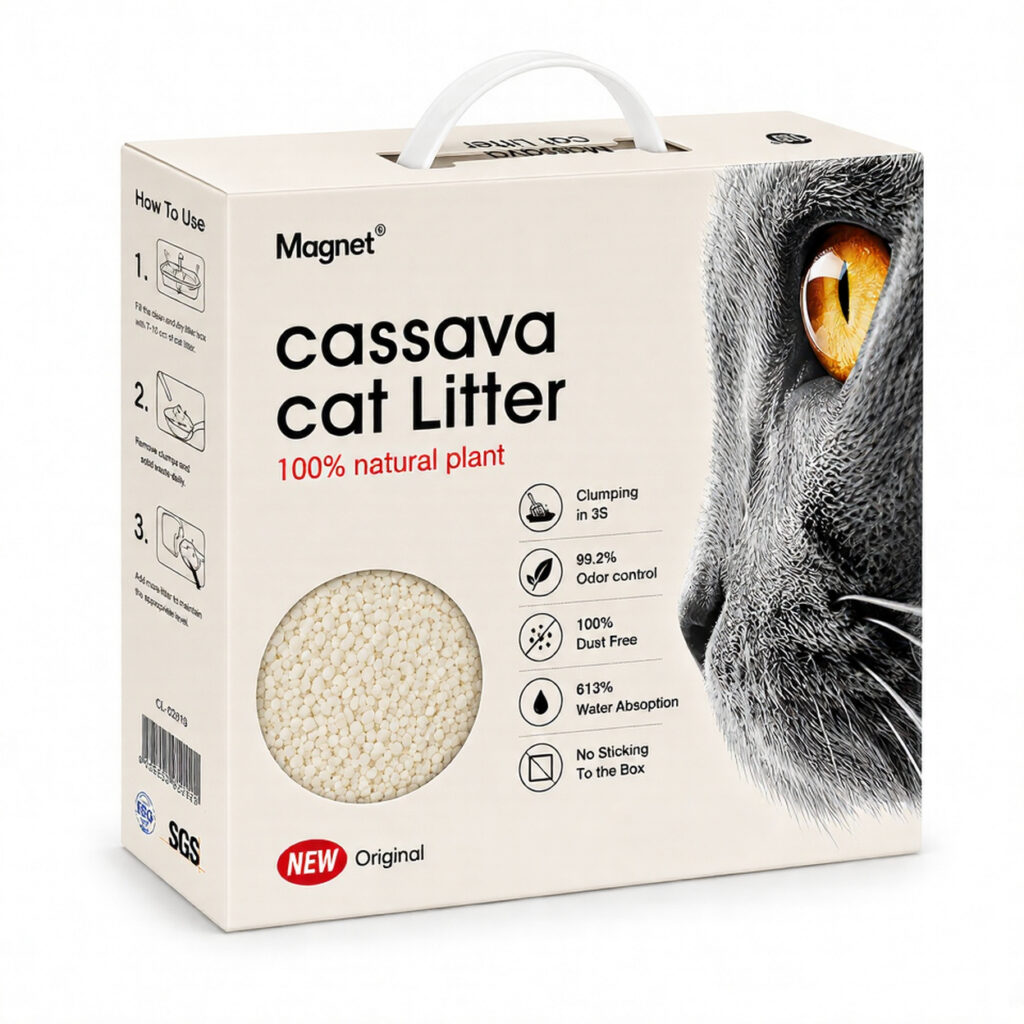
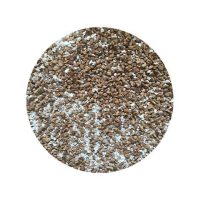
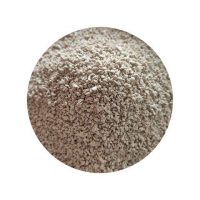
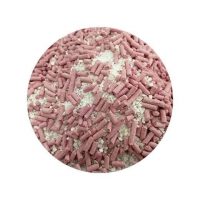


A brand can have its own packaging without having a unique litter formula. That is not a weakness if the product fits the customer and the supply arrangement works. Equally, putting a different name on a standard bag will not solve a specific requirement the formula cannot meet.
The decision between standard and custom cat litter formulas should begin with the difference your customer needs, not the appeal of the word exclusive. Before funding development, ask whether that difference requires changing the product at all.
Separate Branding From Formulation
There are at least three distinct projects a supplier might call private label: an existing formula in your packaging, a defined modification to an existing product, or a new development brief. Ask which one the quotation covers.
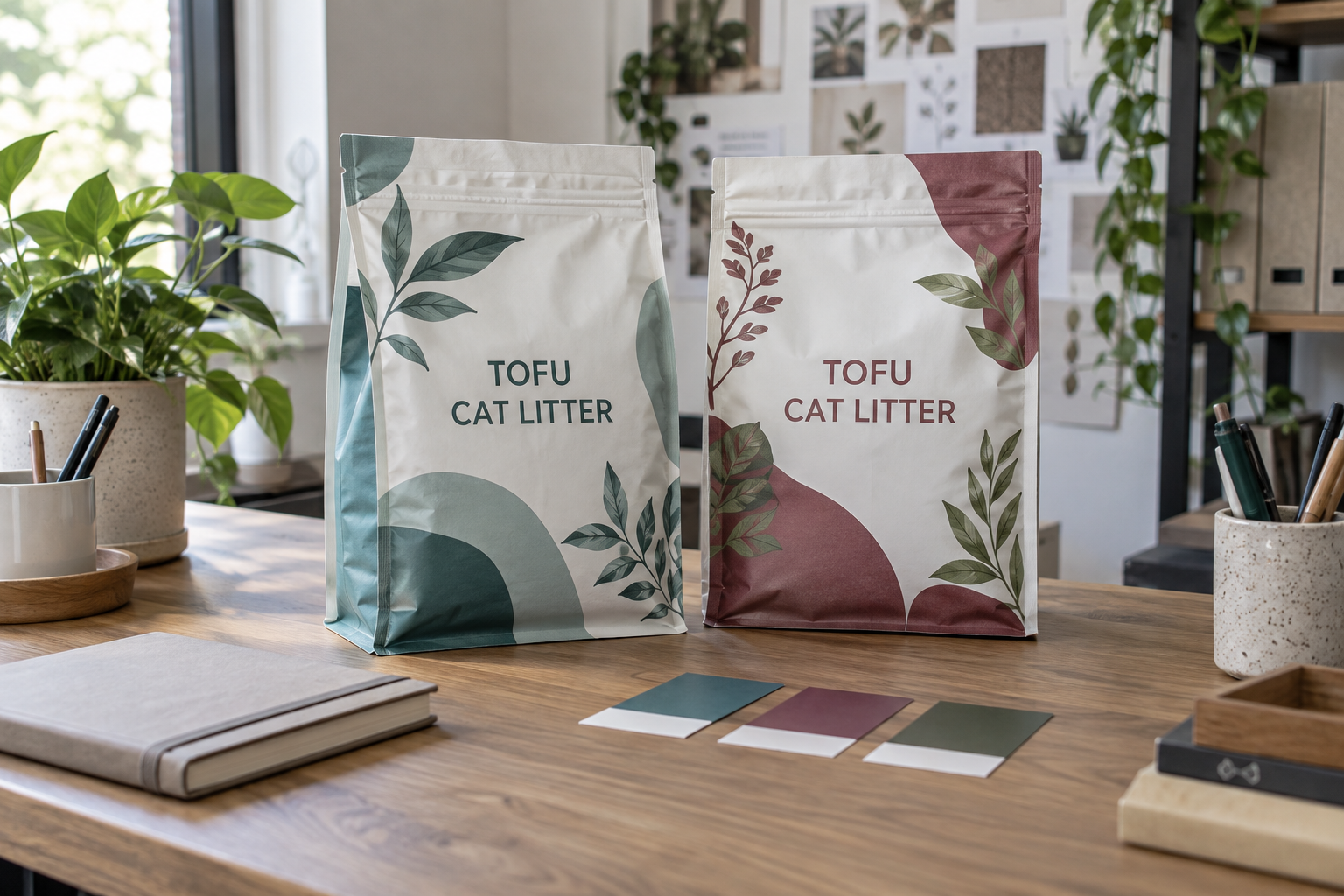
Custom artwork does not necessarily mean custom ingredients. A different fragrance does not necessarily mean a new base formula. Conversely, removing an ingredient may require more work than the small change on the ingredient list suggests.
When reviewing a private label cat litter supplier, have the supplier describe what stays unchanged, what will be modified and which approvals are needed. That gives the project a scope both sides can price and schedule.
Start With a Requirement the Customer Would Notice
A useful development brief identifies a problem or preference. It could be an ingredient exclusion, a particular particle format or a packaging and use requirement that the standard range cannot accommodate. More premium is not a sufficiently clear brief.
Write the requirement in a sentence that can later be checked. Then ask whether an existing product already meets it. A supplier’s established tofu cat litter range may contain an appropriate starting point without a new formulation exercise.
Keep essential requirements separate from optional preferences. If every color, fragrance and bag feature is treated as essential, the project can become expensive before you have established what customers will pay for.
When a Standard Formula Is a Sensible Choice
An existing formula deserves consideration when it meets the product brief and your main differentiation comes from the retail offer, pack size, service or sales channel. It may let the team concentrate on launching and replenishing one clearly defined product.
Do not assume that standard means immediately available, low minimum order or fully qualified for your market. Confirm current production arrangements, packaging minimums and the evidence relevant to your proposed claims. You still need to approve the product you will sell.
The main question is whether a known commercial option removes unnecessary development work. If it does, there is no commercial reason to change it solely to make the launch sound more original.
When Custom Development Has a Clear Purpose
A custom project becomes more compelling when no current option meets an important requirement and the business can explain the value of closing that gap. The value should be specific enough to justify additional time, qualification and inventory commitments.
Ask the supplier to identify the proposed development stages. A promising laboratory or hand-prepared sample is not the same as a formula demonstrated in normal production. Agree when feasibility, sample approval and production readiness will be assessed.
Avoid announcing a launch date around a result that has not yet been achieved. Also agree what happens if development cannot meet the original brief: revise the target, consider an existing product or stop before buying production packaging.
Compare the First Order and the Reorder
Request the costs and minimums associated with formulation work, samples, production setup and printed packaging separately. Ask which costs recur and which are genuinely one-time charges.
Then examine replenishment. Can the custom product be produced at the quantities your sales are likely to require? Does it depend on a particular raw material with a separate purchasing minimum? What happens when you need only one variant from the opening range?
A custom product that fits the first container but cannot be replenished economically is not a complete sourcing solution. Compare it with the standard option over a realistic sales and reorder cycle, without assuming that the most optimistic forecast will occur.
Do Not Assume Custom Means Exclusive
Formula ownership, confidentiality and selling rights are separate matters. Discuss what the development fee buys and which information or rights are included. A supplier may modify its own existing formula without transferring ownership or granting exclusivity.
If exclusive supply or ownership is important, obtain a clear written agreement and appropriate professional review. Do not rely on a product code or a sales description as proof of those rights.
The same applies to switching manufacturers later. Clarify what specifications and records you may use before assuming that a custom project can be transferred freely.
Make the Decision Before Committing to Artwork
Choose the formula route, define the approval requirements and confirm the commercial terms before printing a large quantity of bags. Packaging claims should follow the approved product rather than become targets the factory is expected to achieve afterward.
The best decision may be to launch a standard product and revisit a specific modification when customer feedback supports it. It may also be to delay launch until a necessary custom requirement is met. Neither path is automatically more professional.
A focused brief gives a cat litter manufacturer something useful to evaluate. The goal is a product worth reordering, not customization for its own sake.
Decide How Much Customization You Need
Share your target customer, essential product requirements and launch timing with Magnet. Ask whether an existing formula or a development project is the better fit.
Discuss Private Label Formulas