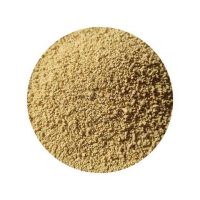
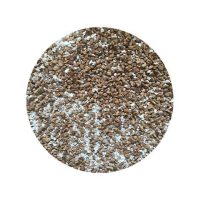
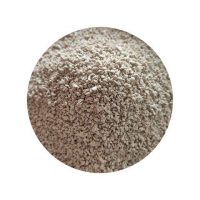
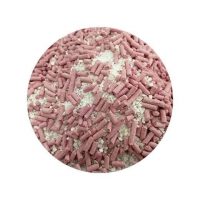
A customer picks up a bag of walnut litter because they like the material. A week later, they return with a different question: why does it not scoop like the litter they used before? The problem may be a poor product, but it may also be a mismatch between the formula and the cleaning routine the customer expected.
Walnut shell litter and walnut-cassava mixed litter should not be treated as the same purchase with slightly different ingredients. For a retailer, the useful comparison is what happens after the litter becomes wet and what the owner needs to remove from the tray.
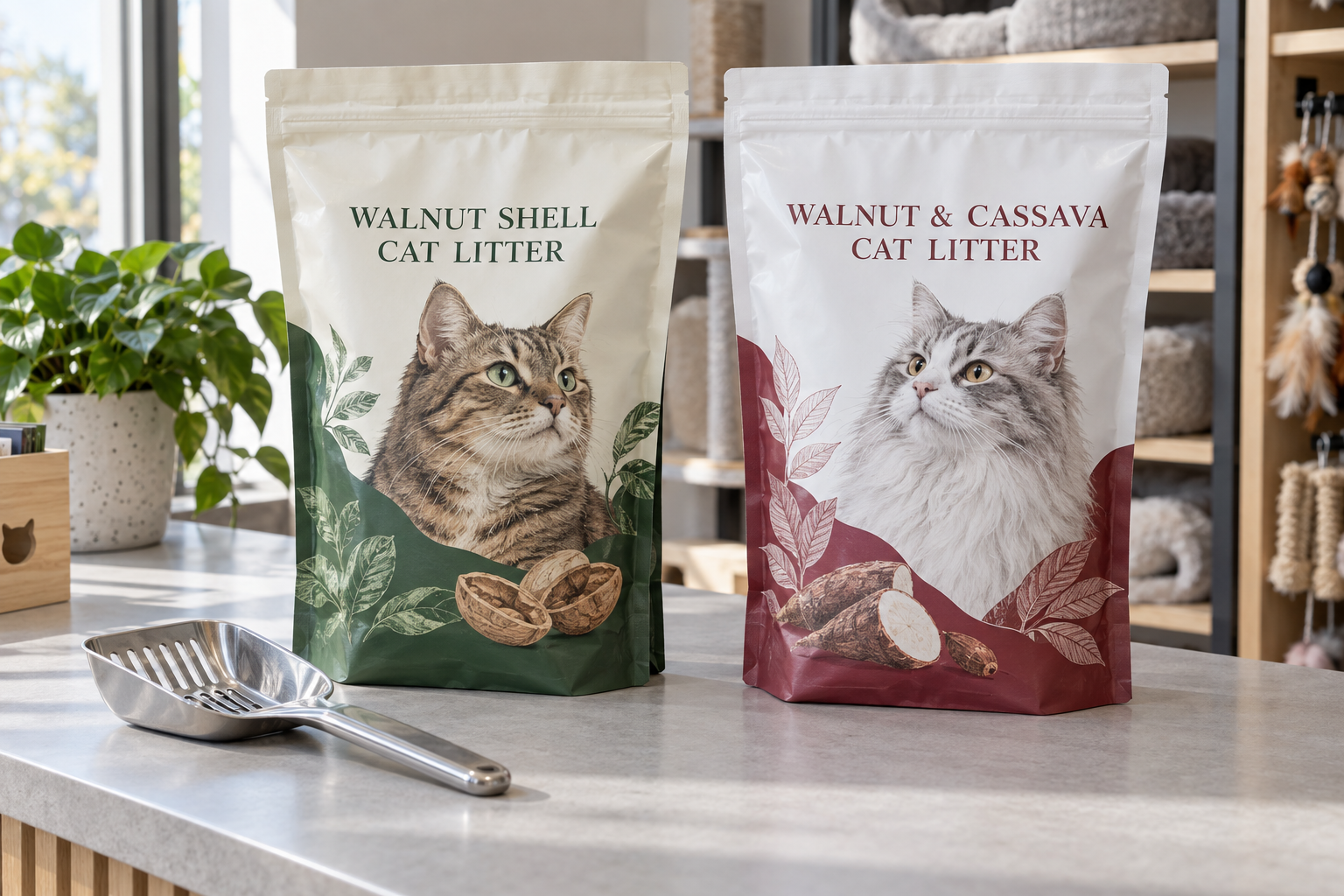
If intact scoopable clumps are essential, evaluate a formula sold for that purpose. The presence of walnut shells alone does not tell you whether a product will provide that cleaning experience. Magnet offers both a walnut-shell product and a walnut-cassava blend, giving buyers two distinct options to investigate rather than a universal winner.
Walnut Shell Cat Litter
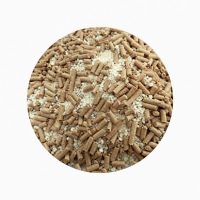
Magnet’s walnut shell cat litter lists walnut shells as its ingredient and describes polished, naturally dark-brown granules. Its product positioning emphasizes absorption, odor control and the granule finish.
That gives the product a clear material identity. What it does not provide, by itself, is a complete answer about how the wet litter should be removed. Before presenting this SKU to customers who normally scoop firm clumps, obtain the current cleaning instructions and confirm its wet behavior with a representative sample.
Do not extend that uncertainty to every walnut-based litter on the market. The relevant question is how this finished formula behaves, not whether the word walnut belongs to a clumping or non-clumping category. An ingredient-led buying decision still needs a product-specific care routine.
For an owner, this means checking the bag’s instructions before expecting the scoop to do the same job as it did with another formula. For a shop, it means explaining removal and replacement at the point of sale rather than leaving the customer to discover the difference at home.
Walnut and Cassava Mixed Cat Litter
The walnut and cassava mixed cat litter is positioned around combining walnut material with a cassava-based litter to improve clumping and cleanup. The page states a walnut-to-cassava ratio of 3:7; buyers should confirm the ratio basis and the exact finished formulation on the quotation.
This is the more directly relevant shortlist option when a customer wants a walnut-containing formula but also expects to lift wet waste as a formed clump. That is an intended use, not a guarantee that every clump will lift perfectly from every tray.
The page also contains a table specifically labeled for cassava cat litter. Those component specifications should not become the finished blend’s specifications by default. Request the mixture’s own particle information, filling guidance and performance documentation before preparing a retail listing.
Buying a supplied blend is different from pouring two unrelated bags together at home. A supplier needs to define the components and the mixture consistently. A homemade combination does not establish how the quoted commercial product will perform, and it should not be used as a substitute sample.
Clumping Walnut Cat Litter and Wet-Waste Removal
Absorption and clumping answer different questions. Absorption concerns liquid taken up by the material. Clumping concerns whether the wetted area holds together well enough for the intended removal method. A product can absorb liquid without giving the owner a firm, easily lifted lump.
The distinction matters most when the scoop reaches the wet area. Look at whether the material can be separated from the surrounding litter, whether it stays together while lifted, and what remains after removal. A surface that looks dry is not sufficient evidence of any of those outcomes.
There are also two different ways a clump can disappoint. It may adhere strongly to the tray and break during scraping, or release easily but fall apart in the scoop. Those problems call for different follow-up questions about the formula, fill level, setting time and tool. Recording only that clumping was poor loses the detail needed to make a better selection.
For a retailer choosing between these two options, ask the customer one concrete question: do you want to remove individual urine clumps, or are you comfortable with the cleaning routine specified for the walnut-shell product? Establish that expectation before discussing price or packaging.
Odor Control Walnut Cat Litter
An odor-control claim should describe a benefit the customer can recognize during normal use. It should not suggest that waste can remain indefinitely or that the owner can stop washing the tray. Ask for the applicable cleaning routine alongside any supporting performance information.
For a side-by-side evaluation, separate the smell of unused material from the smell noticed during use. They are different observations. Also record whether wet residue remains after scooping and whether the bag is being topped up as directed. Otherwise, a comparison may reflect different maintenance conditions rather than a useful formula difference.
Retailers should resist turning one favorable impression into a fixed number of odor-free days. Household use, the amount of waste and cleaning routines are not identical. Describe the product’s intended odor-control role, then support any stronger or numerical statement with evidence for the finished SKU and a stated method.
The blend may be worth evaluating for customers who connect freshness with removing wet waste in discrete clumps. The buying decision should still include the actual removal experience. A bag that smells acceptable when first opened has not yet answered the customer’s daily-cleanup question.
Low Dust Walnut Cat Litter and Granule Appearance
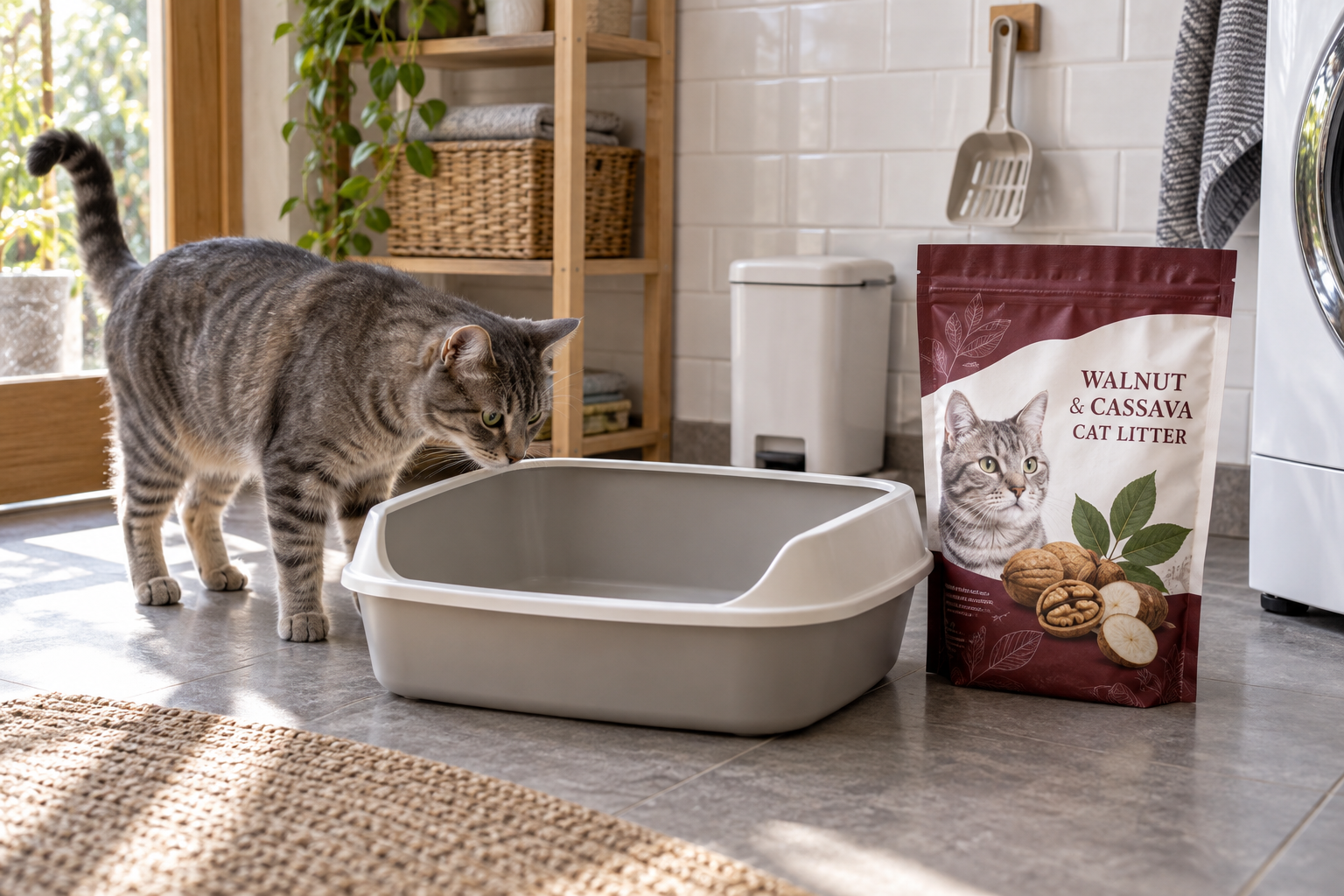
Color and texture help a customer recognize a product, but neither is a dust measurement. If dark particles appear outside the box, first identify whether they are intended granules, small fragments, material carried out by the cat or a spill from refilling. Do not call every visible speck airborne dust.
For wholesale review, ask how the supplier defines its dust result and which SKU was assessed. A component result, an unopened product photograph and a finished-bag handling observation answer different questions. Keep them separate in the product record.
During ordinary use, examine the amount and kind of material near the tray before and after cleaning. A scoop that retains unused litter may cause more handling and shaking; changing that tool can change the cleanup experience. Record the equipment so the formula does not receive all the credit or blame for the setup.
Dark color also changes how easily a person sees a stray particle on a particular floor. A white tile and a dark mat are not equivalent backgrounds for judging visible mess. Use the same location when comparing products, and do not mistake a less noticeable particle for a particle that is no longer there.
Wholesale Walnut Cat Litter Sample Selection
Request both samples only if they answer a genuine range decision. A buyer whose customers insist on scoopable clumps can begin with the blend and evaluate whether its handling meets that expectation. A buyer building a walnut-material offering needs to confirm the standalone product’s care routine before deciding how to present it.
Keep the sample review focused on a few purchasing questions:
- Product identity. Does the sample label identify the exact formula and, for the blend, the agreed component ratio?
- Cleaning instructions. What should be removed after use, what should remain, and how should the working layer be maintained?
- Removal behavior. Does the wet material behave as the instructions lead the customer to expect?
- Unused-litter loss. Does ordinary cleaning discard substantial surrounding material, and is the scoop appropriate?
- Retail description. Can the buyer explain the difference between the two products without promising unverified superiority?
These are selection criteria, not published test results. Keep the observations with the sample identity so a later order refers to the product that was actually reviewed.
Private Label Walnut Cat Litter for Different Customers
The two products do not need identical front-of-bag messages. For the standalone option, lead with the confirmed walnut-shell composition and provide clear care instructions. For the blend, identify both material groups and explain the intended scoopable-cleanup role, using only claims supported for the finished mixture.
Avoid a broad natural-litter label that hides the distinction. A shopper who buys a mixed formula should not have to find the cassava component in tiny print. Equally, a walnut-shell SKU should not inherit clumping promises from an adjacent mixed-litter listing just because both bags share a design.
For purchasing, the brief sent to a wholesale cat litter supplier should name the customer expectation first. Specify whether the range needs a walnut-material option, a walnut-containing clumping option, or both with clearly different roles.
Choose the walnut-shell product when its confirmed cleaning routine fits the customer you intend to serve. Shortlist the walnut-cassava blend when formed-clump removal is central to the offer. The stronger range is not the one with more similar bags; it is the one in which each bag makes a promise the product can support.
Compare Walnut Cat Litter Options for Your Range
Tell Magnet whether your customers prioritize walnut-shell materials or scoopable clumps. Request the relevant samples, finished-formula specifications and cleaning instructions.
Request Product Samples