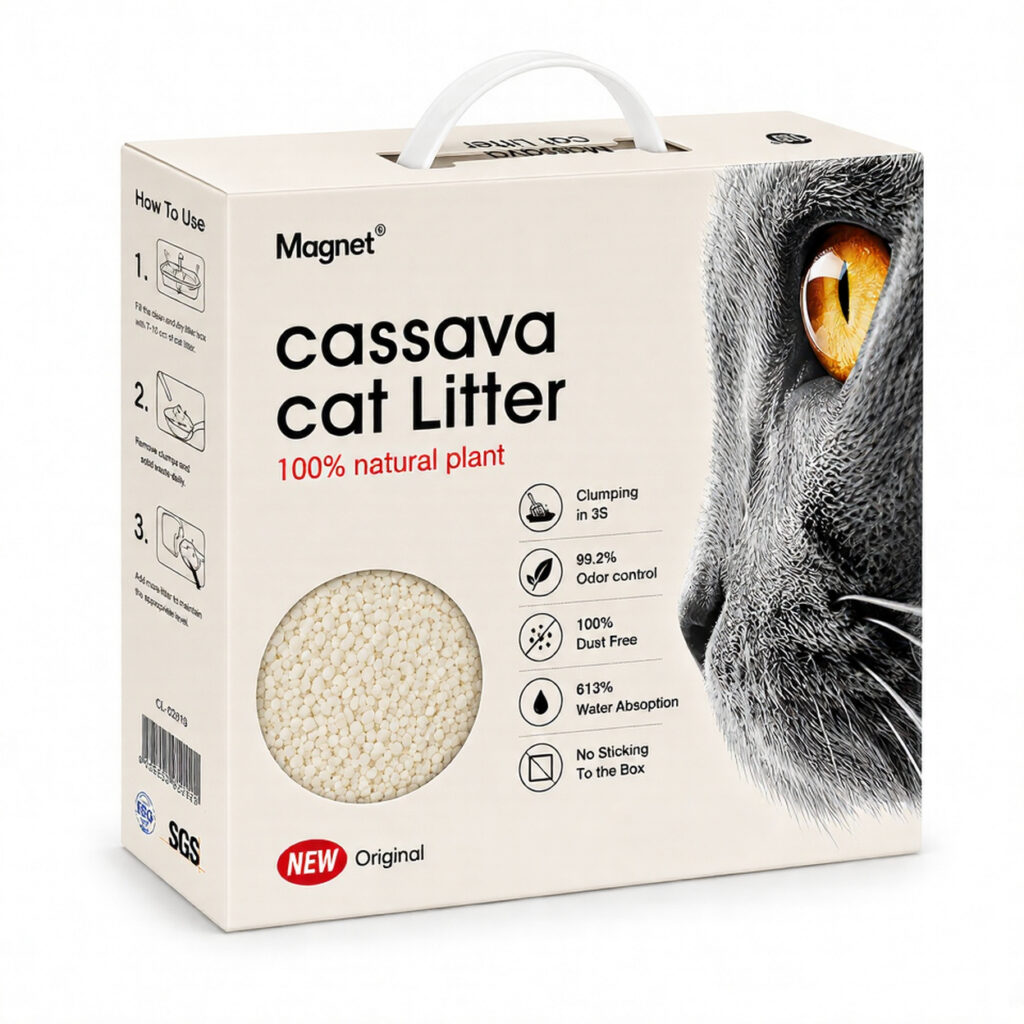
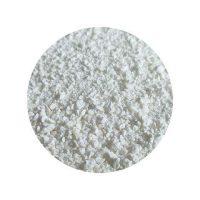
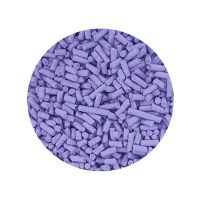
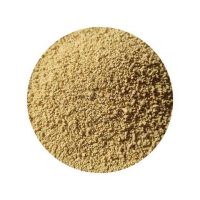
Two bags can both say plant-based pellet litter and still require very different explanations at the shelf. A customer may see similar shapes and assume the products scoop the same way. A retailer may see different raw materials and overlook the cleaning routine entirely.
Wheat straw and tofu litter deserve a more useful comparison. The decision involves the exact pellet format, what happens after wetting, what the scoop should remove and which features are actually documented for the selected product.
For customers who specifically want a clumping pellet formula, tofu litter is the more clearly documented starting point in this comparison. Wheat straw should be evaluated as its own product, with its wet behavior and cleaning instructions confirmed before making the same promise. This is a product-selection distinction, not a claim that every tofu formula outperforms every straw formula.
Wheat Straw Cat Litter
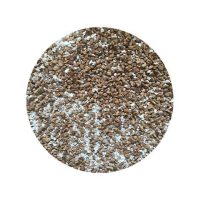
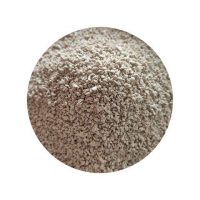
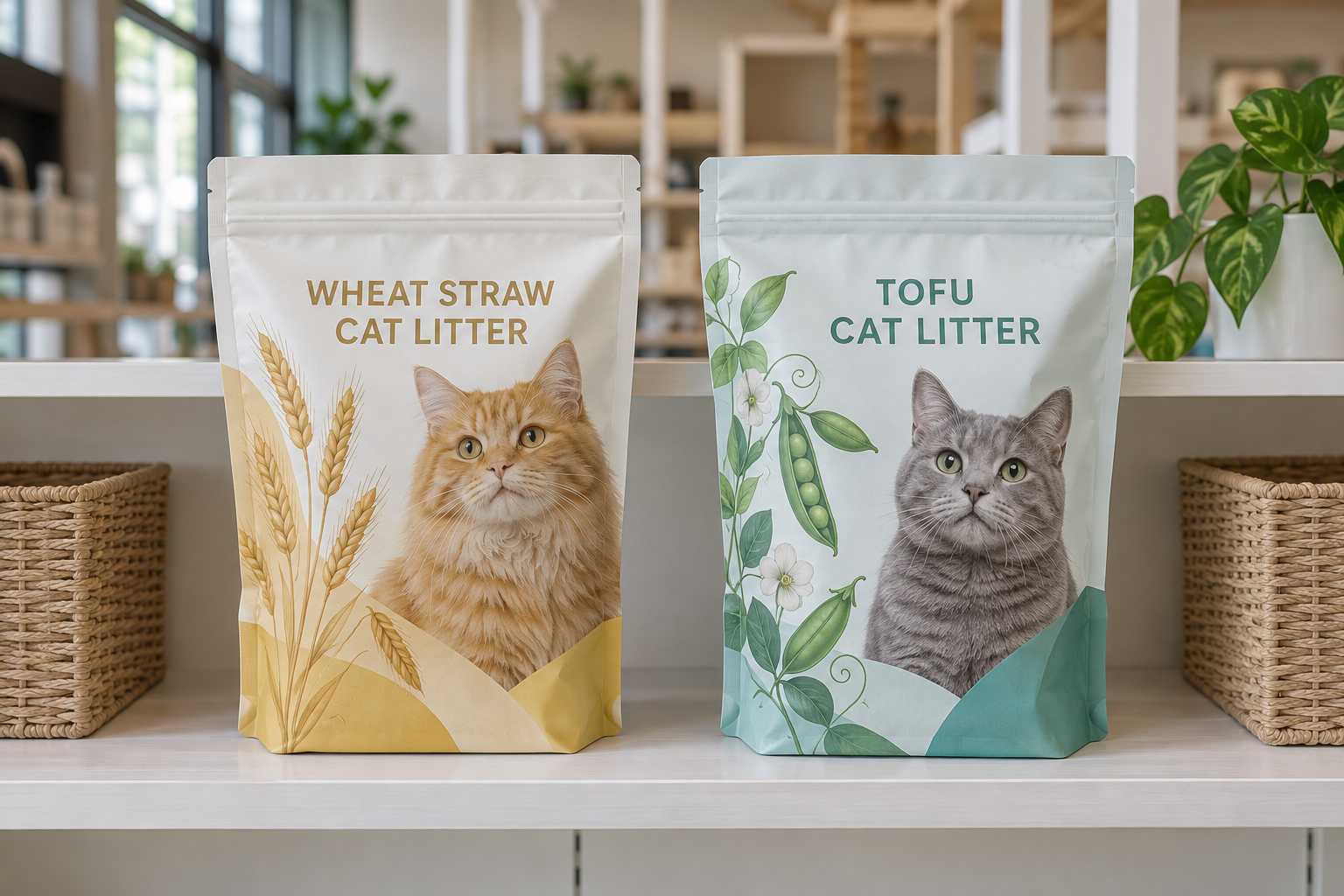
Magnet’s wheat straw cat litter identifies wheat straw as the ingredient and lists a 6 mm pellet diameter. Its material proposition centers on using agricultural by-products rather than wood.
That is a specific story a retailer can explain without resorting to a vague green label. It also separates wheat straw from products sold under the broader name wheat litter. A product made from straw should not be described as though its ingredient were wheat grain simply because the two names share a word.
The published information emphasizes absorbency. Buyers should obtain explicit guidance on the wetted pellet’s behavior and the intended removal method instead of inferring a firm clump from an absorption figure or a page heading. Confirm whether the owner is expected to scoop a formed mass, remove affected material another way, or follow a different maintenance routine.
That answer determines where this SKU fits in a store. Material origin can attract interest, but the customer still needs to know what tomorrow morning’s cleanup will involve.
Tofu Clumping Cat Litter
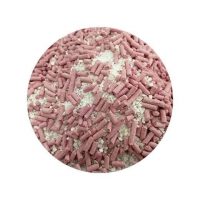
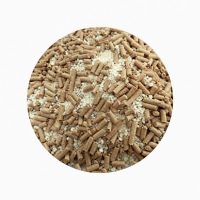
Magnet’s unscented tofu cat litter describes a clumping pellet format and lists diameter options of 1.5, 2 and 3 mm. Its ingredient table includes pea fiber and other formulation ingredients; the product name should not be interpreted as pure tofu or pure soybean material.
For a retailer, the relevant starting point is a customer who wants to remove wet waste as individual clumps while buying a pellet-style litter. Confirm the selected diameter and finished formula rather than treating all size and variant options as one interchangeable SKU.
There is also a detail to resolve before producing an unscented label. The page describes unscented options, while its general ingredient table includes fragrance. Request a SKU-specific ingredient statement and written fragrance confirmation. The customer-facing label should follow that confirmed document, not a choice between two conflicting pieces of page copy.
That clarification does not make the product unsuitable. It makes the purchasing brief precise. A brand can only describe its bag accurately once the selected option, ingredients and claim wording refer to the same product.
Pellet Cat Litter Sizes and Everyday Handling
The listed wheat-straw diameter is larger than the tofu diameter options above, but diameter is only one part of the pellet specification. Length, variation within the bag and the presence of broken pieces also affect what the customer sees and handles. Ask for those details when comparing samples.
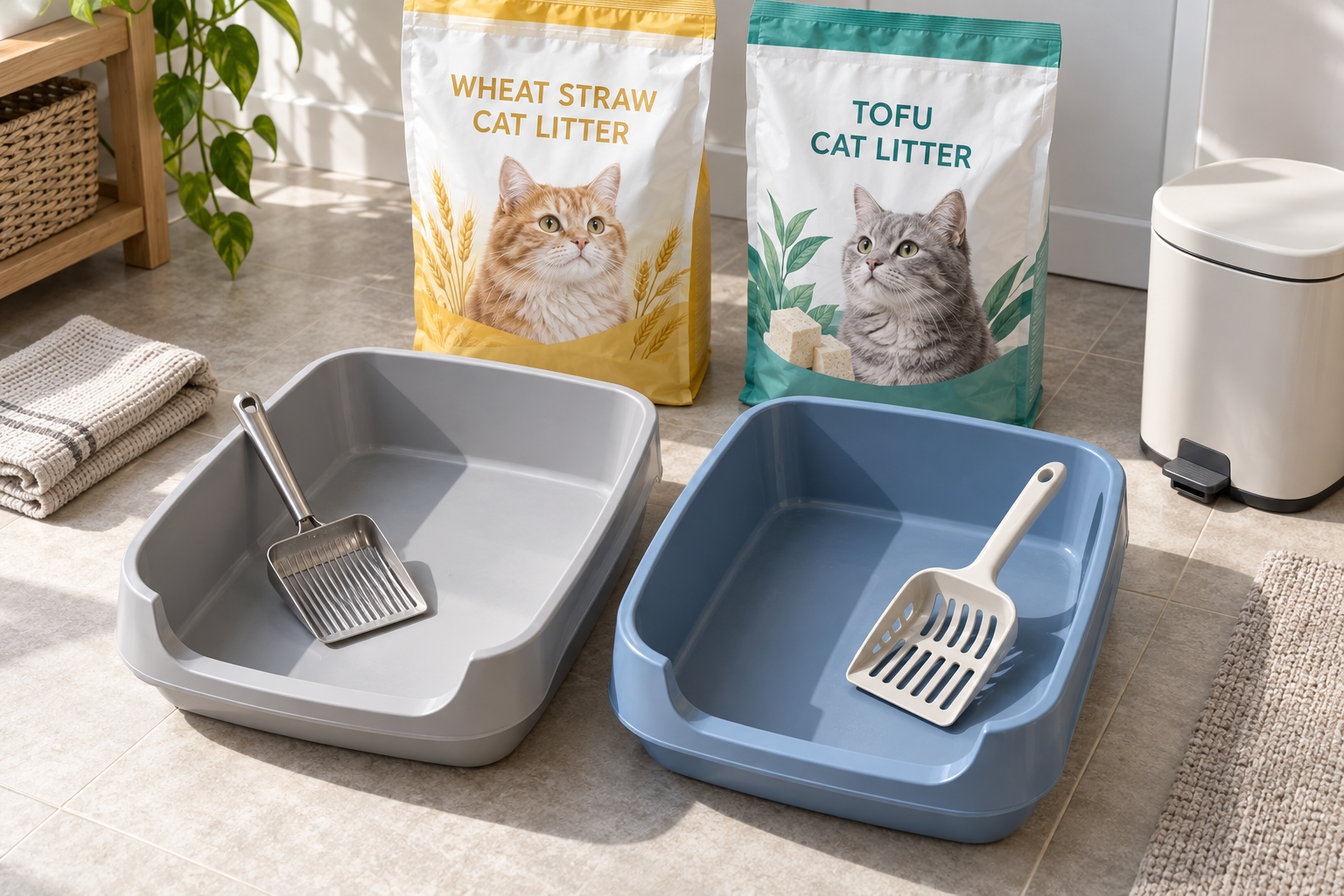
Start with the scoop. Can unused pellets pass through its openings without prolonged shaking, while the waste that should be removed stays on the scoop? If the tool retains too much unused material, daily cleaning can become wasteful even when the litter otherwise meets the buyer’s requirements.
Next consider the complete tray setup. A pellet should not be labeled suitable for an automatic box simply because it is plant-based or because another pellet product works in that machine. Check the current box instructions and the selected litter’s requirements. A manual-tray recommendation and a machine-compatibility claim are different commitments.
Cat acceptance also belongs in the decision. A change in pellet dimensions is a change in the surface the cat encounters. Do not assume every household will accept the new format immediately, and do not promote a particular diameter as universally preferred without evidence.
Clumping Pellet Cat Litter and Absorbent Pellets
An absorbent product takes up liquid. A clumping product must also create wet material that holds together for its intended removal method. Those two properties should be checked separately when the main selling point is convenient scooping.
For the tofu candidate, observe whether the formed clump stays manageable when lifted according to the use instructions. Check the material left in the tray, not just the lump held above it. A dramatic photograph can hide small fragments that make routine cleaning inconvenient.
For the wheat-straw candidate, first establish what successful wet behavior is supposed to look like. Do not fail it for lacking a feature that was never specified, but do not sell it as providing that feature either. The appropriate review follows the product’s stated care routine.
This distinction helps prevent returns caused by expectations rather than defects. Someone who has always removed individual clumps may not welcome another cleaning method, even if the new product absorbs well. Explain that difference before asking them to switch materials.
Low Tracking Pellet Cat Litter
A larger pellet is a format choice, not a promise of a clean floor. Litter outside the tray may have been kicked over the rim, carried on the cat or spilled during refilling. Those are different problems, and a product change will not necessarily address all three.
When assessing either candidate, record where the material appears. Pellets directly beside the digging area tell a different story from particles farther along the exit route. Check the mat’s position as well: it cannot intercept the cat’s path if the cat routinely steps or jumps around it.
Keep those observations separate from dust during handling. A bag with little visible dust can still leave recognizable pellets outside the box. Likewise, a convenient-to-collect pellet shape does not establish the amount of fine material in the delivered bag.
For retail copy, identify the chosen format and support any low-tracking or low-dust benefit individually. Combining them into a zero-mess promise raises expectations beyond what a pellet-size specification can show.
Plant-Based Cat Litter for Retail Product Ranges
These products can serve different roles without either being called the best natural litter. Wheat straw offers a material-origin proposition based on a crop by-product. Tofu offers a formulated pellet option with a stated clumping role. A useful shelf description makes the practical difference visible alongside the ingredient story.
For the wheat-straw SKU, lead with the confirmed material and pellet format, then explain its verified cleaning routine. For the tofu SKU, identify the selected formula and diameter, then describe the supported clumping benefit. Use the full ingredient information where required rather than letting botanical packaging stand in for composition.
Avoid converting plant-based into automatic promises about allergy suitability, universal safety or disposal. Those are separate claims requiring their own support. Material origin also does not establish that a used product belongs in a household compost bin or toilet. Give disposal instructions appropriate to the product and destination market instead of improvising them from the raw material’s name.
A buyer does not need both products just to make the range look larger. If both would receive the same vague shelf description, the range decision is unfinished. Establish the customer and cleaning expectation for each before ordering two sets of packaging.
Wholesale Pellet Cat Litter Selection
A focused sample brief is more useful than a request for the cheapest natural litter. Tell the supplier what the customer currently uses and what needs to improve: formed-clump removal, a different pellet format, a specific material preference or a clearer fragrance policy.
For each sample, request the selected formula, diameter and length information, filling guidance, wet-waste removal instructions and relevant claim documentation. Ask whether those documents describe the exact retail SKU or a broader product family. That distinction matters when several variants share one product page.
During review, keep a short record of three separate outcomes. First, did the product behave as its instructions described? Second, was the required cleaning routine convenient with the intended equipment? Third, can the retailer explain the result without overstating it? This is a proposed selection process, not a report of tests performed on either product.
When approaching a wholesale cat litter supplier, send that brief with the intended packaging format. The quotation should identify the chosen variant so the approved sample, finished bag and online listing all describe the same purchase.
For a clumping-pellet range, begin with the tofu option and confirm its specific formulation. For a straw-material offering, assess the wheat-straw product against its own verified care routine. The best choice for the shelf is the one whose material, handling and customer expectations agree.
Find the Right Pellet Litter for Your Customers
Share your preferred material, pellet format and cleaning requirements with Magnet. Request wheat straw and tofu samples with current SKU specifications and use instructions.
Discuss Pellet Litter Options