

Factory direct sounds reassuring on a quotation. It can mean a useful relationship with the people making the product, but the phrase alone does not tell you who controls production, who signs the contract or who resolves a failed shipment.
A trading company can add cost without adding much value. It can also coordinate a mixed order, manage communication and handle tasks a small buyer cannot easily perform. The right comparison is therefore not a slogan about removing middlemen. It is a comparison of responsibilities, access and total cost for your order.
Identify the Parties Behind the Offer
Ask for the legal contracting entity, manufacturing site and exporter or other relevant parties in the proposed transaction. Confirm how they are related and who is accountable for the finished goods.
A factory may sell through an affiliated export company. A trading company may have an established production partner. Those arrangements are not automatically problematic, but they should be explained rather than hidden behind ambiguous sales language.
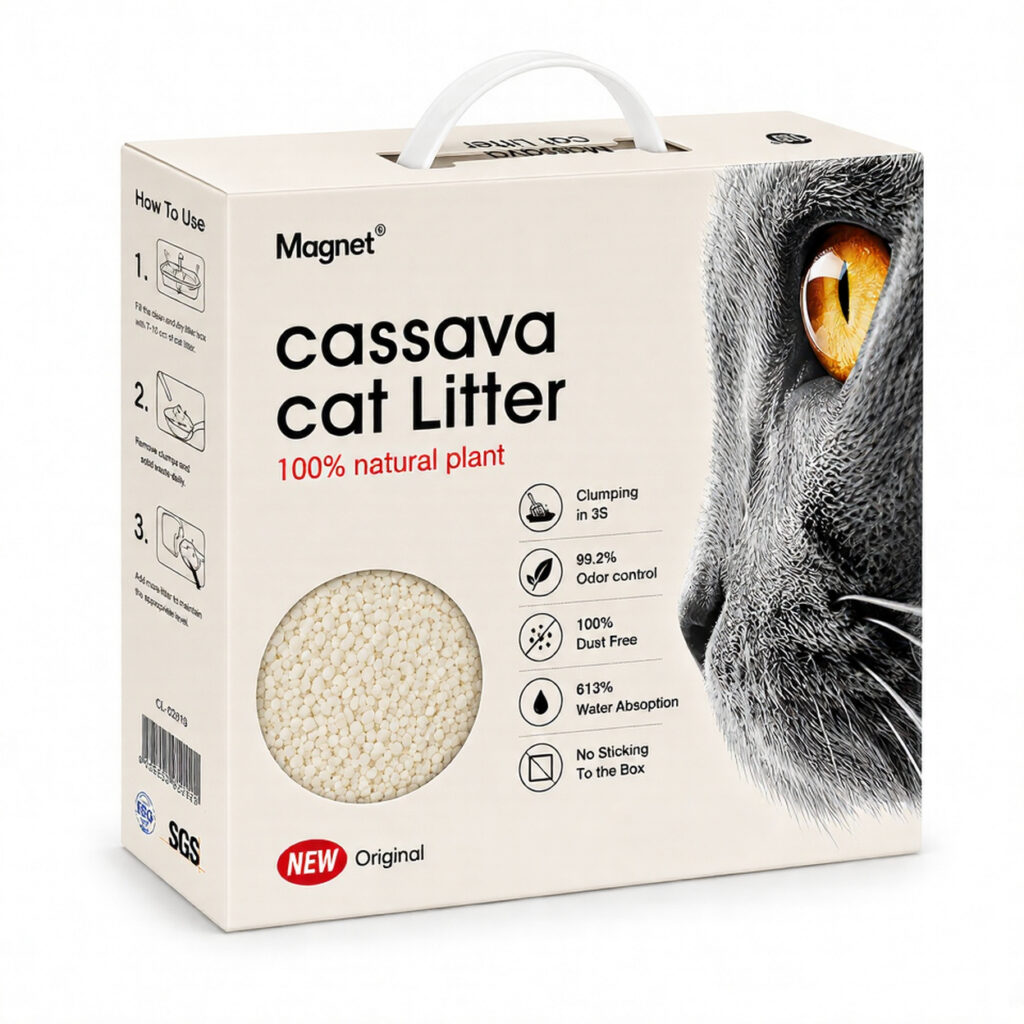
When reviewing a cat litter manufacturer, ask which processes are performed at the stated site and whether the proposed product is made there. A photograph of equipment does not establish that every item in a broad catalogue comes from that facility.
When Direct Manufacturing Access Matters
A direct relationship may be particularly useful when your project needs formula development, a defined particle specification, process clarification or repeated technical discussions. The potential advantage is a shorter route to the people controlling those decisions.
Verify that access during the enquiry. Can the sales team obtain a specific answer from production or quality staff? Can the proposed specification be tied to a commercial batch? Who approves changes when a raw material becomes unavailable?
Do not assume that owning equipment guarantees strong export service or flexible minimums. A manufacturer optimized for large repeat runs may not be the best operational fit for a buyer needing many small variants.
When a Trading Company Can Be Useful
A trading company may help a buyer assemble products from several sources, coordinate smaller requirements or manage communication across a broader pet-products assortment. Whether it actually offers those benefits needs to be checked.
Ask how it selects and monitors production partners, whether it can change factories without your approval and what access you receive to product-specific records. A single contact is convenient only if that contact can resolve issues rather than pass messages indefinitely.
For a buyer ordering litter alongside unrelated pet accessories, coordination may justify part of the service cost. For a technically demanding single-formula programme, direct production access may carry more weight. Neither situation determines the answer by itself.
Compare Equivalent Quotations
Use the same formula brief, net contents, packaging, case format, delivery basis and required documentation. Confirm which services each price includes.
A low factory price can still leave the buyer paying separately for inspection coordination, export handling or order consolidation. A trading quotation may include those tasks, or it may not. Make the scope visible before comparing the final numbers.
Consider the work your own team must perform as well. More supplier coordination can be worthwhile when it provides control, but it has a real operational cost. The aim is not to prove that one business model is always cheaper.
Follow a Quality Problem Through the Arrangement
Ask a practical question: if delivered litter falls outside the approved specification, who investigates, who can authorize corrective action and who is responsible under the supply agreement?
You need a clear route from the complaint to batch records and a decision. Request a description of the process, including how an independent inspection or assessment would be handled if necessary.
Apply the same standard to direct factories and intermediaries. Neither a factory address nor a professional trading office substitutes for a defined specification and accountable counterpart.
Match the Supplier to the Next Stage of Your Business
An early-stage brand may value a manageable first order and clear communication. A larger programme may need tighter change control, capacity planning and direct technical access. The supplier that suits the pilot is not automatically the right arrangement for every later stage.
Avoid choosing a relationship purely for hypothetical future scale. Assess the order you can realistically place now, then ask how the service would change as volumes or requirements grow.
Use the Same Questions for Both Candidates
Before selecting a wholesale cat litter supplier, confirm the production location, contracting party, product revision, change-approval process, included services and route for resolving nonconforming goods.
Where possible, verify business and production information through suitable independent checks. Treat trade-show introductions, video calls and documents as pieces of evidence rather than interchangeable guarantees.
The better supplier is the one whose capabilities and responsibilities fit your product and business. Factory direct can be a meaningful advantage, but only when the actual arrangement delivers the access and accountability the words imply.
Discuss Your Manufacturing and Supply Needs
Ask Magnet about the production arrangement, specification control and order requirements relevant to your proposed litter range.
Enquire About Cat Litter Manufacturing