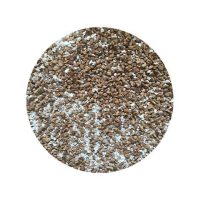
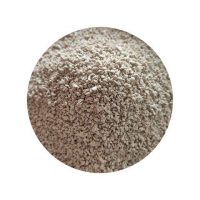
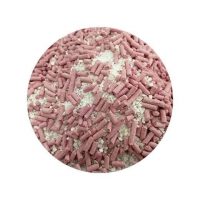
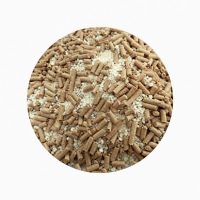
Tofu cat litter has won over millions of cat owners worldwide — and for good reason. It clumps, it controls odor naturally, it’s near-zero dust, and it’s biodegradable. But one question comes up again and again in cat owner communities: how often do you actually need to completely empty and refill the litter box? Get it wrong in either direction, and you’ll either be wasting good litter or tolerating a box that smells far worse than it should.
The Real-World Problem Cat Owners Report
Across forums and pet communities, two types of complaints dominate tofu litter discussions. The first: “I changed it after two weeks and it already smelled terrible by day ten.” The second: “I’ve been changing it every week — am I wasting money?” Both reflect the same underlying confusion: tofu litter doesn’t behave like clay litter, and the rules that apply to clay don’t map cleanly onto a plant-based formula.
Tofu litter works through a combination of liquid absorption, natural enzymatic odor neutralization (from soybean protein), and physical clump containment. When you scoop clumps diligently, the remaining clean litter stays active and odor-controlling. When you don’t — or when the litter box hosts multiple cats — the enzymatic capacity gets overwhelmed and odor accumulates in the residual fine particles that settle at the bottom of the box.
The Recommended Change Frequency
Industry guidance from manufacturers and veterinary professionals, combined with real-world user data, points to the following benchmarks:
1 Cat / Daily Scooping
3–4 Weeks
Full litter box change recommended
2 Cats / Daily Scooping
2–3 Weeks
Full litter box change recommended
3+ Cats / Any Frequency
1–2 Weeks
Full litter box change recommended
These intervals assume daily scooping of all visible clumps and solid waste. If scooping happens every other day instead of daily, subtract approximately 5–7 days from each interval. The enzymatic compounds in tofu litter are finite — once the active capacity of the remaining litter is exhausted, no amount of top-up will restore its performance.
Key parameter: High-quality tofu cat litter should absorb at least 200–250% of its own weight in liquid and maintain effective odor control for up to 7 days per liter of litter under single-cat, daily-scooping conditions. Products that fall below these benchmarks — which can vary significantly between manufacturers — will require more frequent full changes.
Four Signs It’s Time for a Full Change — Right Now
Regardless of the calendar, your litter box is telling you it needs attention if you notice any of these:
- Persistent odor that survives scooping. If the box smells noticeably bad within an hour of scooping, the residual litter’s enzymatic capacity is spent.
- Granules clumping without liquid contact. This means moisture has permeated the fine particles at the base — a sign the litter has reached saturation.
- Visible discoloration of the litter bed. A yellowing or darkening of the remaining granules indicates absorbed waste that scooping cannot remove.
- Your cat starts avoiding the box or scratching outside it. Cats detect odor thresholds far below what humans can perceive. Avoidance behavior is often the earliest and most reliable indicator that the litter needs replacing.
How Litter Quality Directly Affects Change Frequency
This is where the wholesale and manufacturing perspective becomes directly relevant to end consumers. Not all tofu cat litter is produced to the same standard. The density and uniformity of granule formation, the moisture content at the time of packaging, the freshness of the soybean fiber raw material, and the absence of excess fines (the powdery residue at the bottom of a bag) all directly determine how long a fill of tofu litter remains effective before needing replacement.
“A well-made tofu litter produced from fresh, properly processed soybean fiber will outlast a poorly made one by 30–50% under identical use conditions — which means the ‘cheaper’ bag often costs more per week of effective use.”
| Quality Parameter | Premium Standard | Impact on Change Frequency |
|---|---|---|
| Granule uniformity | <10% fines by weight | Fewer fines = less residual dust absorbing waste invisibly |
| Moisture content at pack | ≤10% | Lower moisture = more absorption capacity left on use |
| Clump formation time | 30–60 seconds | Faster clumping = less liquid penetrates to litter base |
| Soybean protein freshness | Processed within 6 months of harvest | Fresher fiber = more active enzymatic odor compounds |
| Odor control duration | 7+ days / liter (single cat) | Longer-lasting = fewer full changes per month |
Tofu vs. Other Plant-Based Options: Does Formula Type Matter?
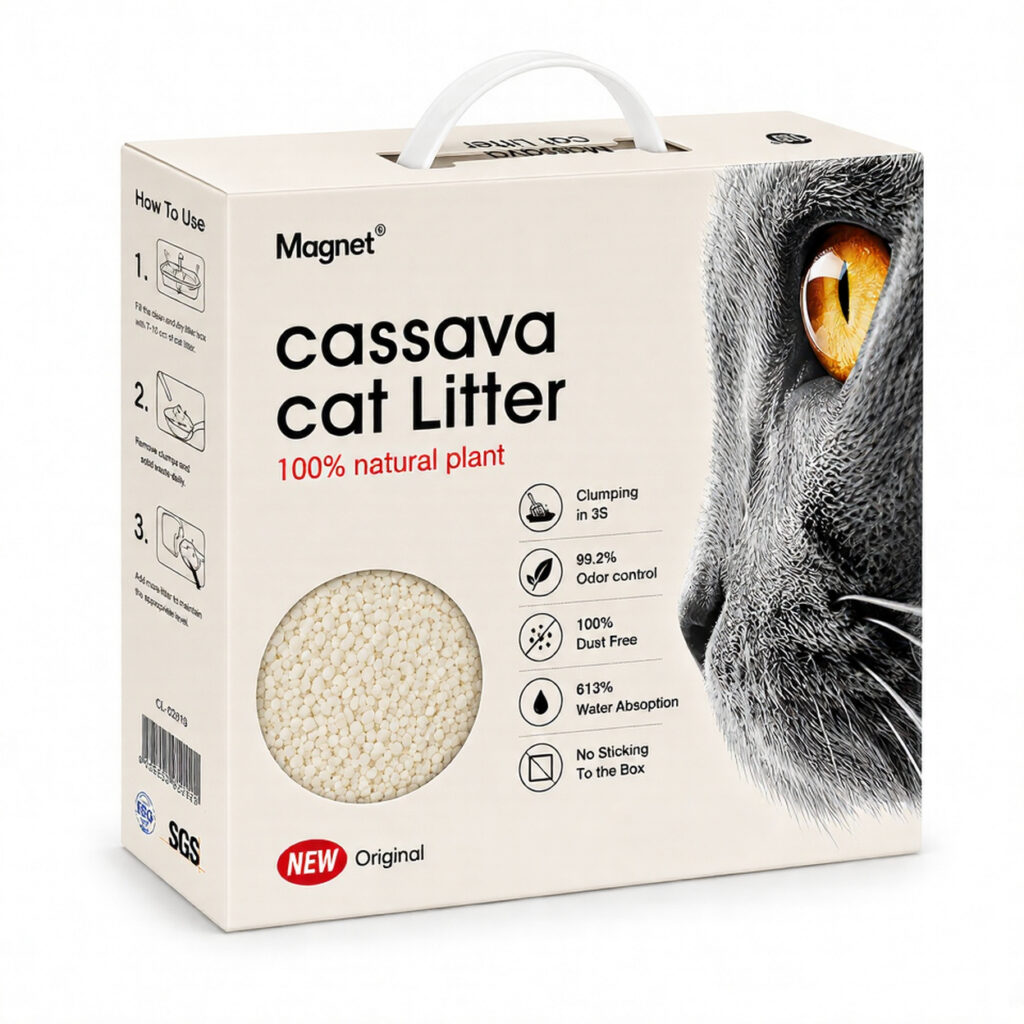
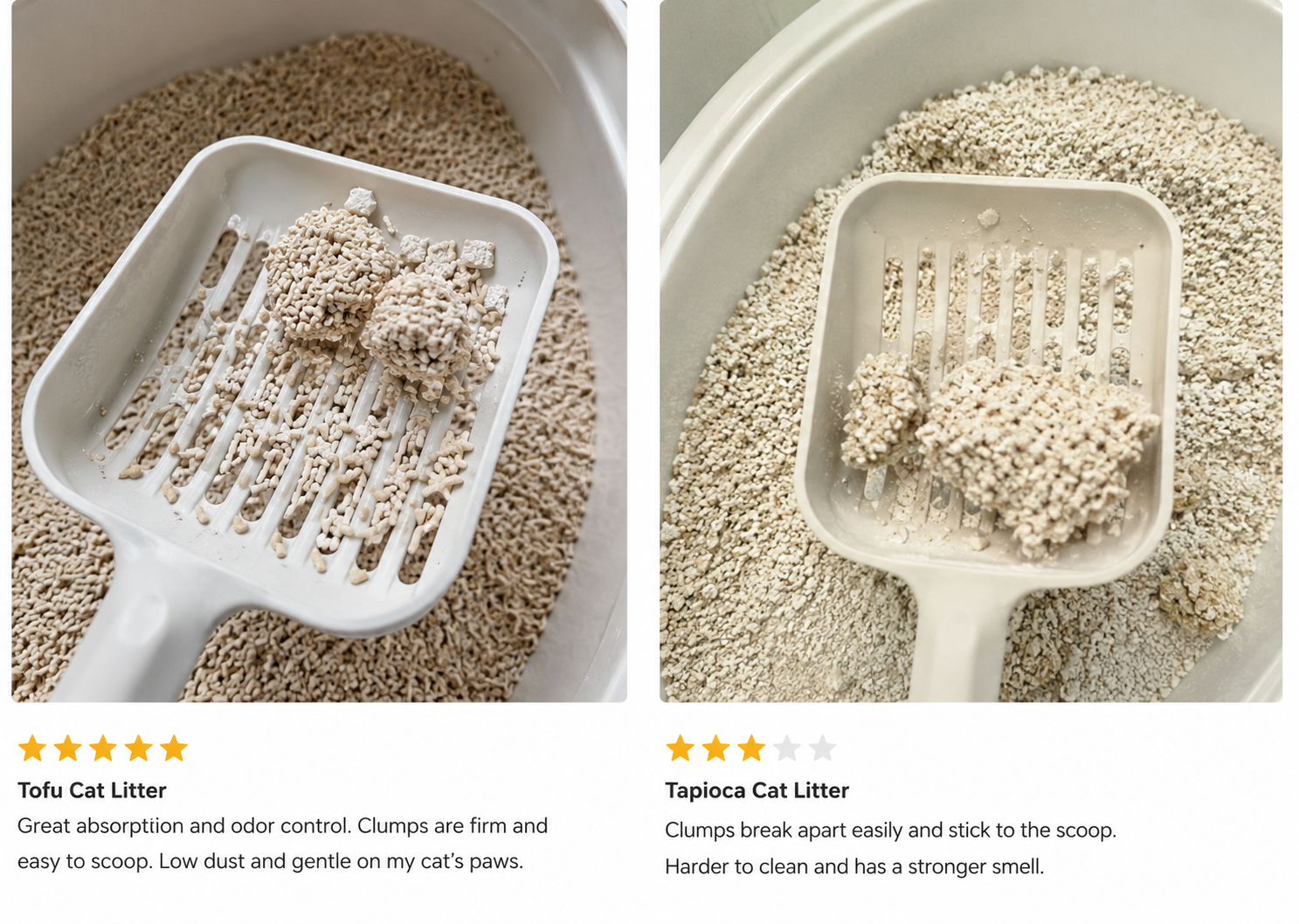
If you’ve been comparing tofu litter to alternatives like cassava or tofu cat litter blends, or looking at Tofu Cat Litter vs Tapioca Cat Litter, formula type does affect how frequently you’ll need a full change. Pure cassava (tapioca) litter, with its denser clumps and higher absorption capacity, can sometimes extend the effective fill period by 3–5 days compared to pure tofu under high-use conditions. Mixed tofu-cassava formulas often deliver the best of both — strong clumping that reduces base contamination, plus enzymatic odor control from the soybean fiber component.
Practical Tips to Maximize Litter Life
- Scoop at least once daily — ideally morning and evening for multi-cat households. Frequency of scooping is the single biggest lever you have over effective litter lifespan.
- Maintain the right fill depth. Most tofu litters perform best at 5–7 cm (2–3 inches) of fill depth. Too shallow and clumps touch the box base, causing sticking; too deep wastes litter without proportional performance gain.
- Top up between full changes. As litter volume reduces through scooping, adding a small amount of fresh litter (rather than waiting for a full change) replenishes active enzymatic capacity and maintains fill depth.
- Clean the box itself at each full change. Residual odor molecules bond to plastic surfaces over time. Washing the box with unscented dish soap and rinsing thoroughly before refilling ensures the fresh litter starts in a neutral environment.
For Retailers: What This Means for Your Range
Understanding litter change frequency isn’t just useful for end consumers — it’s commercially relevant for retailers and distributors building a wholesale kitty litter for your store range. Litters with longer effective lifespans generate better consumer satisfaction and repeat purchase loyalty. Products that degrade too quickly generate returns, complaints, and brand switching.
When sourcing tofu cat litter wholesale, the quality parameters listed above — granule uniformity, moisture content, clump speed, and enzymatic freshness — are the specifications that determine the consumer experience your brand delivers. A kitty litter factory like Magnet Litter, with certified production processes and full OEM/ODM capability, gives wholesale buyers the ability to specify and verify these parameters before production begins — protecting both brand reputation and consumer satisfaction.
Source Premium Tofu Cat Litter at Wholesale
Magnet Litter manufactures certified tofu cat litter to the quality standards that maximize litter life and consumer satisfaction. Request samples and wholesale pricing today.
Explore Tofu Cat Litter Wholesale →