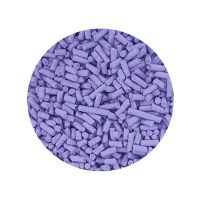
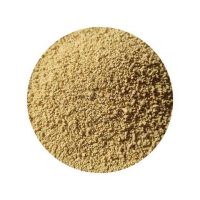
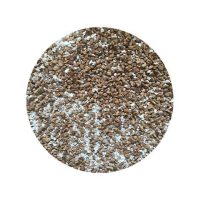
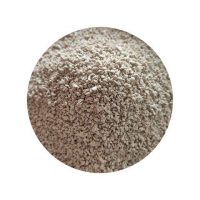
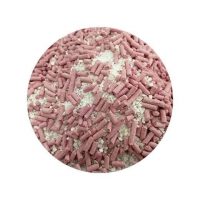
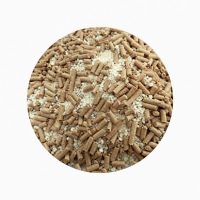
An unscented product still has a smell. Corn-based raw materials, binders and packaging can all contribute to what a buyer notices when a bag is opened. The useful question is not whether a sample smells of absolutely nothing, but whether the finished product matches the promise your brand intends to make.
For an unscented corn cat litter private label project, start by agreeing what unscented means in the formula brief. Then assess cleaning performance without allowing an attractive ingredient story to carry the whole decision.
Confirm the Formula Before Designing the Bag
The words corn cat litter do not tell a buyer the complete composition. Ask which plant fractions are used, whether other materials are included, what provides binding and whether any fragrance or odor-masking ingredient is added.
When reviewing corn cat litter, request written confirmation of the proposed formulation and available unscented option. Do not assume that every catalogue variant is fragrance-free or that a custom version is available at the same minimum order.
Separate three points in your specification: ingredient composition, intentionally added fragrance and acceptable raw-material odor. This makes a later disagreement easier to resolve than a purchase order that merely says natural and unscented.
Evaluate the First Opening and the Open Bag
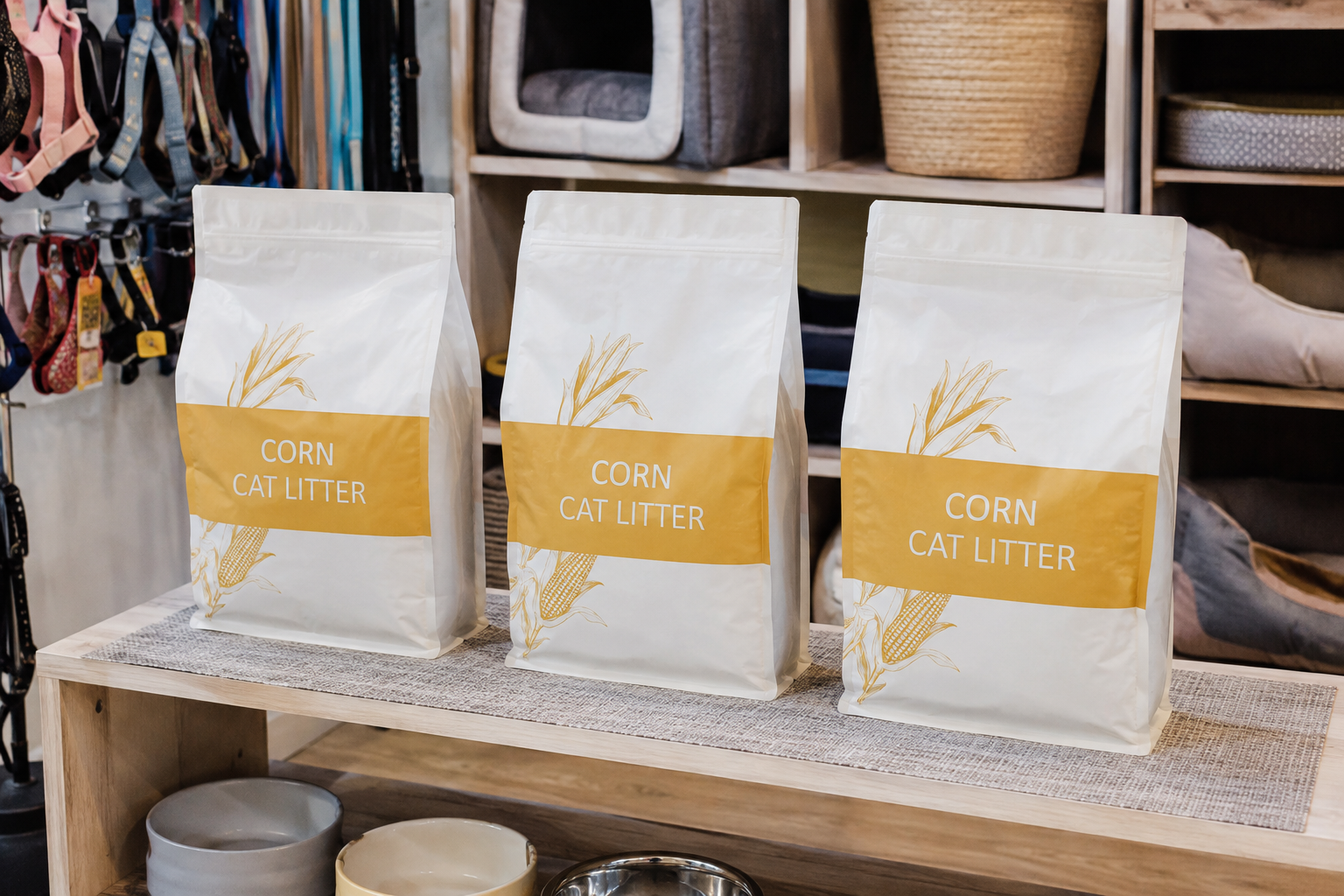
Inspect sealed bags from the proposed packaging format. Record any noticeable odor immediately after opening and again after normal storage following the supplier’s instructions. A sample transferred into a new bag for a sales meeting is a poor substitute.
Use coded samples when comparing suppliers so packaging design does not influence the assessment. Have more than one person record observations independently. Personal descriptions will vary, so agree on a simple vocabulary before the session.
If a sample smells unexpectedly different from the approved version, investigate its batch, age and storage history. Do not solve the issue by adding perfume while continuing to market the original unscented proposition.
Keep Odor Control Separate From Fresh-Bag Scent
A mild smell when the bag is opened does not establish how the litter performs during use. Likewise, a pleasant fragrance does not prove odor control.
For a product comparison, agree on a repeatable protocol with the supplier or testing provider. Keep litter depth, liquid challenge, elapsed time and environmental conditions consistent. Any instrumental method should identify what was measured and how results relate to the claim being considered.
A controlled comparison can help shortlist formulas, but it will not reproduce every household. Follow it with a limited user trial that records cleaning frequency and whether complaints concern the tray, waste bin or unused bag. Those are different product and usage questions.
Look at What Remains After Scooping
The customer sees the condition of the tray after cleaning, not a clump lifted for a photograph. Check whether small wet fragments remain, whether the clump sticks to the base and how much unused litter leaves with it.
Compare several repetitions rather than the best result. If performance depends heavily on waiting longer before scooping, decide whether that fits your customer and instructions. Avoid adopting a strong clumping claim on the strength of one favorable demonstration.
For a brand already selling unscented tofu cat litter, the new corn SKU needs a concrete role. That could be a different texture, price point or measured cleaning preference. Simply adding another plant name may divide existing sales without bringing in a new customer.
Approve the Packaging With the Product Inside
Request filled bags, not only an artwork proof. Check the opening, pouring control, closure and how the bag stands when partly empty. Confirm that storage instructions reflect the validated package and product combination.
Keep environmental and health claims out of the design until the relevant evidence and market review are complete. Plant origin alone does not establish flushability, allergy suitability or a finished pack’s disposal route.
Build a Quote That Can Be Compared
Ask each supplier to quote the same net contents, pack format, case quantity, formula requirements and delivery basis. Include the sampling and approval steps in the discussion rather than treating them as an afterthought.
The right launch brief explains what must stay consistent between the sample and the reorder. That is more useful to a private label brand than a long list of attractive adjectives on the first bag.
Discuss a Corn Cat Litter Brief
Ask Magnet about current corn litter formulation options, fragrance requirements and production-format samples for your market.
Enquire About Corn Cat Litter