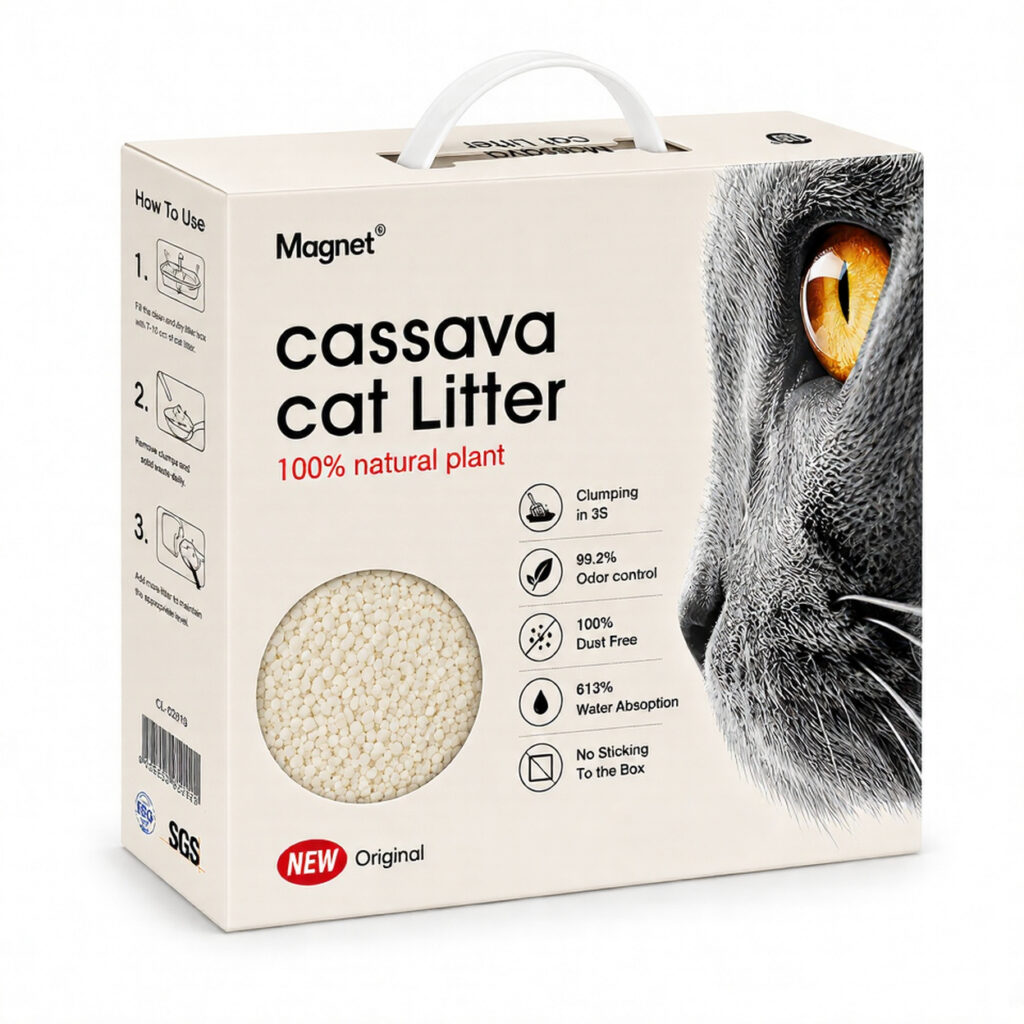
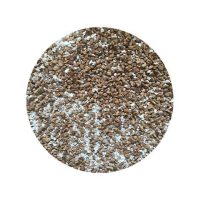
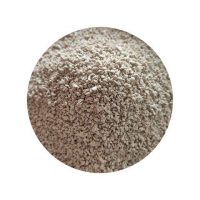
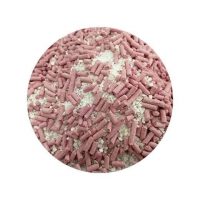
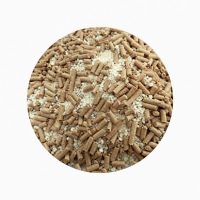

Two litters can both be described as “fast clumping” and behave completely differently in a litter box, because clay and cassava don’t clump through the same physical process at all. One relies on a mineral structure absorbing water between its layers. The other relies on starch hydrating at the surface of a granule. Those mechanisms operate on different timescales, and that difference is why cassava sets faster.
Understanding which mechanism you’re buying matters commercially — it determines what a sample test is actually measuring, and which formula variables a factory can adjust when you ask for firmer clumps. This goes deeper on the clumping side of our overview of 100% biodegradable cassava cat litter.
How Cassava Cat Litter Clumping Actually Works
Cassava litter is built on tapioca starch extracted from cassava root. When liquid reaches a granule, water is drawn into the starch structure at the surface, the starch swells, and the hydrated layer becomes adhesive. Adjacent granules bond to each other through that adhesive layer, and as the wetted zone spreads, the bonded granules form a single cohesive mass.
Two features of that process explain most of cassava’s behavior in the box. First, the binding starts at the outer surface of each granule, so it begins essentially on contact rather than waiting for liquid to penetrate to the core. Second, the bond is adhesive — granules are glued to one another — which is what allows the resulting clump to hold its shape under the mechanical stress of scooping.
A note on the term “gelatinization”
The industry commonly describes this as starch gelatinization, but that isn’t quite accurate in the strict food science sense. True gelatinization of native tapioca starch requires heat — roughly 60–70°C. Room temperature clumping depends on cold-water hydration, which is why commercial cassava litter formulas use pre-gelatinized or otherwise modified starch, frequently alongside a natural binder such as guar gum to stabilize clump strength.
This distinction is worth knowing when you’re evaluating suppliers. A factory that can discuss its starch specification and binder system understands its own formula. A supplier that only repeats “natural starch clumping” as a marketing line may be reselling rather than producing.
How Bentonite Clay Clumping Works
Sodium bentonite clumps through an entirely different mechanism. Bentonite is a smectite clay built from stacked mineral platelets with sodium ions occupying the spaces between them. When water reaches the clay, those sodium ions hydrate and water is drawn into the interlayer galleries, forcing the platelets apart. The clay swells substantially — this expanding lattice behavior is exactly why sodium bentonite is used for clumping litter in the first place, and it’s covered further in our overview of which minerals are used in cat litter.
The swollen, plastic clay particles then press against one another and interlock into a mass. It’s a physical entanglement of expanded particles rather than an adhesive bond between discrete granules.
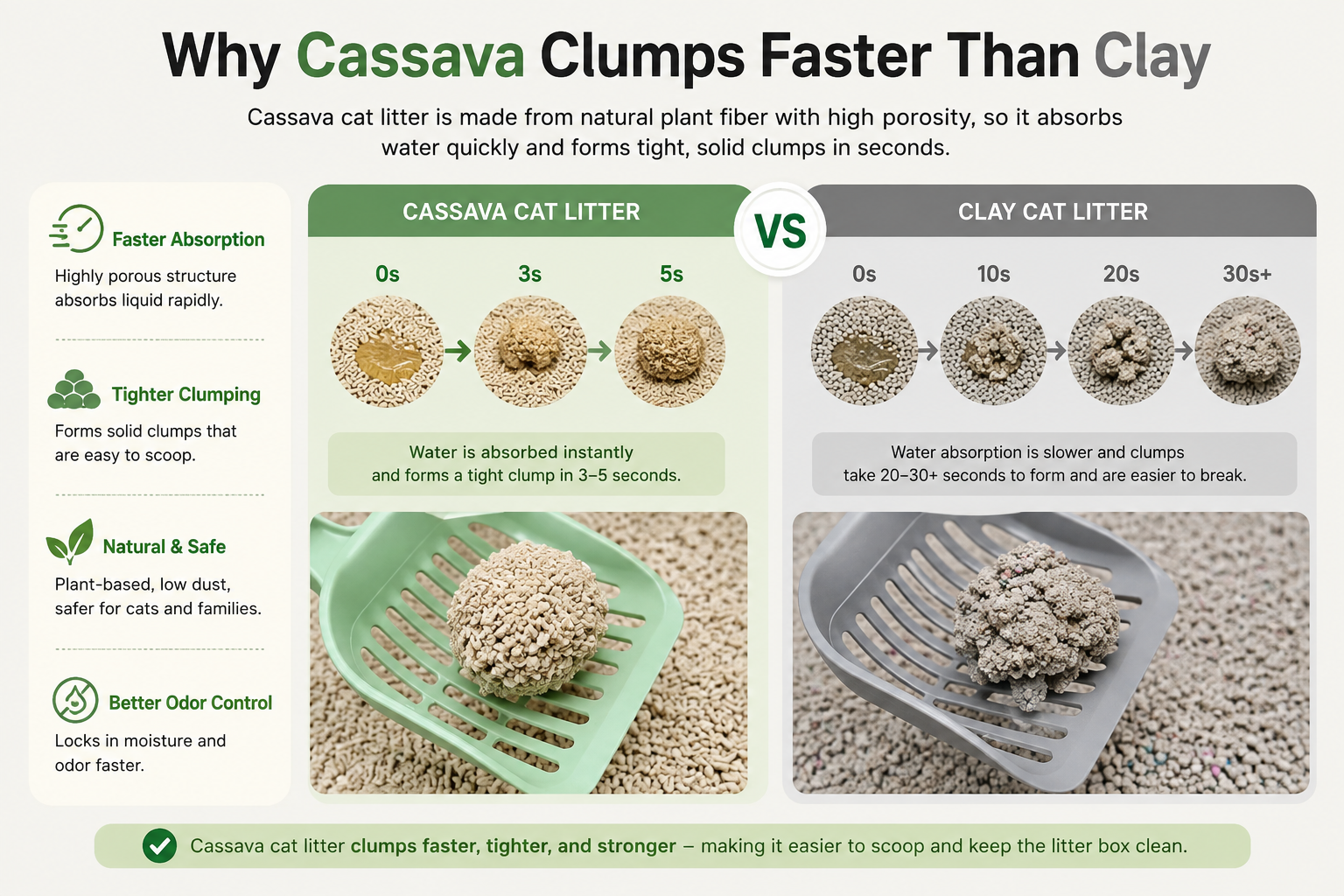
Why Cassava Clumps Faster Than Clay
The speed difference comes down to where the water has to travel.
In cassava, the reaction happens at the granule surface, where liquid makes immediate contact. The adhesive layer forms and neighbouring granules begin binding right away.
In bentonite, water has to migrate into the interlayer spaces inside the clay structure before swelling can occur. That’s a diffusion-limited process — it proceeds at the rate water can work its way between mineral platelets, not at the rate the liquid arrives. Full clump strength develops progressively as that penetration continues inward.
Surface hydration is inherently faster than diffusion into a layered mineral. That’s the whole explanation, and it’s why cassava reaches a liftable clump sooner even when both litters eventually produce a comparably firm result.
| Property | Cassava | Sodium Bentonite |
|---|---|---|
| Binding mechanism | Starch hydration, adhesive bonding | Interlayer swelling, particle interlocking |
| Rate-limiting step | Surface contact | Water diffusion into clay layers |
| Set speed | Faster | Slower to full strength |
| Clump boundary | Discrete, clean edge | Can fuse to surrounding litter |
| Effect on unused litter | Largely unchanged | Surrounding fines progressively saturate |
| Biodegradable | Yes | No |
Clump Boundary: The Difference That Shows Up After Three Weeks
Set speed is the difference customers notice on day one. Clump boundary is the difference they notice on week three, and it matters more for repeat purchase.
Because cassava binds granules into a discrete adhesive mass, the clump has a clean edge and the litter immediately around it stays largely unaffected. Scoop the clump and the remaining bed is still functional.
Bentonite’s swelling behavior is less contained. Fine clay particles surrounding a clump absorb moisture and gradually lose absorbency without forming anything scoopable. Over successive uses the bed accumulates saturated fines, which is the practical reason a clay box needs full replacement sooner than a plant-based one — and a meaningful part of the cost-per-use argument when you’re positioning a premium plant-based SKU against a cheaper clay product.
What Controls Clumping Speed in a Cassava Formula
Four production variables determine where a given cassava litter lands on clump speed and firmness. These are the levers a factory adjusts when you ask for a change:
- Starch specification. The type and degree of modification determines how readily the starch hydrates in cold water. This is the primary lever and the one least visible from outside the factory.
- Granule size and surface area. Finer granules present more surface per unit volume, so more binding sites engage at once. This is part of why fine granule cassava sets denser than pellet format — see fine granule cassava cat litter against pellet cassava cat litter for how the same base material behaves differently by format.
- Finished moisture content. Starch that has already taken up ambient moisture has less capacity to hydrate on contact, producing slower, weaker clumping. This is why a moisture specification around 10% or below matters, and why storage conditions affect performance in the field.
- Binder system. Guar gum or a comparable natural binder supplements starch adhesion and stabilizes clump integrity, particularly over longer shelf life.
Why this matters when comparing quotes: Because cassava starch contributes its own binding, a well-formulated cassava litter can reach strong clump firmness at a lower total binder ratio than materials relying entirely on added agents. If two suppliers quote noticeably different prices on the same format, starch grade and binder ratio are the two places the difference usually hides — and both are fair questions to ask directly.
How to Test Cassava Clumping Performance on a Supplier Sample
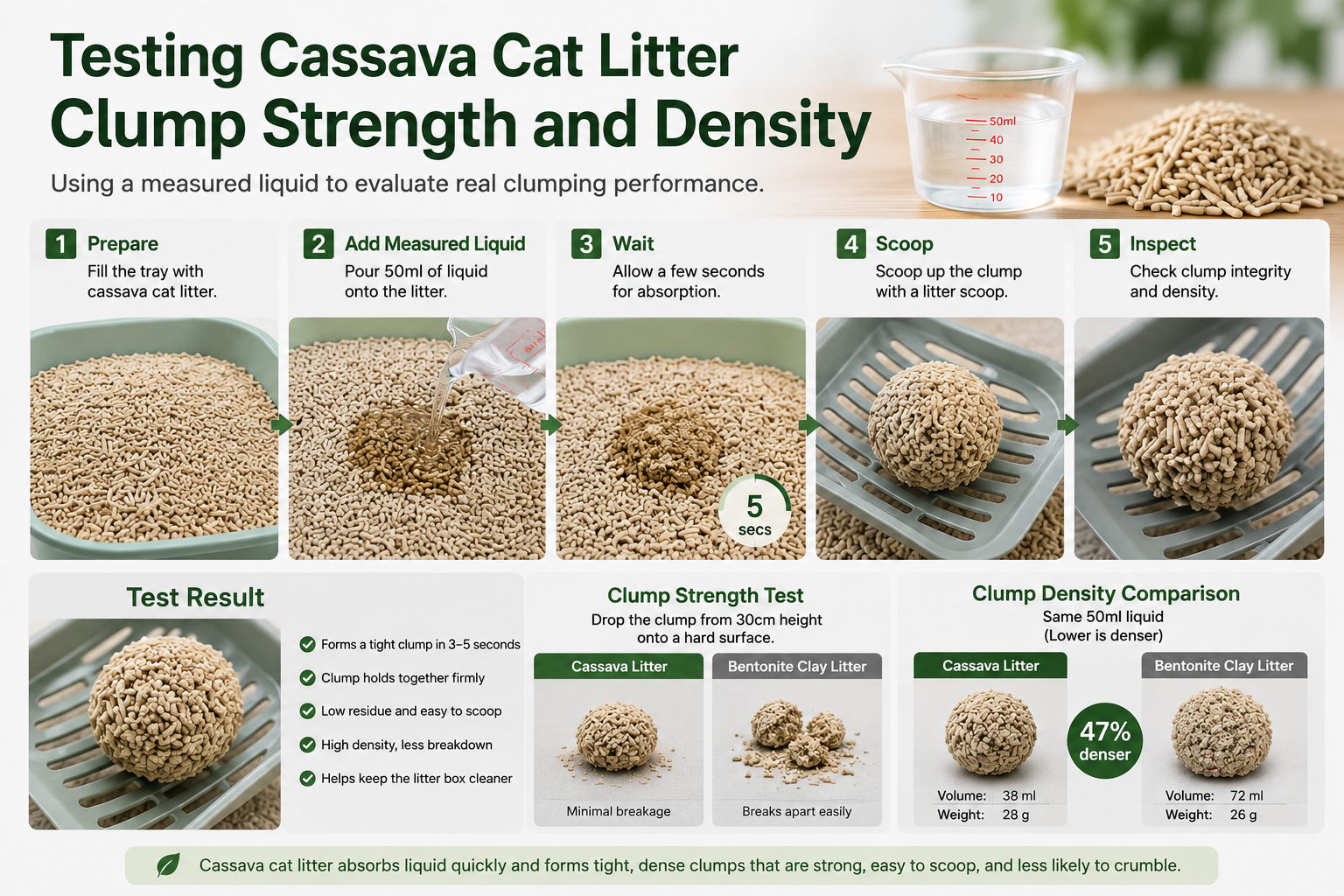
Spec sheets state what a formula should do. A twenty-minute test tells you what it does. Run this on any sample before approving it:
- Set time. Level a bed of litter roughly 5cm deep, pour a fixed volume of liquid (use the same volume across every sample you compare), and time until the clump can be lifted intact with a scoop.
- Clump density. Weigh the dried clump and measure its displaced volume. Density gives you a comparable number across suppliers rather than a subjective impression of firmness.
- Drop test. Drop the clump from around 30cm onto a hard surface. It should survive intact. Crumbling indicates weak binding that will produce residue and customer complaints.
- Residue check. After removing the clump, inspect the bed underneath. Material stuck to the base is a formulation weakness, not a scooping technique problem.
- Aged sample retest. Repeat the set time test after the sample has been open for several weeks. Formulas that clump well fresh but degrade with ambient moisture exposure fail here — and this failure mode never appears in a same-day evaluation, only in customer reviews.
Run the same protocol across every sample you’re comparing. Consistent method matters more than sophisticated equipment.
What This Means for Wholesale Buyers
Three practical takeaways from the mechanism difference:
- Clump feel is a switching factor, not just a performance factor. Customers coming off clay have a learned expectation of what a clump should feel like. Cassava’s dense adhesive clump matches that expectation more closely than lighter plant-based materials, which lowers the barrier to switching.
- Cost per use favours the discrete clump. Litter that stays functional around the clump extends fill life. That’s a defensible argument for a higher shelf price rather than a marketing claim.
- Clumping speed is adjustable. Starch grade, granule size, and binder ratio are all specifiable in an OEM program — see our overview of choosing a cat litter manufacturer for what else belongs in a formula brief.
If you’re still deciding between clumping and non-clumping formats for a product line, our comparison of clumping versus non-clumping cat litter covers that decision, and cat litter alternatives to clay looks at the wider material landscape.
Frequently Asked Questions
Why does cassava cat litter clump faster than clay?
Cassava clumps through starch hydration at the granule surface, which begins on contact with liquid. Bentonite clay clumps through water migrating into the spaces between clay platelets and forcing them apart, which is a diffusion-limited process. Surface hydration is inherently faster than diffusion into a layered mineral structure, which is why a cassava clump reaches scoopable firmness sooner.
Is cassava cat litter clumping true starch gelatinization?
Not in the strict food science sense. True gelatinization of native tapioca starch requires heat. Cat litter clumping at room temperature relies on cold-water hydration, which is why commercial cassava formulas use pre-gelatinized or otherwise modified starch, often alongside a natural binder. The term gelatinization is used loosely in the industry to describe the swelling and binding behavior.
How do I test cat litter clump strength on a supplier sample?
Pour a fixed volume of liquid onto a level bed of litter, time how long until a solid clump can be lifted intact, then weigh the clump and measure its displaced volume to calculate density. Repeat the test after 24 hours and again on litter that has been stored for several weeks, since some formulas lose clumping consistency as they absorb ambient moisture.
Article summary: Cassava clumps by hydrating starch at the granule surface and bonding granules adhesively; bentonite clumps by drawing water between mineral platelets until they swell and interlock. Surface binding is faster than interlayer diffusion, which explains both cassava’s set speed and its cleaner clump boundary. Starch grade, granule size, moisture content, and binder ratio are the four variables that move performance within a cassava formula.
Test Our Clumping Performance Yourself
Request cassava samples in fine granule and pellet format, with full formula and moisture specifications for your own testing protocol.
Request Samples →