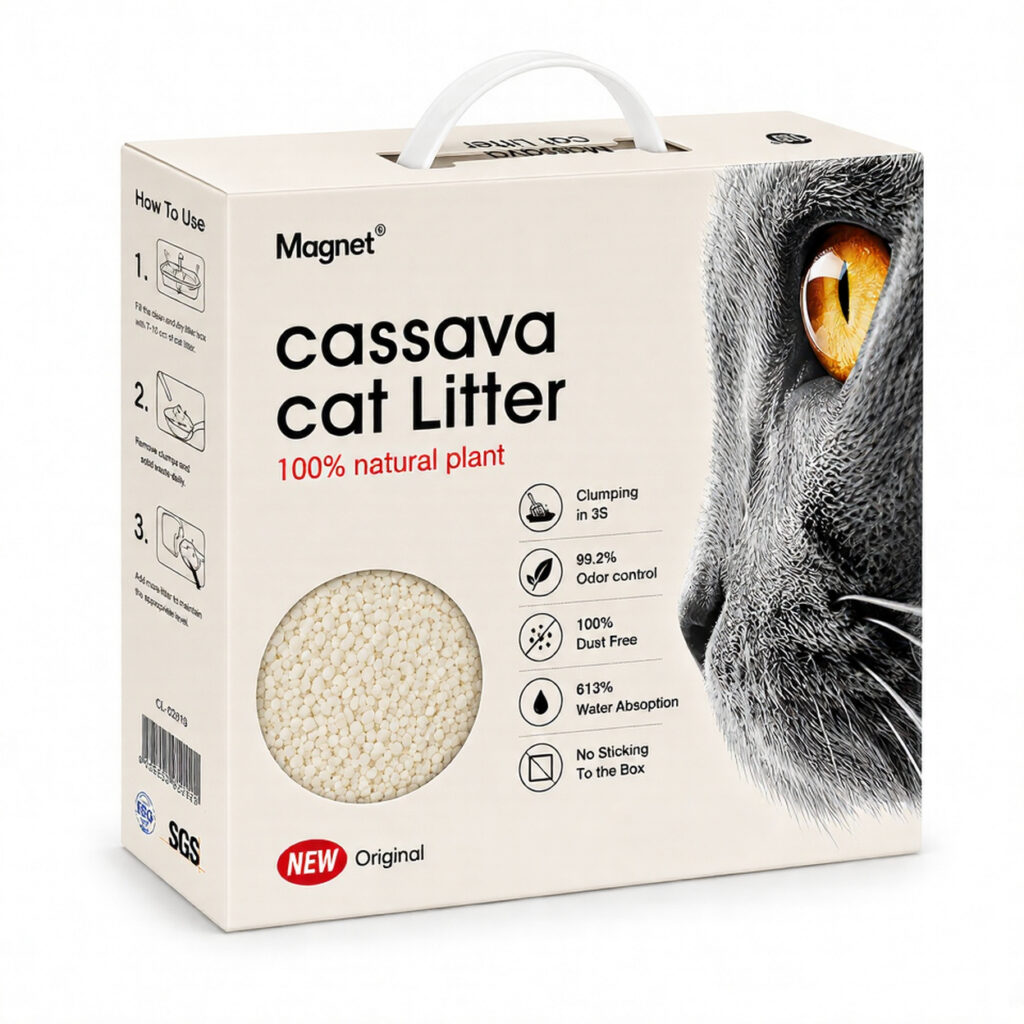

Two quotes arrive for what appears to be the same retail bag. One says 6L, the other 2.5kg. The price difference looks small, so the buyer assumes the quantities are equivalent.
That assumption can change the entire comparison. Liters measure volume; kilograms measure mass. Converting between them requires the bulk density of the actual litter under a defined measurement method. There is no universal conversion for tofu cat litter.
Use Density to Understand the Difference
For planning purposes, mass in kilograms equals volume in liters multiplied by bulk density in kilograms per liter. The density belongs to a particular formula and measurement procedure, not to the material name alone.
Consider two hypothetical products. At 0.40 kg per liter, 6L corresponds to 2.40 kg. At 0.50 kg per liter, the same 6L corresponds to 3.00 kg. Conversely, a 2.5 kg fill corresponds to 6.25L in the first example and 5.00L in the second.
These values illustrate the arithmetic; they are not published specifications for Magnet products. Ask the supplier for actual data before comparing tofu cat litter quotations.
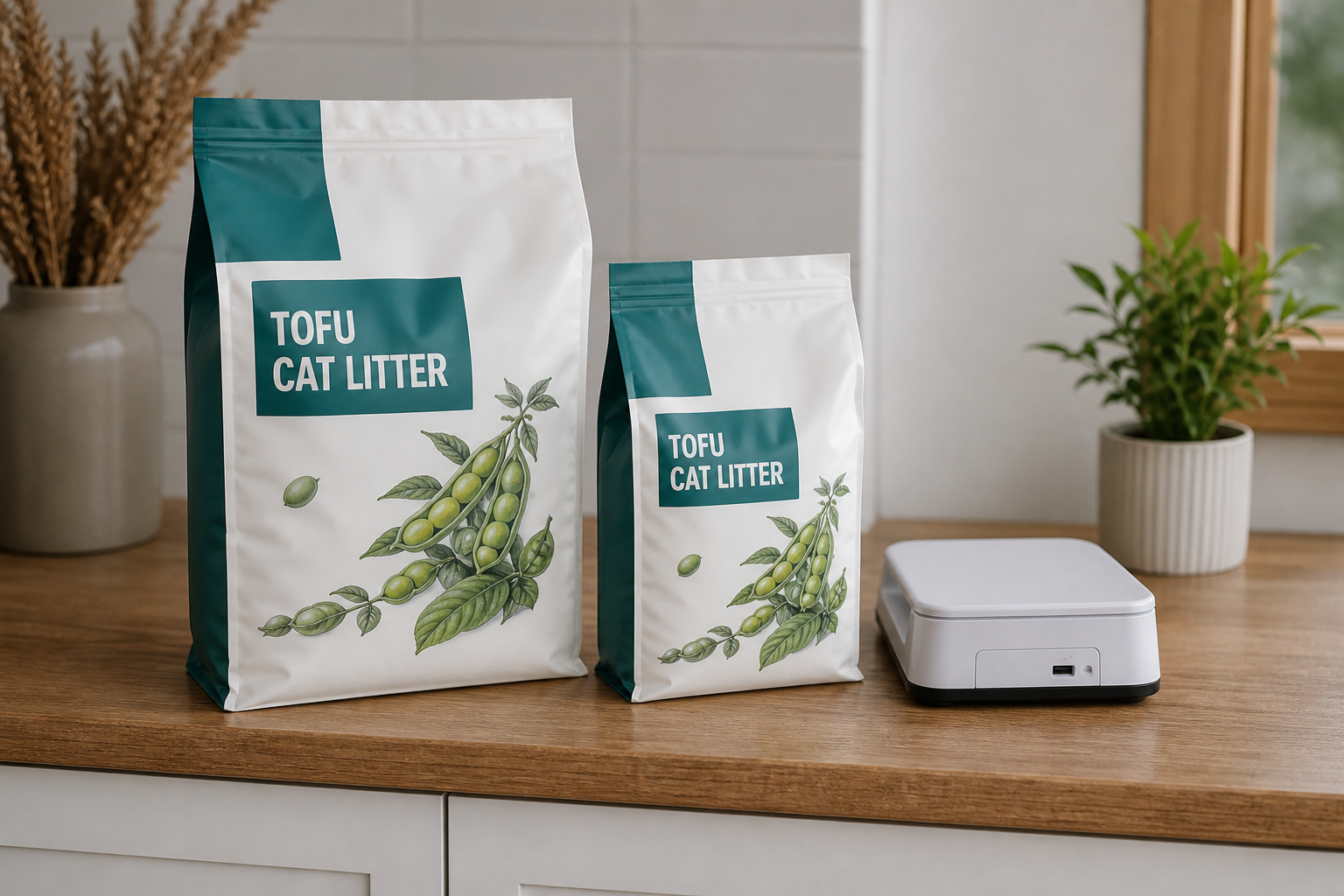
Ask How the Volume Was Measured
Loose particles leave spaces between them. Filling, settling and compression can therefore influence a volume measurement. A tightly handled sample may not give the same result as a loosely poured sample.
Ask the supplier to define the container, filling method, leveling or settling procedure and number of repetitions. Use a consistent method when assessing samples. For legally declared net contents, obtain destination-market advice on the applicable measurement and labeling requirements rather than treating an internal density calculation as compliance evidence.
Also distinguish net contents from package capacity. A bag large enough to hold six liters is not evidence that every filled unit contains six liters under the relevant method.
Put Quotes on a Common Basis
Request both the declared selling quantity and enough physical data to compare the shipment. That means the proposed net fill, gross bag weight, external filled dimensions and units per case.
Suppose two hypothetical offers are $2.10 for 6L and $2.00 for 2.5kg. You still cannot conclude which is cheaper for the customer without knowing how the quantities relate and how the products perform. Cost per kilogram can clarify purchasing, while cost per usable volume may be relevant to filling a tray. Neither measure alone establishes duration in use.
Keep the commercial terms aligned as well. A price including custom packaging is not directly comparable with one for a standard bag, even after the contents have been normalized.
Check What the Customer Sees and Carries
A retail buyer should handle filled samples. Is the package easy to lift and pour? Does it fit the intended shelf? Does the visual size create a reasonable expectation of contents? Can a partly used bag be stored conveniently?
Do not redesign the bag solely around making it appear larger. A useful package helps the customer understand the quantity and use the product without frustration.
For e-commerce, measure the final parcel too. The selling bag’s dimensions are not necessarily the dimensions billed by the delivery provider once protective packaging is added.
Keep Net Content Changes Out of Routine Substitutions
A supplier should not adjust the fill basis quietly when formula density changes. The purchase order needs to state what is being sold and what variation or verification method applies.
If the declared contents change, review packaging, product listings and identifiers before shipment. GS1’s declared net content rule requires a new GTIN when the legally required declared net content changes. Ask your GS1 organization and marketplace team how the change affects the relevant packaging levels and listings.
A Better Way to Request the Quote
Send a short, specific brief: the formula you are considering, whether the market-facing quantity is by mass or volume, the target price and the proposed case format. Ask for a filled sample and the supporting measurements.
For a wholesale cat litter supplier, that is enough to begin a meaningful pack discussion. Six liters and 2.5 kilograms may happen to be close for one formula, but a coincidence is not a purchasing specification.
Compare Tofu Litter Pack Options
Tell Magnet whether your market buys by liters or kilograms, along with your target retail price and shipping format.
Request Pack Information