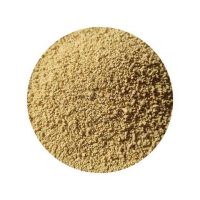
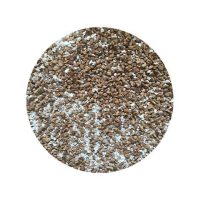
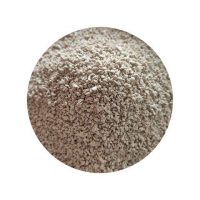
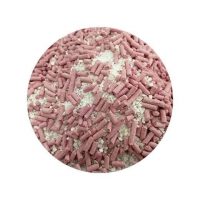
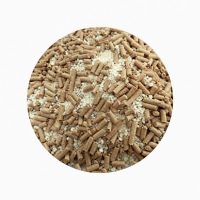
“Plant-based cat litter” isn’t one product — it’s a category covering at least six distinct raw materials, each with a different clumping mechanism, dust profile, odor performance, and retail price ceiling. Treating them as interchangeable “eco” options is the fastest way to pick the wrong formula for a specific customer base or price point.
This guide breaks down each major plant-based material on its own terms — how it clumps, what it costs relative to the others, and where it fits in a retail lineup — then links to a deeper article on each one. If you’re sourcing rather than just researching, our manufacturer sourcing guide and OEM & private label guide cover the buying process itself.
In This Guide
Why Plant-Based Cat Litter Exists (and What It Solves)
Plant-based cat litter grew out of three specific limitations of traditional bentonite clay: weight (clay is heavy, which drives up shipping cost and makes bags harder for customers to carry), dust (clay dust has raised air-quality concerns for some cat owners and multi-cat households), and end-of-life disposal (clay doesn’t biodegrade, while most plant-based materials do). Every material below solves these three problems to a different degree, which is exactly why the category hasn’t converged on one dominant formula the way bentonite once did for clumping clay.
Tofu Cat Litter: Flushable, Lightweight & Dust-Free
Tofu cat litter is made from soybean fiber byproduct — a genuine repurposing of a food-industry material rather than a purpose-grown crop. Its defining trait is weight: tofu litter is the lightest of the major plant-based materials, which is also what drives its flushability claim, since the lighter fiber structure disperses more readily in water than denser materials. Clumps form reliably but feel lighter when scooped compared to cassava or corn.
Best fit for: brands leading with a flushable or ultra-lightweight claim, and customers switching from crystal or silica litters who prioritize low weight.
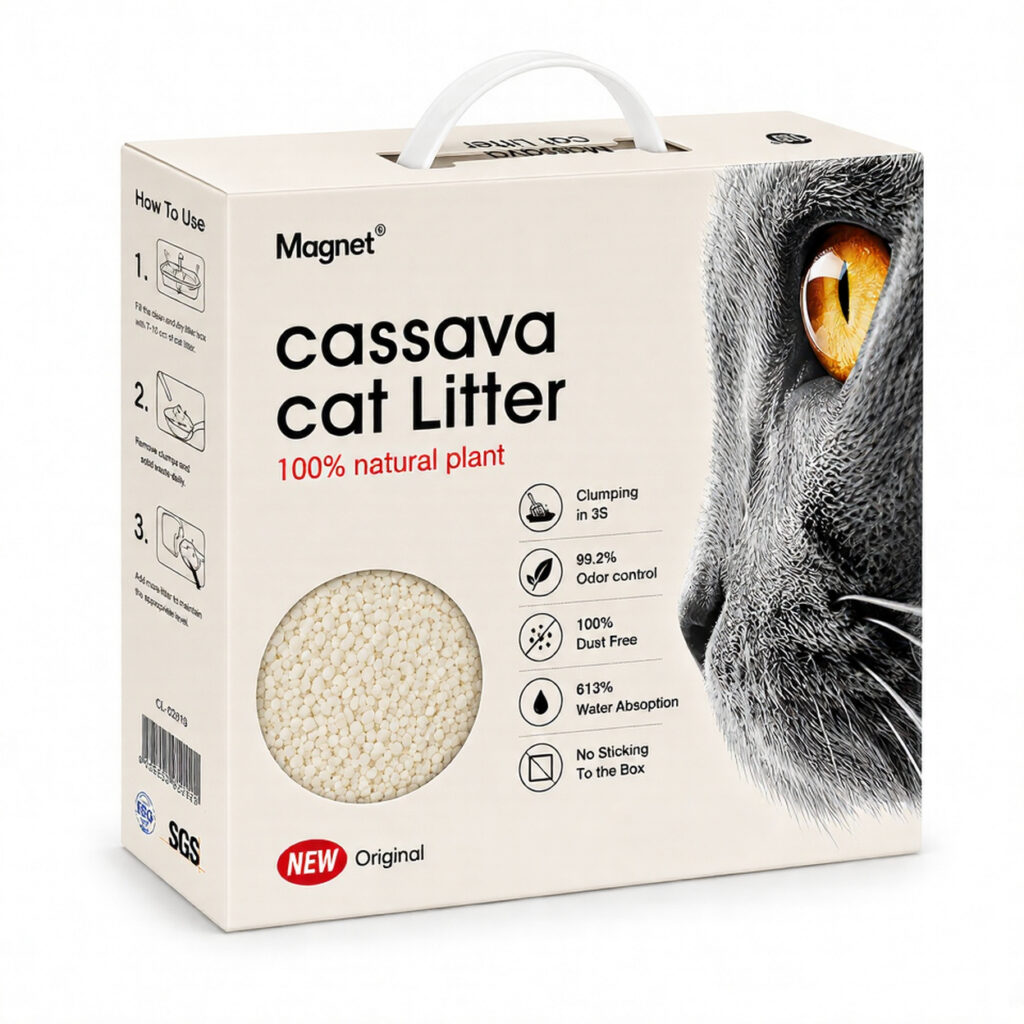
Cassava Cat Litter: Fast Clumping & Fine Natural Texture
Cassava cat litter is currently one of the fastest-growing plant-based formulas in Western retail. It’s made from cassava root starch, which naturally processes into a fine, dense texture that clumps quickly and firmly — closer in feel to traditional clumping clay than most other plant-based options, which makes it a comfortable transition material for customers moving off bentonite.
Best fit for: brands targeting customers switching from clumping clay, or riding current category growth in premium plant-based retail.
Corn Cat Litter: Natural Odor Absorption at a Mid-Tier Price
Corn cat litter is made from ground corn cob or corn starch and sits at a more accessible price point than cassava or tofu, while still delivering solid natural odor absorption. It’s a longtime staple of mid-tier plant-based lines — less trendy than cassava right now, but a dependable entry point for a brand that wants a plant-based claim without stepping up to premium raw material cost.
Best fit for: value-conscious plant-based positioning, or a second SKU beneath a premium cassava or tofu line.
Wheat Straw Cat Litter: Enzyme-Active Odor Control
Wheat straw cat litter is one of the longest-established plant-based materials, valued for naturally enzyme-active odor control — the material itself interacts with ammonia compounds in urine rather than relying purely on absorption. It tends to have a coarser texture than cassava or tofu, which translates to somewhat lower tracking.
Best fit for: odor-control-led positioning, and multi-cat households where lower tracking matters more than ultra-fine texture.
Walnut Shell Cat Litter: Low Dust & Low Tracking
Walnut shell cat litter is made from ground walnut shells and stands out for density and low tracking — the granule structure is naturally heavier and less prone to sticking to paws than lighter plant-based materials. It’s a strong choice where dust control is the primary purchase driver rather than clump texture or flushability.
Best fit for: dust-sensitive households and retail positioning built around cleanliness rather than eco-claims alone.
Mixed Formula Cat Litter: Blending Two Materials for a Target Price Point
Mixed cat litter combines two base materials — commonly tofu with cassava, or walnut shell with cassava — to land at a performance and price point between two single-material lines. A tofu-cassava blend, for example, can combine cassava’s denser clump with tofu’s lighter weight and flushability story, giving a brand a middle-ground SKU without committing fully to either material’s tradeoffs.
Best fit for: brands that want to test two material profiles in one SKU before locking in a single-material line for a future order — see our comparison of cassava vs tofu for private label for a deeper look at that specific pairing.
Plant-Based Health Monitoring Cat Litter: A Functional New Category
Plant-based health monitoring cat litter layers a functional capability onto a standard plant-based base — the litter is formulated to visibly change color in response to specific markers in urine (such as pH shifts or the presence of blood), giving owners an early at-home signal of potential urinary or kidney issues worth a vet visit. This is a meaningfully different value proposition from the materials above: the purchase driver is preventive health monitoring, not clumping performance or eco-positioning, which opens a distinct marketing angle for a brand willing to educate customers on how to read the color change.
Best fit for: premium and veterinary-adjacent retail channels, and brands with an audience receptive to a health-focused product story.
Plant-Based Cat Litter Materials: Side-by-Side Comparison
| Material | Clump Style | Dust Level | Relative Cost | Standout Trait |
|---|---|---|---|---|
| Tofu | Light, cohesive | Low | High | Flushability, lightest weight |
| Cassava | Dense, fast-setting | Low | Mid-to-high | Clay-like clump feel |
| Corn | Moderate | Low-to-moderate | Low-to-mid | Accessible price point |
| Wheat Straw | Moderate, coarser | Low-to-moderate | Low-to-mid | Enzyme-active odor control |
| Walnut Shell | Dense | Very low | Mid | Low tracking |
| Mixed (e.g. Tofu & Cassava) | Blended profile | Low | Mid-to-high | Middle-ground positioning |
None of these materials is universally “best” — the right choice depends on which tradeoff matters most for your specific customer: clump feel, flushability, dust sensitivity, or price point. If you’re deciding what to launch first as a private label brand rather than researching materials generally, our OEM & private label guide walks through that decision alongside MOQ and cost.
Frequently Asked Questions
What is the most popular plant-based cat litter material right now?
Cassava and tofu are currently the two fastest-moving plant-based materials in North American and European retail. Cassava is favored for its dense, clay-like clump feel, while tofu is favored for its lightweight, flushable positioning — both are outpacing corn and wheat straw in new product launches.
Is plant-based cat litter actually better than clay or bentonite litter?
Better depends on the priority. Plant-based litters are generally lighter to ship, lower-dust when properly processed, and biodegradable, which bentonite is not. Bentonite still has a cost advantage and a very established clumping reputation, so the two categories tend to serve different price points and customer priorities rather than one strictly replacing the other.
Can plant-based cat litter formulas be mixed together?
Yes. Mixed formulas — such as tofu combined with cassava, or walnut shell combined with cassava — are common in wholesale supply, letting a brand target a price and performance point between two single-material lines rather than choosing one material exclusively.
Guide summary: Plant-based cat litter spans at least six distinct materials, each solving the weight, dust, and biodegradability limits of clay differently. Match the material to what your specific customer values most — clump feel, flushability, dust control, or price — rather than treating “plant-based” as one interchangeable category.
Request Samples Across Our Full Material Range
Compare tofu, cassava, corn, wheat straw, walnut shell, and mixed formulas side by side before you choose a material for your line.
Request Material Samples →