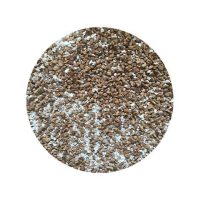
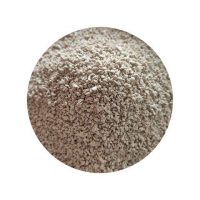
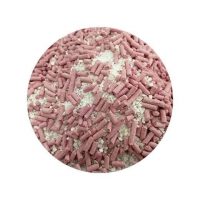
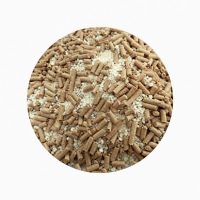

Tofu litter is the plant-based material most people have heard of, and also the one carrying the most claims that deserve unpacking. “Flushable” isn’t a regulated term. “Made from tofu” isn’t quite accurate either. And the ultra-light weight that customers love is the same property that changes how the litter behaves in the box.
This explains what tofu cat litter actually is, how its flushability works mechanically, why it weighs so little, and where it genuinely fits against cassava and clay. It’s part of our plant-based cat litter materials guide.
What Is Tofu Cat Litter Made Of?
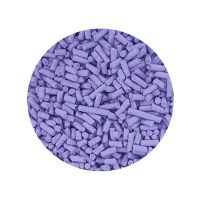
Tofu cat litter isn’t made from tofu itself — it’s made from the soybean fiber pulp left over after soy milk and tofu production, a byproduct known in the food industry as okara. This pulp is dried, processed, and extruded into the cylindrical pellets that give tofu litter its distinctive look, usually with a natural binding agent such as guar gum or a plant starch added to control clumping strength.
Two things follow from this that matter commercially. First, it’s a genuine waste-stream material rather than a purpose-grown crop, which is a real sustainability point rather than a marketing one. Second, the extrusion step is why tofu litter costs more per kilogram than mined bentonite — you’re paying for processing, not for a scarce raw material.
Is Tofu Cat Litter Flushable? How It Actually Works
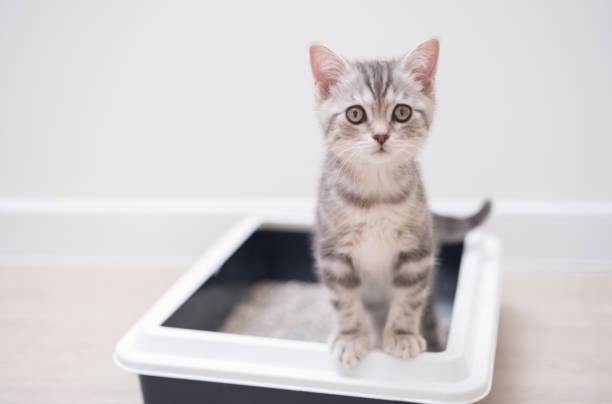
The flushability claim comes down to one mechanical difference: clay litter swells when it absorbs liquid and holds together as a solid mass, while tofu litter’s soy fiber structure breaks apart and disperses. That’s the entire basis of the claim — tofu pellets soften and separate into fiber in water rather than forming a plug.
Two practical caveats belong alongside that claim, and brands that communicate them clearly tend to get fewer customer complaints. Flush a small amount at a time rather than an entire scoop, since even dispersible material can accumulate in older or narrow plumbing. And check local wastewater guidance — some municipalities discourage flushing any cat waste regardless of litter type, due to concerns about parasites entering water systems rather than anything to do with the litter material itself.
Packaging tip: If you’re building a private label line around a flushable claim, state the recommended flush quantity directly on the bag. It converts a claim that can generate complaints into a usage instruction, and it protects the claim’s credibility with customers who have older plumbing.
Why Tofu Cat Litter Is the Lightest Plant-Based Option
Tofu litter’s low density comes from the soy fiber itself — a porous, fibrous structure with a lot of internal air space, unlike the dense starch of cassava or the mineral density of clay. That porosity is also what drives its absorption speed: liquid wicks into the fiber structure quickly rather than needing to penetrate a dense granule.
Commercially, the weight advantage shows up in two places. Shipping cost per unit drops meaningfully compared to clay at the same volume, which matters over a full container. And end customers notice it directly — a 10kg bag of tofu litter delivers noticeably more volume than 10kg of clay, which is a real perceived-value advantage at the shelf.
Tofu Cat Litter Clumping & Dust Performance
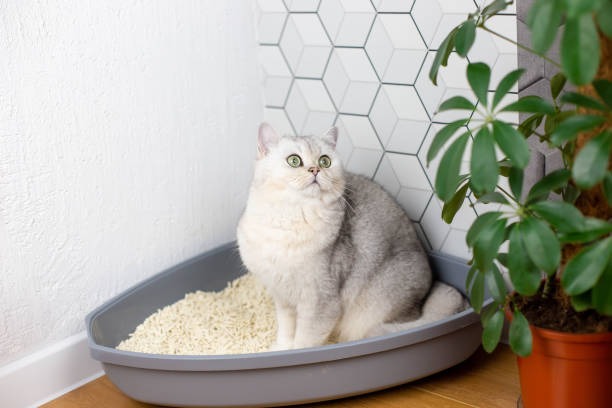
Tofu litter clumps reliably, but the clump feels different from cassava or clay — lighter and slightly softer when scooped, because the clump is bound fiber rather than compacted dense granules. Some customers read this as a positive (easier scooping, less weight in the waste bag); others coming from clay read it as feeling less solid. This is a genuine preference split, not a performance failure, and it’s worth knowing which way your target customer leans before choosing tofu as a first SKU.
On dust, tofu performs well for a structural reason: because the pellets are extruded rather than granulated from a powder, there’s less loose fine particulate in the finished product to begin with. Dust performance still depends on production quality control and moisture management, but the extrusion process gives tofu a head start compared to materials granulated from fine powder.
Tofu vs Cassava vs Clay: Where Each One Wins
| Factor | Tofu | Cassava | Bentonite Clay |
|---|---|---|---|
| Weight | Lightest | Light | Heaviest |
| Clump feel | Light, soft | Dense, firm | Very firm |
| Granule shape | Cylindrical pellets | Fine granules | Fine granules |
| Flushable claim | Yes (with limits) | Often marketed as yes | No |
| Dust level | Low | Low | Moderate-to-high |
| Raw material cost | Highest of the three | Mid-to-high | Lowest |
If you’re specifically weighing tofu against cassava for a first private label SKU, our cassava vs tofu comparison goes deeper on the launch decision, including cost and retail positioning for each.
Who Tofu Cat Litter Is Right For
- Strong fit: brands leading with a flushable or ultra-lightweight claim; customers in apartments or upper-floor homes where carrying heavy bags is a real friction point; households prioritizing low dust.
- Weaker fit: customers switching directly from clumping clay who expect a dense, heavy clump feel — cassava tends to ease that transition better.
- Middle ground: a tofu and cassava mixed formula combines tofu’s light weight with cassava’s denser clump, which can work well as a first SKU when you’re not sure which way your customer base leans.
Frequently Asked Questions
What is tofu cat litter made of?
Tofu cat litter is made primarily from soybean fiber — the pulp byproduct left over after soy milk and tofu production, sometimes called okara. This fiber is dried, processed, and extruded into cylindrical pellets, usually with a natural binding agent such as guar gum or a starch to control clumping strength.
Is tofu cat litter really flushable?
Tofu litter disperses in water far more readily than clay litter because its soy fiber structure breaks apart rather than swelling into a solid mass. Most brands recommend flushing only a small amount at a time. Flushability should still be checked against local plumbing and wastewater rules, since it is not a single regulated standard across markets.
Why is tofu cat litter more expensive than clay litter?
Tofu litter costs more because soy fiber requires drying, processing, and extrusion into pellets, whereas bentonite clay is mined and processed with fewer steps. The tradeoff is lower shipping weight per unit and a higher achievable retail price point, so the cost gap narrows once freight and margin are factored in.
Article summary: Tofu cat litter is made from soybean fiber byproduct, extruded into pellets. Its flushability comes from fiber dispersing rather than swelling, and its light weight comes from the porous fiber structure — the same property that gives it fast absorption and a softer clump feel than cassava or clay.
Request a Tofu Cat Litter Sample
Test pellet quality, clumping performance, and dust level against your own criteria before choosing a formula.
Request a Sample →