
MOQ is the question that ends most first sourcing conversations. A brand with a validated concept and a modest budget hears “one container minimum,” does the arithmetic, and quietly walks away — often without asking whether the number is actually fixed.
It usually isn’t fixed in the way buyers assume. This covers what standard cat litter MOQ looks like, why factories set it where they do, what smaller options genuinely exist, and what each one costs you in per-unit terms.
What Is the Standard MOQ for Cat Litter?
Across most China-based and Vietnam-based cat litter factories, standard MOQ sits at one 20ft container. Depending on formula density and bag size, that translates to somewhere in the range of 15–20 tonnes of finished product — a serious inventory commitment for a brand that hasn’t sold a bag yet.
Three things shift that number in practice:
- Standard versus custom formula. A factory’s existing formula usually carries a lower minimum than a bespoke one, because no line reconfiguration or development work is involved.
- Packaging complexity. Standard bag formats have lower minimums than custom-structure packaging, which often carries its own separate MOQ from the packaging supplier.
- Relationship stage. Trial-run flexibility on a first order is common; it’s a business development decision, not a production constraint.
Why Cat Litter Factories Set MOQ at Container Level
Understanding the reason makes the negotiation more productive, because you can then ask for the right thing.
The binding constraint is production line changeover. Switching a line to a different formula, granule size, or bag format means cleaning down equipment, resetting the mixing and granulating parameters, and running material through until output stabilizes. That’s a fixed cost in both time and wasted material, and it’s absorbed far more efficiently across a large run than a small one.
Container-level MOQ, in other words, reflects production economics rather than an arbitrary sales policy. Which means the useful question isn’t “can you lower the MOQ” but “what’s the smallest run that still makes changeover economics work for you” — a question a factory can actually answer.
How to frame the ask: Rather than requesting a discount on a smaller order, offer something that offsets changeover cost — accepting the factory’s standard formula, accepting a standard bag format, or committing to a follow-up order timeline. Buyers who understand what MOQ is protecting tend to get more flexibility than buyers who simply push on the number.
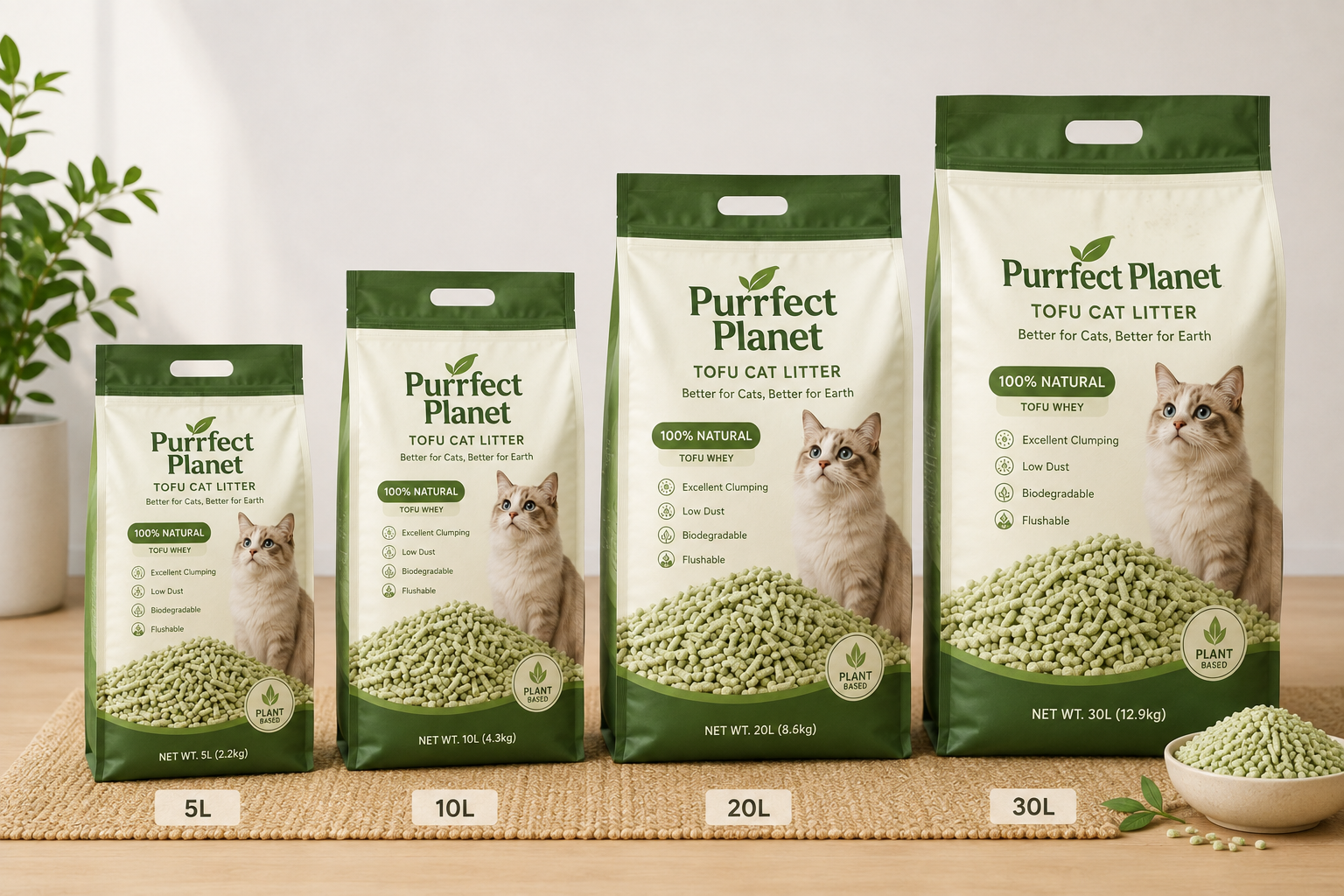
Options Below Full Container MOQ
| Option | Typical Volume | Per-Unit Cost | Best For |
|---|---|---|---|
| Sample order | A few bags | Not comparable | Formula and quality validation only |
| Trial run | Part-container | Higher than FCL | First market test with real retail packaging |
| LCL shipment | Part-container | Higher freight per unit | Lower upfront capital, longer transit |
| Shared container | Mixed SKUs to full container | Near FCL rates | Multiple formulas or bag sizes in one order |
| Full container (FCL) | One 20ft or 40ft | Lowest | Validated demand and reorder cadence |
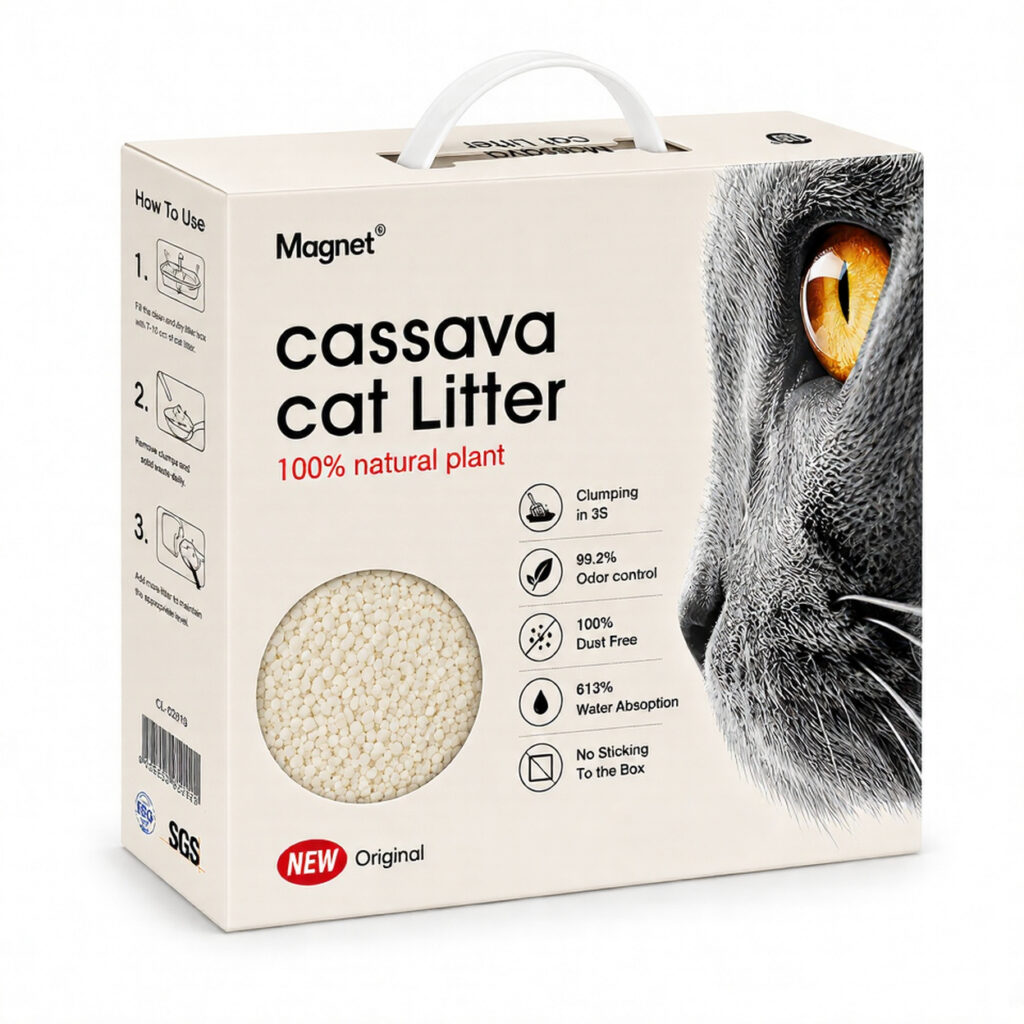
The shared container option deserves more attention than it usually gets. If you want to launch two formulas — say a cassava SKU alongside a tofu SKU — splitting one container across both reaches full-container freight economics while halving your inventory exposure on each individual product. You’re not ordering below MOQ; you’re meeting it with a more diversified basket.
Sample Orders Are Not Small MOQ Orders
Worth separating clearly, because buyers conflate them. A sample order exists to validate formula, clumping, and dust performance — it isn’t a commercial run, its per-unit cost tells you nothing about your real economics, and it usually ships without full retail packaging.
A trial run is a commercial order at reduced volume, produced with your actual packaging, intended to be sold. Both have a place in a launch sequence, and both should be requested explicitly rather than assumed. Our walkthrough of the cat litter OEM process covers where each fits in the production timeline.
How Smaller Orders Affect Your Landed Cost
Smaller volume raises per-unit cost through two mechanisms working together: production cost per unit rises because changeover is spread across fewer units, and freight cost per unit rises because LCL shipping is priced less efficiently than FCL.
The result is that a trial run genuinely costs more per bag than a full container. The question is whether that premium is worth what it buys — real sell-through data, customer feedback on your specific formula, and the ability to correct a positioning mistake before it’s replicated across twenty tonnes of inventory. For most first-time brands, it is. Our breakdown of private label cat litter cost shows how to model both scenarios side by side.
Practical tip: Model cost per unit at both trial and full-container volume before deciding. If the premium on a trial run is 15–20%, that’s usually cheap insurance. If it’s 60%, the economics may argue for a full container of a proven standard formula instead of a smaller run of a custom one.
How to Reduce MOQ Without Raising Cost Much
- Order the factory’s standard formula. No development work, no line reconfiguration, lowest achievable minimum. Custom formula work can wait for order two — see custom cat litter formula for which variables are worth customizing and when.
- Accept a standard bag format. Custom packaging structures carry their own MOQ from the packaging supplier, often independent of the litter itself.
- Limit to one or two SKUs. Every additional formula or bag size is another changeover.
- Share a container across SKUs. Reach full-container economics without concentrating risk in a single product.
- Signal reorder intent honestly. A factory weighing changeover cost against a likely repeat customer prices differently than one quoting a one-off.
Frequently Asked Questions
What is the typical MOQ for a first cat litter order?
Standard MOQ across most cat litter factories is one 20ft container. Some manufacturers offer smaller trial runs below container volume for new brands validating a formula, though per-unit cost rises accordingly. MOQ is also formula-dependent — a factory’s standard formula usually carries a lower minimum than a fully custom one.
Can I ship cat litter LCL instead of a full container?
Yes. LCL, or less-than-container-load, shares container space with other shippers and allows a smaller first order. Freight cost per unit is meaningfully higher than FCL and transit times are typically longer due to consolidation and deconsolidation, but it lowers the upfront capital needed to test a product in market.
Why do cat litter factories set MOQ at a full container?
Production line changeover is the main reason. Switching a line to a different formula, granule size, or bag format requires cleaning down and resetting equipment, and that fixed cost is absorbed more efficiently across a larger run. Container-level MOQ reflects production economics rather than an arbitrary sales policy.
Article summary: Standard cat litter MOQ is one 20ft container, driven by production changeover economics rather than sales policy. Trial runs, LCL shipping, and shared containers all bring a first order below that threshold at higher per-unit cost. Understanding what MOQ protects gets you further in the conversation than pushing on the number itself.
Ask Us About Trial Run Options
Tell us your target formula, packaging, and realistic first-order volume — we’ll tell you what’s workable and what it costs per unit.
Discuss Your First Order →