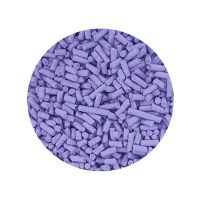
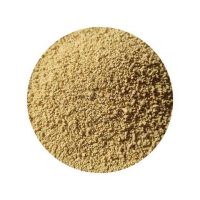
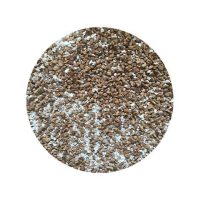
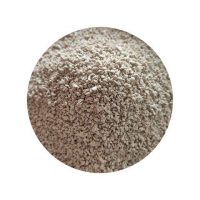
Buyers often ask whether China or Vietnam is the better place to manufacture cat litter. The honest answer is that country alone does not decide product quality, price, or reliability. A capable factory in either market can outperform a poorly matched supplier elsewhere.
The useful comparison is project-specific. It considers formula capability, material sourcing, packaging, production control, origin treatment, freight, lead time, and the buyer’s need for one or more supply routes.
Compare Factories Before Countries
Start with the exact product. Bentonite, tofu, mixed plant litter, crushed tofu, silica, and specialty formulas require different equipment, materials, and process knowledge. A factory with a good general presentation may not have strong experience with the format you plan to sell.
Ask each site for the same information:
- Products and particle formats made on the line
- Annual and available capacity
- Key process equipment and dust controls
- Raw-material sources and approved alternatives
- In-process and finished-product tests
- Traceability, retained samples, and change control
- Packaging formats made in-house or by partners
- Export markets and relevant audits or certifications
- Normal MOQ and production lead time
- Nearest loading port and inland route
Country-level assumptions become much less important once the actual operating data is visible.

Formula and Raw-Material Fit
China has a large and varied pet-products manufacturing base, with broad access to packaging suppliers and many cat litter formats. Vietnam can provide a useful manufacturing and export base for selected formulas, particularly when the factory has reliable access to the required agricultural or mineral inputs.
That general picture does not guarantee the result for a particular SKU. Ask where the main materials are sourced, how incoming lots are approved, and what happens when a normal source is unavailable. A factory may import part of its input, which changes lead time, currency exposure, and the real supply route.
For a private label formula, compare samples from production-representative equipment. Hand-prepared laboratory samples can demonstrate direction but may not reveal drying, screening, blending, or packing variation at scale.
Packaging Capability
Packaging can decide MOQ and launch speed. Review printed-film minimums, bag construction, zipper or handle options, print method, color control, master cartons, pallet standards, and local packaging lead time.
A buyer using the same artwork at two origins should not assume the bag will be identical. Film structure, ink, dimensions, seal behavior, and print tolerances need a shared approved standard. If different packaging suppliers are used, test both filled bags through the same drop, compression, vibration, and storage sequence.
Standard unbranded packaging may make a small market test easier. Custom printed film is more suitable when demand is proven and the buyer can absorb its production minimum.
MOQ and Total Cost
An attractive MOQ has value only if the finished product remains commercially viable. Compare formula MOQ, packaging MOQ, setup charges, pallet minimum, and container utilization separately.
Do not compare only ex-factory price. Build a landed cost per bag for each route, including:
- Product and retail package
- Inland origin logistics
- Export charges and documentation
- Inspection and testing
- Freight and insurance
- Duty, tax, and customs treatment
- Destination charges and delivery
- Expected loss and inventory carrying time
The lower manufacturing price can lose its advantage if the route has weaker loading, higher damage, or a much longer cash cycle.
Lead Time and Reorder Reliability
Ask for a calendar, not one headline lead time. The complete schedule includes formula confirmation, artwork approval, printed packaging, production booking, manufacturing, inspection, container booking, port movement, sailing, customs, and destination delivery.
Review holiday periods, agricultural material seasonality, weather exposure, port options, and the factory’s policy for peak demand. Then compare actual on-time history where the supplier can provide it.
For repeat orders, stable communication and controlled changes are often more valuable than an optimistic first-order promise.
Quality Control Across Two Origins
If a brand wants China and Vietnam supply, write one master product specification. Use the same defined methods for particle distribution, moisture, dust, absorption, clump strength, odor control, bulk density, net weight, and packaging tests.
Then approve each factory separately. Similar ingredient lists do not guarantee equivalent performance. Equipment, drying, screening, storage, and raw-material variation can produce a different result.
Keep origin-specific retained samples and lot records. If consumers may receive either origin under one listing, test whether the difference is noticeable in color, scent, particle shape, clumping, and bag appearance.
Country of Origin Must Be Genuine
Origin is determined under the applicable rules for the destination and product. Repacking or routing goods through another country does not automatically change origin. Buyers should not select a factory as a paperwork shortcut.
Confirm the product’s manufacturing steps, material origins, tariff classification, marking, and documentary evidence with a qualified customs adviser. If a preferential tariff is expected, verify that the product meets the relevant agreement’s origin rule before including the saving in the business case.
Freight and Port Comparison
Request current quotations for both routes using the same container type, loading date range, destination, free-time assumptions, and included charges. Consider inland distance from factory to port as well as the ocean leg.
Container capacity should be based on a packing trial or reliable loading plan. Dense litter may reach payload first; lightweight bags may reach usable volume first. Pallets can reduce bag count but simplify receiving. A route comparison based on theoretical cubic volume can be misleading.
When Dual Sourcing Makes Sense
Two origins can improve continuity, but they also double some work. The buyer may need two packaging approvals, two sets of samples, more audits, separate origin labels, and additional inventory planning.
Dual sourcing is most useful when annual volume justifies it, both factories can meet the same specification, and the buyer has a clear allocation plan. It is less useful when splitting a small order destroys scale and creates inconsistent customer experience.
A practical strategy may begin with one primary origin and a qualified backup. The backup should be sampled and documented before it is urgently needed.
Questions for a China and Vietnam Comparison
Send both sites the same request for quotation. Include formula, particle format, test limits, bag size, printed packaging, destination, forecast, first order, target date, and required documents. Ask each supplier to state assumptions and exclusions.
Magnet’s cat litter manufacturer service can support discussions about production in China and Vietnam. Buyers ready to compare MOQ, packaging, samples, and delivery can use the wholesale cat litter supplier page as the commercial next step.
FAQ
Is cat litter cheaper to manufacture in China or Vietnam?
It depends on formula, raw materials, packaging, order size, exchange rates, freight, duty, and the specific factories. Compare landed cost per sellable bag rather than a country average.
Does Vietnam origin automatically reduce import duty?
No. Duty depends on destination rules, classification, origin determination, and any applicable trade agreement. Confirm eligibility with a customs professional before relying on a rate.
Can one private label use factories in both countries?
Yes, but each factory and package should be approved against one master specification. Labeling and origin marking must accurately reflect the goods supplied.
Which country is better for tofu cat litter?
Choose the factory that can control the required formula, materials, drying, particle distribution, packaging, and repeat orders. Country is one sourcing factor, not a performance test.
What should buyers audit at a cat litter factory?
Review material control, production flow, cleaning, traceability, laboratory methods, retained samples, nonconforming product, packaging, storage, loading, and change approval.
Article summary: Neither China nor Vietnam is automatically the better cat litter origin. Buyers should compare the actual factory, formula, raw materials, packaging network, MOQ, quality controls, loading plan, origin rules, freight, and continuity strategy for the target market.
Compare China and Vietnam Production for Your Project
Share the formula, destination, package, volume, certification, and launch plan. Magnet can discuss which production route fits the commercial and quality requirements.
Request an Origin Comparison