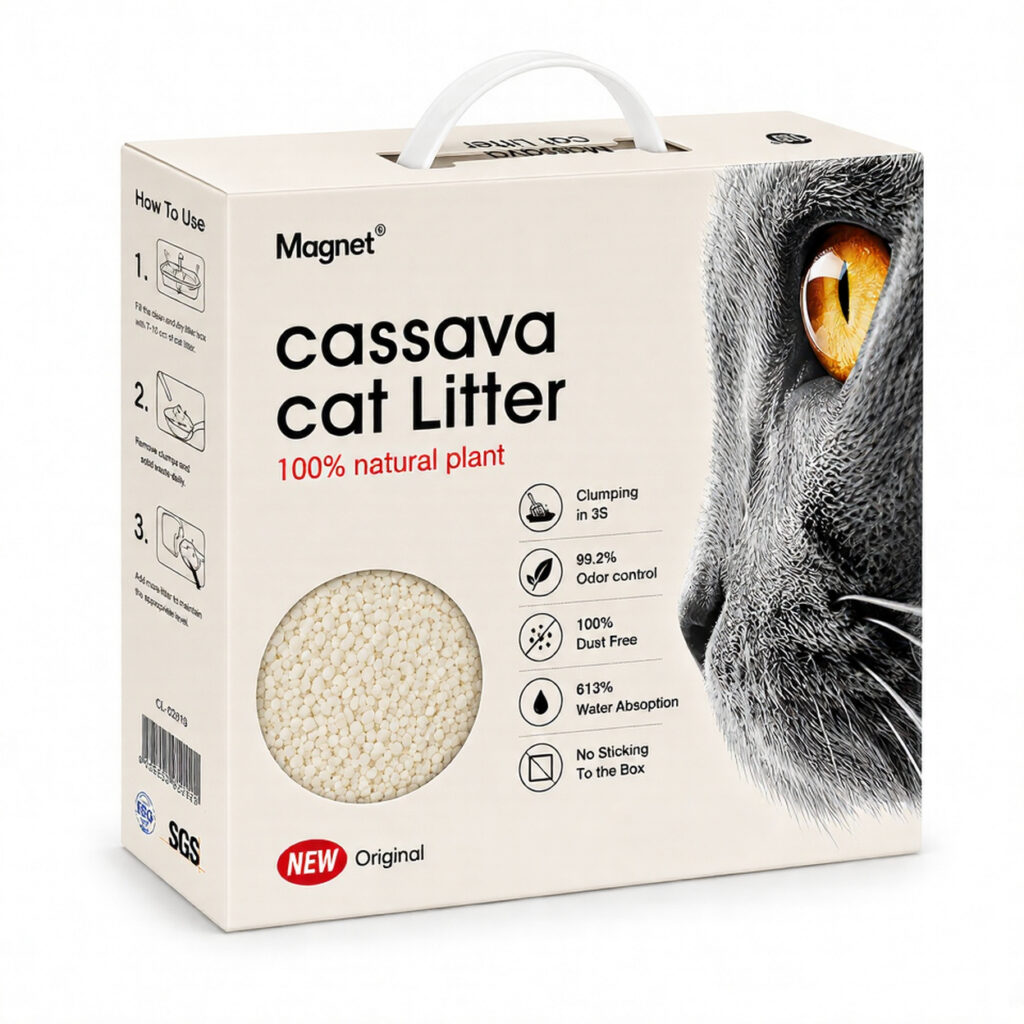

The sample passed in an air-conditioned office. The shipment then spent weeks in transit, waited in a warehouse and reached a store with a very different climate. If the product behaves differently at that point, another fresh sample will not answer the buyer’s question.
Tofu cat litter packaging for humid climates should be evaluated as a complete system: the formula, its condition at packing, the finished bag and the route to the customer. Asking only for a thicker bag leaves too much unexplained.
Describe the Exposure Before Choosing the Film
Give the supplier an honest picture of storage and distribution. Include the destination, expected transit and warehouse periods, whether buildings are climate-controlled and how long a consumer is likely to keep a bag open.
If conditions are unknown, collect measurements rather than relying on a country’s reputation for humidity. A shaded warehouse and a hot enclosed storage area can expose stock differently within the same city.
For a tofu cat litter order, connect these conditions to the proposed pack size and shelf-life evidence. A large bag used over many openings creates a different question from a small pack emptied at once.
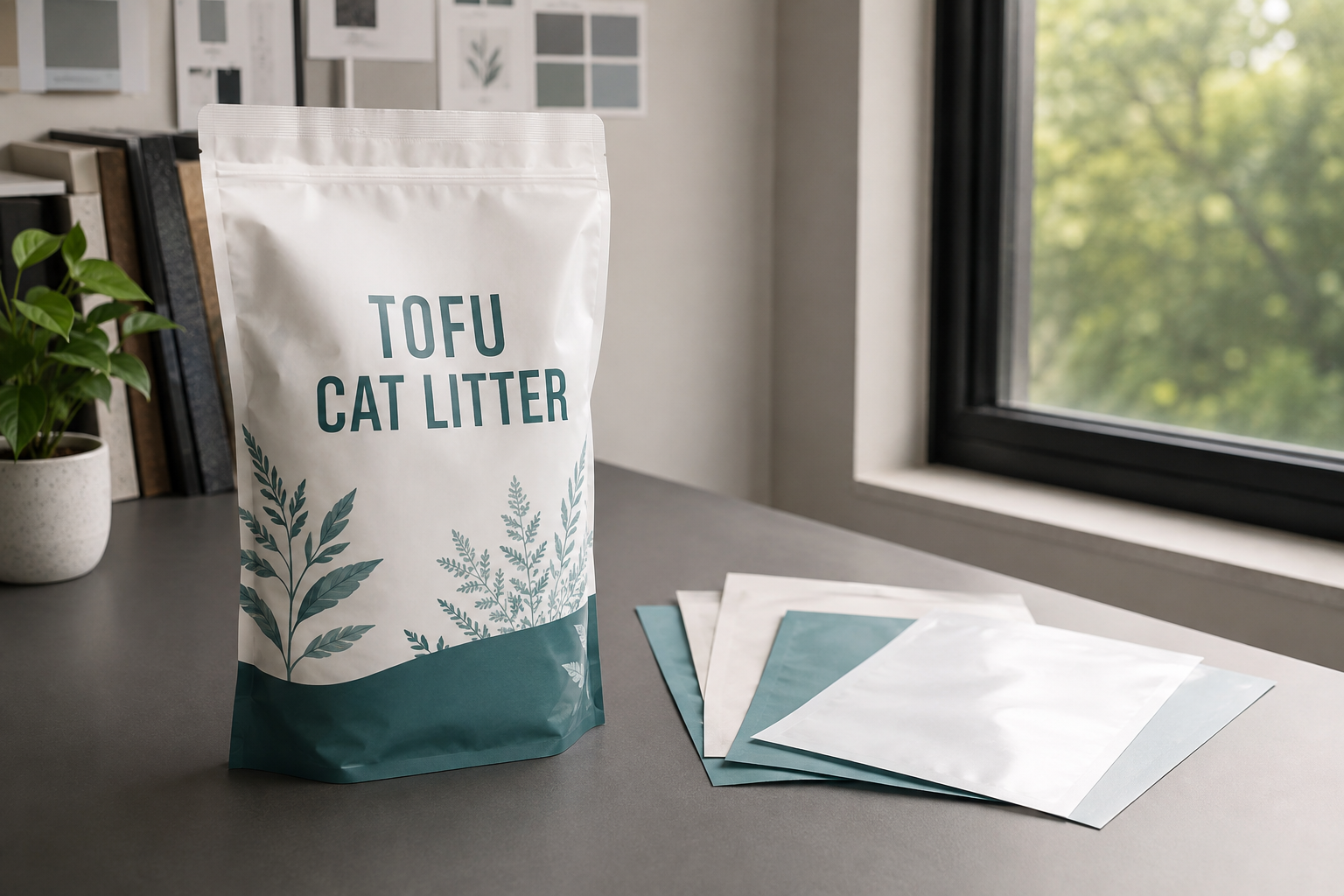
Ask for Barrier Data With Test Conditions
Film thickness alone does not describe moisture protection. Request the film structure and relevant water-vapor transmission data, including the test method, temperature and humidity conditions. Compare results only when their bases are compatible.
ASTM F1249 describes a method for measuring water-vapor transmission through plastic film and sheeting. A laboratory should determine whether that or another method suits the proposed material and purpose.
Do not convert a film result directly into a guaranteed product shelf life. The finished bag also has seals, folds and a closure, and its performance must be considered with the actual contents.
Inspect the Finished Bag After Filling
Ask how seal quality is controlled during production and how filled bags are sampled. Check for channels, contamination in the sealing area, pinholes and damage around folds or handles.
A zipper is convenient after opening, but it is not a reason to ignore the original protective seal. Likewise, a strong-looking laminate can still fail if the sealing process is poorly matched to it.
Keep samples from normal production. If a packaging change is proposed, test the filled replacement rather than approving a material datasheet alone. Record the pack revision so the order cannot quietly return to an earlier film.
Compare Aged Product With the Starting Sample
Agree with the supplier or laboratory which observations matter for your formula. These may include moisture, particle condition, clumping behavior, opening odor and package integrity. Use an appropriate method and written criteria for each.
Compare stored samples with the initial record at planned intervals. Avoid opening and resealing the same bag for every unopened-storage checkpoint; separate retained bags are needed if you want to preserve that condition.
Accelerated exposure may help compare packaging candidates, but an arbitrary short trial does not prove a specific number of months on the shelf. Ask how the proposed study supports the actual claim and where real-time evidence is still needed.
Do Not Forget the Opened Bag
The customer may pour a little litter, close the bag imperfectly and put it back in a utility room. Test whether the opening and closure are easy to use under an ordinary routine.
If storage instructions depend on a fully engaged zipper or another container, make sure those instructions are practical and reviewed with the product. Avoid presenting a closure as airtight unless the claim is supported.
A smaller pack may reduce the time the product spends open, but it can increase packaging and fulfillment costs. Compare that trade-off with the customer’s actual usage rather than selecting the largest bag by default.
Set a Receiving Check and an Escalation Route
On arrival, record damaged bags, abnormal odor or other visible deviations and isolate suspect stock for assessment. Keep batch identification and shipping evidence. Do not sell questionable material merely because an earlier sample passed.
When working with a cat litter manufacturer, agree who investigates a packaging or storage-related complaint and what evidence is needed. A good humid-market brief reduces uncertainty before shipment and makes any later problem easier to investigate.
Review Packaging for Your Destination
Tell Magnet your storage conditions, expected stock cycle and bag size so the packaging enquiry reflects your market.
Discuss Tofu Litter Packaging