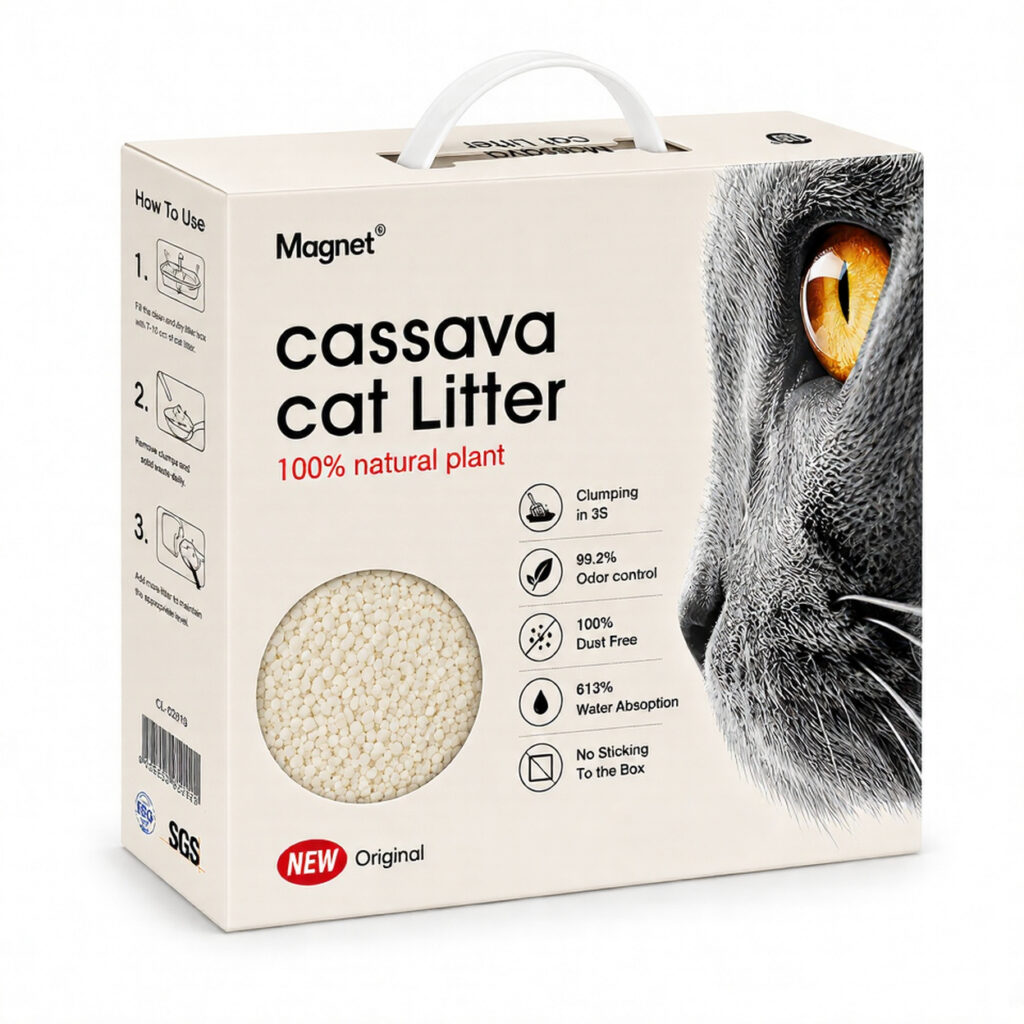






A mixed container can help a distributor introduce several products without buying a full container of each. It can also hide a problem: the fastest seller runs out while a slow-moving fragrance occupies the warehouse for months.
Planning a mixed SKU cat litter container order therefore starts with demand by SKU, not an even split between attractive bag designs. The loading plan comes after the assortment has a commercial reason to exist.
Separate the Different Minimums
Ask the supplier to identify minimums for each formula, fragrance, pack size and printed artwork. Several bags may share one base formula but still require separate printed film or production setups.
The total container quantity does not automatically satisfy every component minimum. Nor does a mixed-container service mean that every catalogue product can be combined on the same production schedule.
Confirm the proposed combination with your wholesale cat litter supplier before promising the assortment to retailers. Keep the response attached to the order, especially where it depends on current packaging stock or a shared production run.

Allocate by Expected Weeks of Sales
Imagine a distributor expects weekly demand of 150 bags for SKU A, 90 for SKU B and 60 for SKU C. Over a hypothetical 12-week planning period, that is 1,800, 1,080 and 720 bags respectively, or 3,600 bags in total before other adjustments.
An equal allocation of 1,200 bags each would cover only eight weeks for A but twenty weeks for C. It looks balanced on a purchase order and unbalanced in the warehouse.
This example is not a recommended stock level. Replace the demand inputs with your own forecast, account for available stock and firm inbound orders, and consider lead time and uncertainty. If the forecast is weak, reduce the number of launch variants rather than manufacturing precision from guesses.
Give Every Variant a Clear Role
There should be a reason for each SKU beyond filling a color in the range. An unscented tofu cat litter might be the core offer, while a cassava cat litter serves a different texture or price preference established through testing.
Avoid launching several barely differentiated versions at once. They consume separate packaging, complicate demand forecasting and make it harder to learn what customers actually value.
Write one sentence explaining who buys each variant and why. If two sentences are essentially the same, consider whether one SKU should wait for a later order.
Put Packaging Readiness on the Critical Path
One unfinished artwork can hold up a mixed shipment when all items are expected to leave together. Set approval dates for each formula and packaging component, then ask which dependencies could delay production or release.
Agree in advance whether a delayed SKU should hold the container, be removed or ship separately. Each choice has a cost. A last-minute substitution may also affect the loading arrangement and retailer commitments.
Do not permit an unapproved scent, fill size or bag design to replace a delayed product simply to fill space. A complete container is not more important than shipping the products you actually ordered.
Make Receiving and Traceability Easy
Use distinct SKU and batch identification on the shipping units. The packing list should let the receiver locate and count each item without opening every retail bag.
Ask the loading team to plan access according to the receiving sequence where practical, while preserving safe weight distribution and securing. Do not prescribe heavy or fragile placements without competent load planning.
Keep the composition of mixed pallets clear. If your warehouse bills extra for sorting, include that cost in the order comparison rather than discovering it on the receiving invoice.
Plan the Second Order Before Placing the First
Decide how sales data will change the next mix. Track units sold, repeat orders, returns and remaining stock by SKU, not only the total revenue of the range.
Agree how individual variants can be replenished if demand separates. A mixed launch is useful only if the successful product can be reordered without repeatedly purchasing unwanted stock.
The best mixed container is not the one with the most variety. It is the one that gives each product enough stock to be tested fairly and leaves the distributor able to respond to what the market actually buys.
Discuss a Mixed SKU Container Plan
Send Magnet the proposed formulas, quantities and pack sizes so availability, minimums and loading assumptions can be reviewed together.
Plan a Wholesale Order