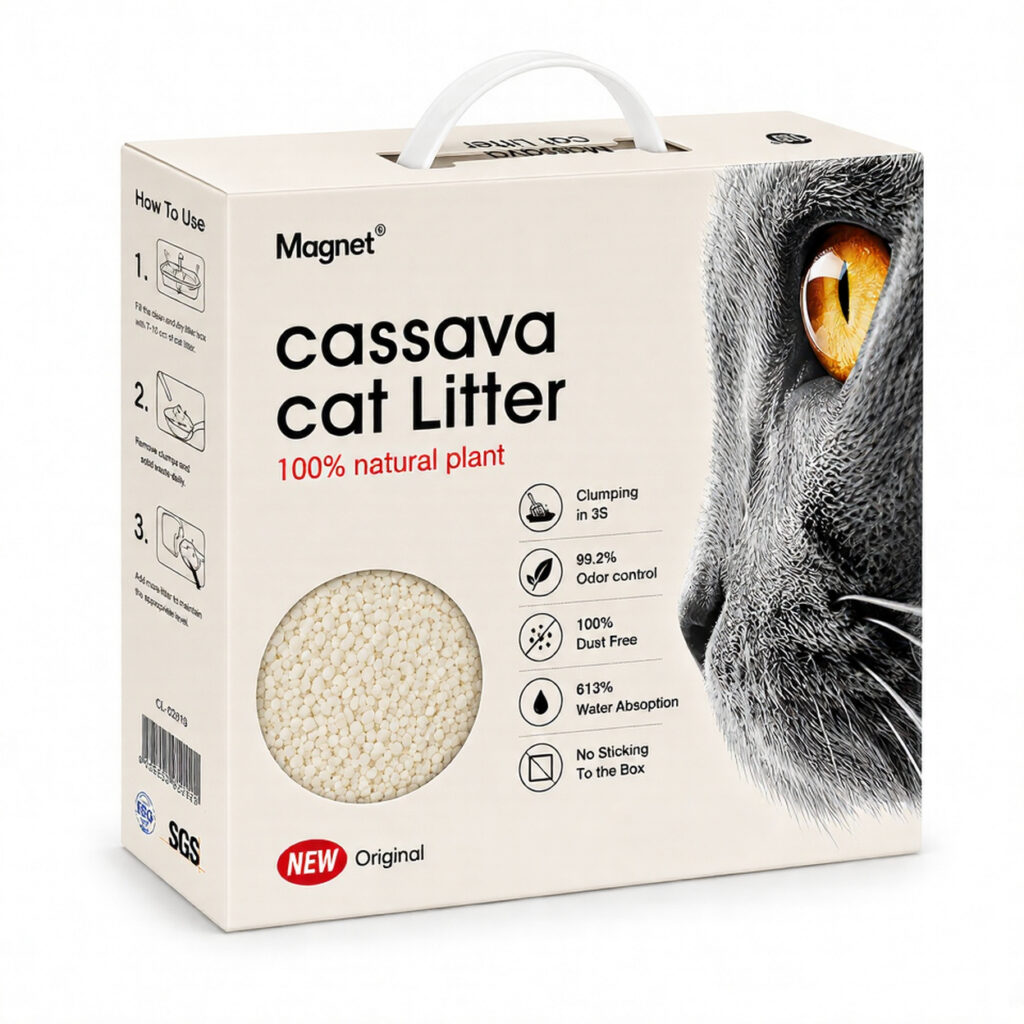








The product can pass its quality checks and still create a difficult first delivery if the retailer cannot identify what has arrived. A bag barcode, a shipping label and a six-bag case do different jobs, and confusing them can turn a routine receipt into manual sorting.
Private label cat litter barcodes should be planned alongside the selling unit and case pack, not squeezed into the artwork after everything else is approved. This is an operational detail with a direct effect on whether stock becomes available for sale smoothly.
Define What Is Being Sold and Ordered
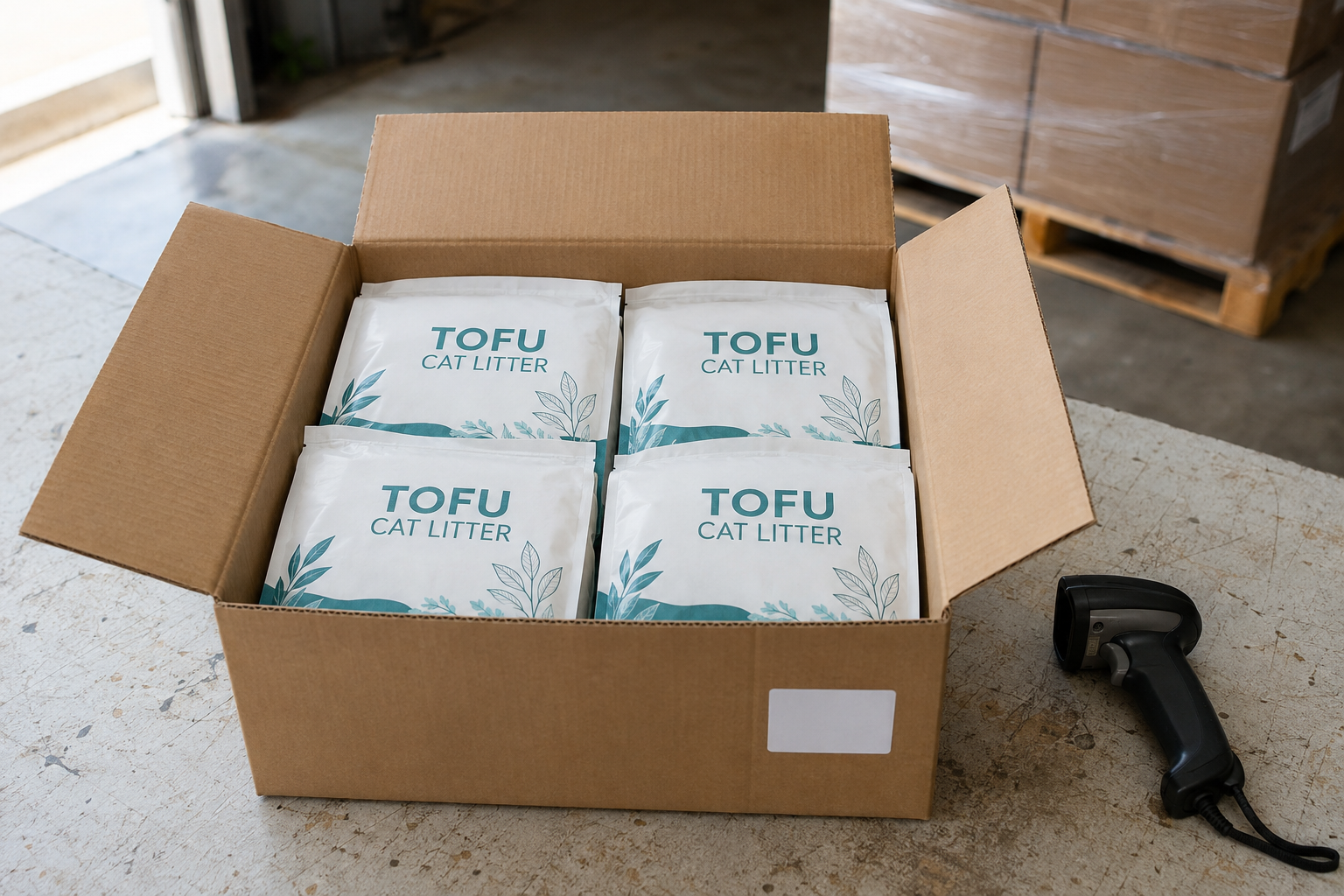
List the consumer unit, any multipack and the shipping case. State how many bags belong in each, whether mixed variants are permitted and how the retailer orders them.
A six-bag case that is only a shipping unit is different from a consumer-facing six-pack sold as one item. The identifier and labeling requirements should follow the actual arrangement and the trading partner’s specification.
Give the same unit hierarchy to the factory, packaging designer, fulfillment provider and retailer. Otherwise, each may build a different interpretation of case quantity into its records.
Assign Identifiers Before Final Artwork
Use your authorized product-identification process and confirm the retailer’s requirements. Do not copy a barcode from another product or assume that a supplier’s existing code identifies your private label SKU.
The GS1 GTIN Management Standard provides rules for identifying trade items and managing product changes. Work through the rules with your GS1 organization where necessary, particularly when creating multipacks or changing case quantities.
Keep the identifier linked to a controlled product record containing the formula variant, declared contents and package level. A spreadsheet of numbers without descriptions is easy to misuse during artwork revisions.
Check the Printed, Filled Package
A barcode can look acceptable on a screen and become difficult to read when printed over a fold, placed near a seam or distorted by a filled pouch. Review the final location with the packaging supplier and retailer requirements in mind.
Test representative printed production samples using an appropriate barcode verification process. A successful scan on one phone is not equivalent to a formal print-quality assessment.
For tofu cat litter retail packs, inspect the bag in its filled shape, not only as flat artwork. Keep required clear areas free of decorative graphics and do not improvise symbol dimensions without the applicable specification.
Make the Case Pack Practical for Stores
Case quantity affects more than transport efficiency. A small store may not want to receive months of one slow variant each time it reorders, while a large distribution center may prioritize handling efficiency.
Compare case dimensions, gross weight, shelf replenishment and the retailer’s ordering pattern. Check whether staff can identify the contents without opening the case and whether inner bags are protected during ordinary handling.
Do not promise a standard case pack across every formula before checking filled dimensions and weight. The same nominal bag size can behave differently with another product.
Keep Batch Identification Separate From Product Identity
A product identifier tells the system what the item is. The batch record helps distinguish a particular production run. Your traceability arrangement should retain both functions rather than relying on one permanent retail code to identify every shipment.
Ask the receiver what information it needs on cartons and pallets. Confirm the required shipping labels, purchase-order references and placement before dispatch. Specific requirements vary by trading partner.
If a shipment includes several batches, make that visible in the packing records. It should not require opening consumer bags to reconstruct which stock belongs to a later complaint.
Review Changes Before Reusing Old Packaging
Changing declared contents or assortment can affect identifiers. For example, GS1’s declared net content rule calls for a new GTIN when the legally required declared net content changes. Review the exact rule for other changes rather than applying a blanket answer.
Before reordering printed bags, confirm that the approved code still matches the product and that old artwork has not been selected accidentally. Keep obsolete versions clearly separated from production files.
Close the Loop With a Receiving Trial
Where practical, send a representative labeled case to the retailer or warehouse for a prelaunch check. Verify the item record, quantity, scan and receiving workflow before a container arrives.
A wholesale cat litter supplier can prepare more accurately when these requirements are available early. Good packaging does not end with an attractive front panel; it also lets the right product move through the supply chain without guesswork.
Confirm Your Retail Packing Requirements
Send Magnet your bag artwork, case quantity and retailer requirements so they can be reviewed before production packaging is approved.
Discuss Retail Order Preparation