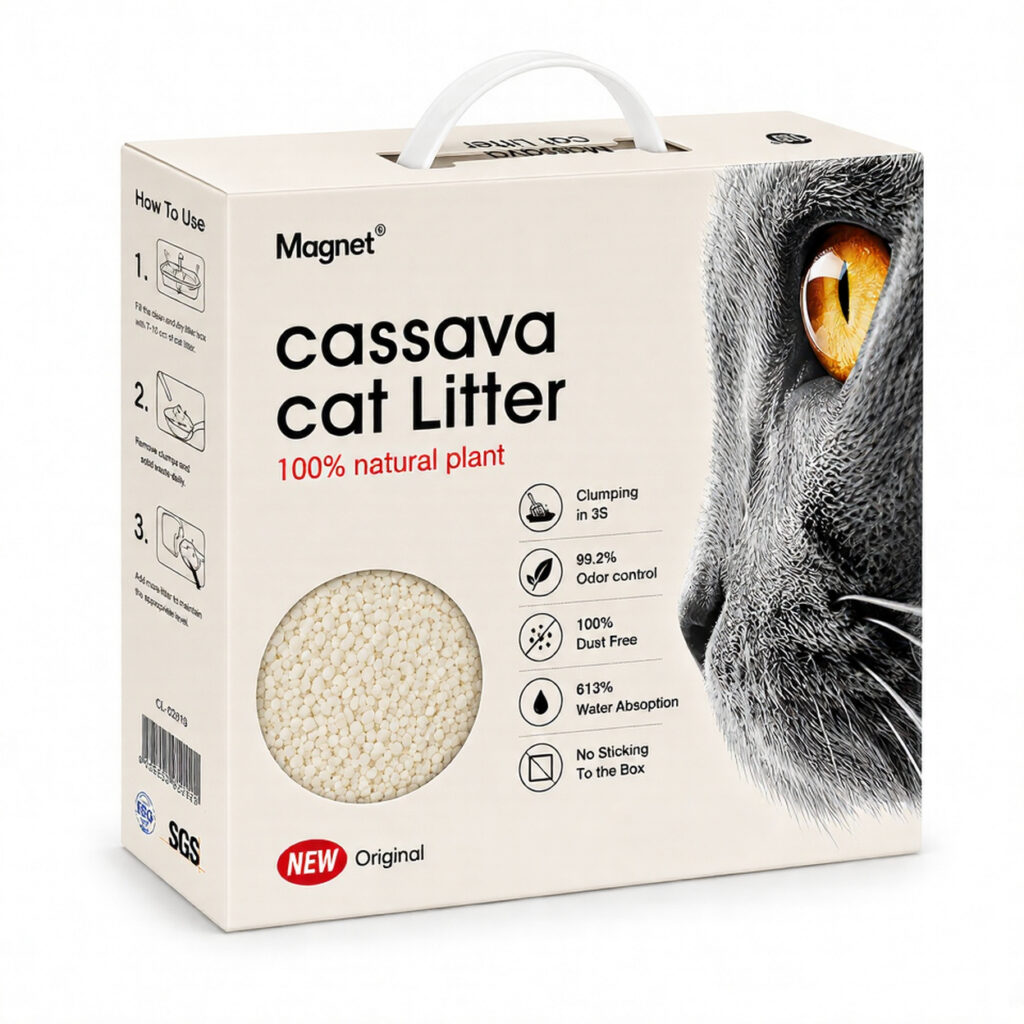
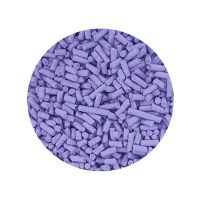
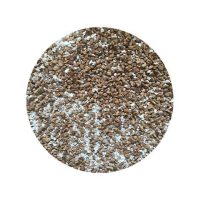
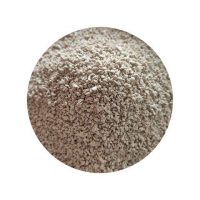
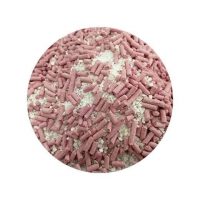
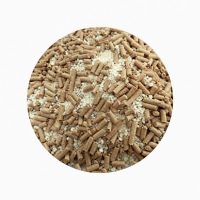

Clumping cat litter is a product category, not a single material. Bentonite clay, tofu fibre, cassava starch, and mixed formulas can all form scoopable clumps, yet they create very different costs and customer experiences.
For a wholesale buyer, the practical question is not which material wins every test. None does. The question is which clumping cat litter type fits the retail tier, local habits, freight route, and complaints the product needs to solve.
Start with the shelf position
Choosing the material before deciding the product position often leads to a confused range. A low-price supermarket SKU and a premium ecommerce product should not be built from the same brief.
Define the role first. Is the product intended to be an affordable everyday litter, a lightweight plant-based alternative, a high-performance natural formula, or a bridge between value and premium? Once that is clear, the material choice becomes easier.
The main commercial clumping types are:
- Bentonite clay litter for familiar performance and value pricing
- Tofu cat litter for lightweight, low-dust, plant-based positioning
- Cassava cat litter for fast clumping and premium plant-based performance
- Mixed cat litter for balancing cost and specific performance needs
A distributor can carry more than one type, but each should have a distinct reason to exist.
Bentonite clumping litter remains the familiar value option
Bentonite is the material many shoppers picture when they hear clumping litter. Fine clay granules absorb liquid and bind into a scoopable mass. Customers understand the texture, and retailers know how to sell it.
Its main advantages are familiarity, strong clumping potential, and an accessible price position. It can work well for high-volume retail, price-sensitive markets, and customers who prefer a sand-like feel.
The trade-offs are weight, dust, tracking, and disposal. Clay is heavier than plant-based litter for the same volume, which affects handling and freight. Fine particles can travel beyond the box, and poor-quality material can create visible airborne dust. Bentonite is also not marketed as biodegradable or flushable.
For wholesale buyers, bentonite quality depends heavily on the mineral source, particle distribution, de-dusting, and any added odor-control components. A low quotation is not useful if the delivered product breaks down into powder or sticks to the bottom of the tray.
Tofu clumping litter brings a lighter retail story
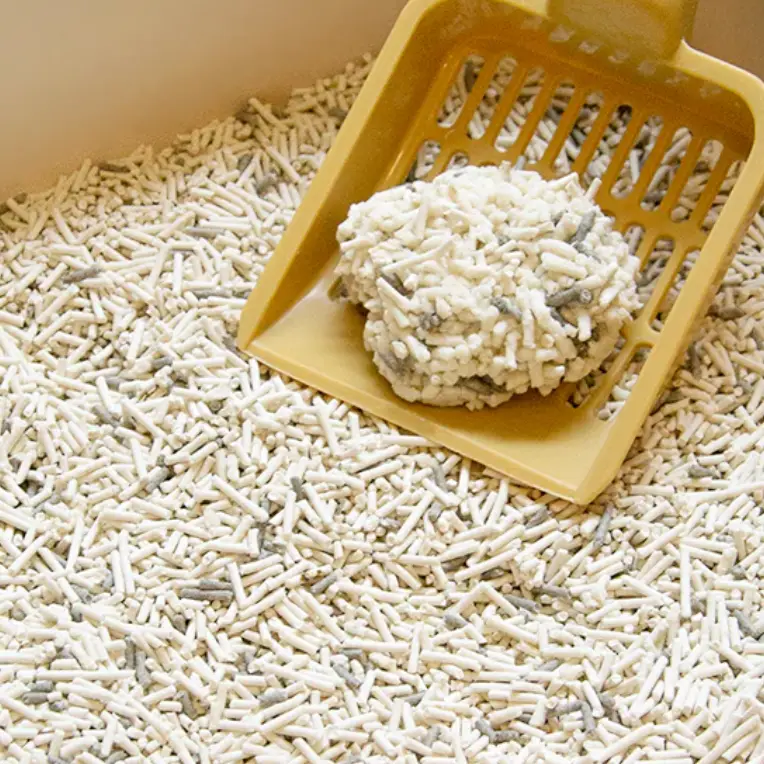
Tofu litter is made from plant fibre combined with starches and a binder, then formed into pellets or crushed granules. It is lighter than clay and can support biodegradable and water-dispersible positioning where local rules allow.
Its strongest commercial advantages are low weight, low dust, and a clearly different appearance. A shopper can see that the product is not conventional clay. For ecommerce, the lower parcel weight can also be helpful.
Tofu litter has its own challenges. Weak formulas may soften, stick, or form clumps that break during scooping. Cylindrical pellets can feel unfamiliar to cats that have always used fine clay. Moisture control during production and storage is important because plant-based material must remain dry and firm.
The format makes a difference. Cylindrical tofu pellets are clean and recognizable, while crushed tofu cat litter offers a finer texture and more surface area.
Cassava clumping litter competes on speed and clean texture
Cassava cat litter uses starch-based material to absorb liquid and form a tight clump. Fine granules can surround moisture quickly, giving the product a fast-clumping, sand-like character.
This makes cassava attractive for premium plant-based lines. It can combine strong clumping with very low dust and a texture that is easier for many cats to accept. It also gives brands a natural-material story without using clay.
The main issue is cost. A pure cassava formula often sits above bentonite and standard tofu in the retail ladder. That does not make it unsuitable; it means the packaging, channel, and customer promise must justify the price.
Buyers should also look closely at composition. Products described as cassava litter may include corn starch or other plant materials. The formula is not automatically a problem, but it should be disclosed accurately so the brand can make honest claims.
Mixed cat litter is a product-development tool
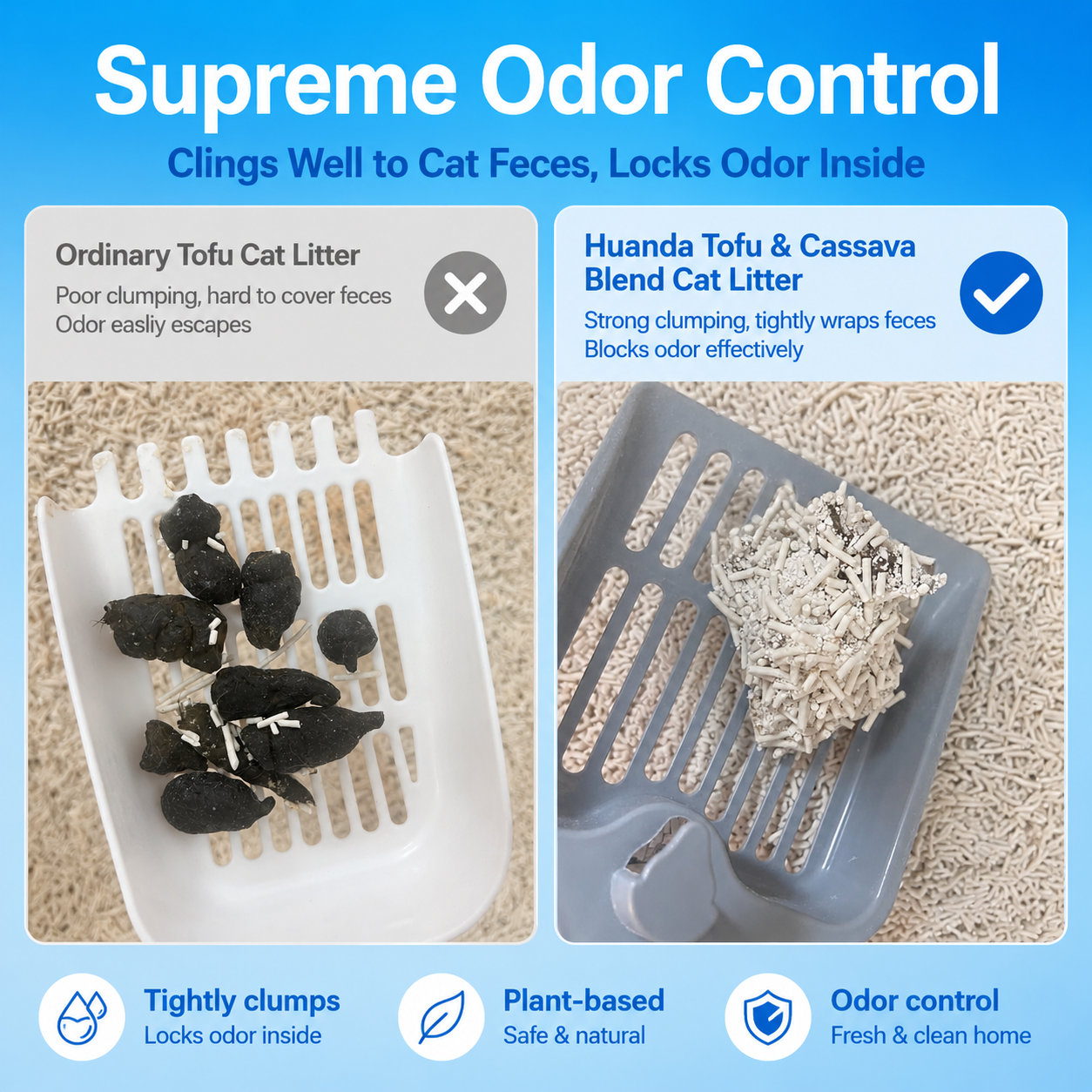
Mixed litter combines two materials to keep a useful strength and correct a weakness. A tofu and cassava blend can improve clumping while retaining a fully plant-based position. A clay and cassava blend can improve dust and odor performance while staying closer to value-tier economics. Walnut shell and cassava can pair natural odor absorption with stronger clumping.
The advantage is flexibility. Blend ratio becomes a way to tune performance and price. The risk is vague communication. If customers cannot tell what the product contains or why the mixture is useful, mixed can sound like a compromise rather than an upgrade.
Use a mixed cat litter formula to solve a specific problem. Do not blend materials simply to create another SKU.
Clump strength needs more than one measurement
Fast clumping and strong clumping are related but not identical. A litter can form a surface crust quickly while remaining soft inside. Another can take longer to set but lift cleanly once formed.
Wholesale sample testing should record:
- Time until the clump can be scooped
- Whether the clump breaks when lifted
- Amount of wet residue left in the tray
- Degree of sticking to the bottom
- Amount of clean litter removed with the clump
- Stability after the litter has been open for several days
Use the same liquid amount, tray depth, waiting time, and scoop. Repeat the test across the sample. A product that performs once but varies from clump to clump is not ready for a repeat retail program.
Dust should be tested after realistic handling
Dust complaints can come from the material itself or from breakage during shipping. Bentonite can contain fine mineral particles. Tofu pellets may generate fines if they are too brittle. Cassava and mixed granules still need proper screening.
Pour each sample from the height a customer would use. Observe airborne dust, then check powder at the bottom of the bag. Handle a sealed sample to simulate transport and repeat the test.
For a low dust cat litter claim, agree on a measurable specification and how it will be checked before shipment. Words such as dust-free should not be used casually when the test method is unclear.
Weight changes the real wholesale cost
Clay often has a lower factory price but a higher weight per litre. Tofu is much lighter, while cassava and mixed formulas sit at their own densities. This changes the number of retail bags, total sellable litres, pallet handling, and ecommerce cost.
Compare materials using the unit customers buy. Calculate landed cost for a 5-litre or 10-litre bag, not only a ton of raw product. Include film, cartons, pallets, freight, customs, warehouse handling, and delivery to the retailer.
A product can be more expensive per ton and still be commercially attractive if each bag is lighter, easier to ship, and sold at a higher margin.
Match the litter type to local disposal expectations
Bentonite is generally disposed of with household waste. Plant-based products may be marketed as biodegradable, and some are described as flushable where plumbing and local wastewater rules permit.
Disposal claims should be reviewed market by market. Water dispersibility does not automatically mean every sewer or septic system can accept used litter. Packaging should give measured instructions and respect local regulations.
For retailers, clear disposal guidance reduces uncertainty. For brands, it prevents a useful product benefit from becoming an exaggerated claim.
Build a range without creating keyword and shelf confusion
A balanced distributor range might contain a value bentonite litter, a lightweight tofu litter, and a premium cassava or tofu-cassava formula. These products serve different buyers and can be explained easily.
Avoid launching several products that differ only slightly in formula but carry nearly identical promises. That creates slow inventory and makes online pages compete for the same search terms.
Give each SKU a primary job:
- Value and familiar texture
- Lightweight plant-based convenience
- Fragrance-free odor control
- Fast premium clumping
- Lower dust at a mid-market price
This same discipline should guide the Blog cluster. A product page converts the shopper, while a supporting article answers the buying question that brings the shopper to it.
Request samples that reflect the target price
Asking a supplier for the best clumping litter without a price target often produces samples that cannot fit the intended shelf. Share the retail range, distributor margin, and package size. The supplier can then recommend a material and formula with a realistic landed cost.
Test no more than a few serious candidates at once. Include one benchmark product already selling in the market. Use the cat litter sample order guide to compare them consistently.
After selecting the material, move into pellet size, scent, packaging, and MOQ. The wholesale cat litter supplier guide provides the broader factory and order checks.
Put the material name in the specification
Clumping cat litter is too broad for a purchase order. Define the base material and any blend ratio, then add granule size, dust, moisture, clump performance, colour, fragrance, net weight, and packaging tolerances.
Keep an approved sample and agree on batch testing before shipment. This protects both buyer and supplier. It also makes product reviews more stable because the customer receives the same experience each time.
The best clumping cat litter type is the one that does a clear job in the range and can be reproduced at the required cost. Material choice matters, but disciplined specification is what turns that material into a dependable wholesale product.
FAQ
What are the main types of clumping cat litter?
The main commercial types are bentonite clay, tofu fibre, cassava starch, and mixed formulas. Each offers a different balance of clump performance, dust, weight, price, disposal, and retail positioning.
Which clumping litter is best for value retail?
Bentonite is commonly used for value and mainstream ranges because customers know the texture and it can offer strong clumping at an accessible price. Buyers must still control dust, tracking, and shipment weight.
Which clumping litter is lightest for shipping?
Tofu cat litter is notably lighter by volume than clay, which can make retail bags easier to handle and change landed economics. Compare the number of sellable litres and bags per shipment rather than price per ton alone.
What is the benefit of mixed cat litter?
A mixed formula uses one material to correct a weakness in another. Examples include tofu with cassava for stronger clumping and clay with cassava for a balance of value, dust reduction, and odor performance.
How should wholesale buyers compare clumping litter samples?
Use the same tray depth, liquid amount, setting time, and scoop. Compare clump strength, residue, sticking, dust, tracking, odor control, clean-litter loss, and consistency across repeated tests.
Article summary: The right clumping litter type depends on the shelf position a buyer needs to fill. Bentonite, tofu, cassava, and mixed formulas each offer a different balance of cost, weight, dust, clumping, and product story.
Compare Clumping Cat Litter Samples
Magnet supplies bentonite, tofu, cassava, and mixed clumping formulas for wholesale and private label buyers. Tell us your market and price target to receive suitable samples.
Request Clumping Litter Samples