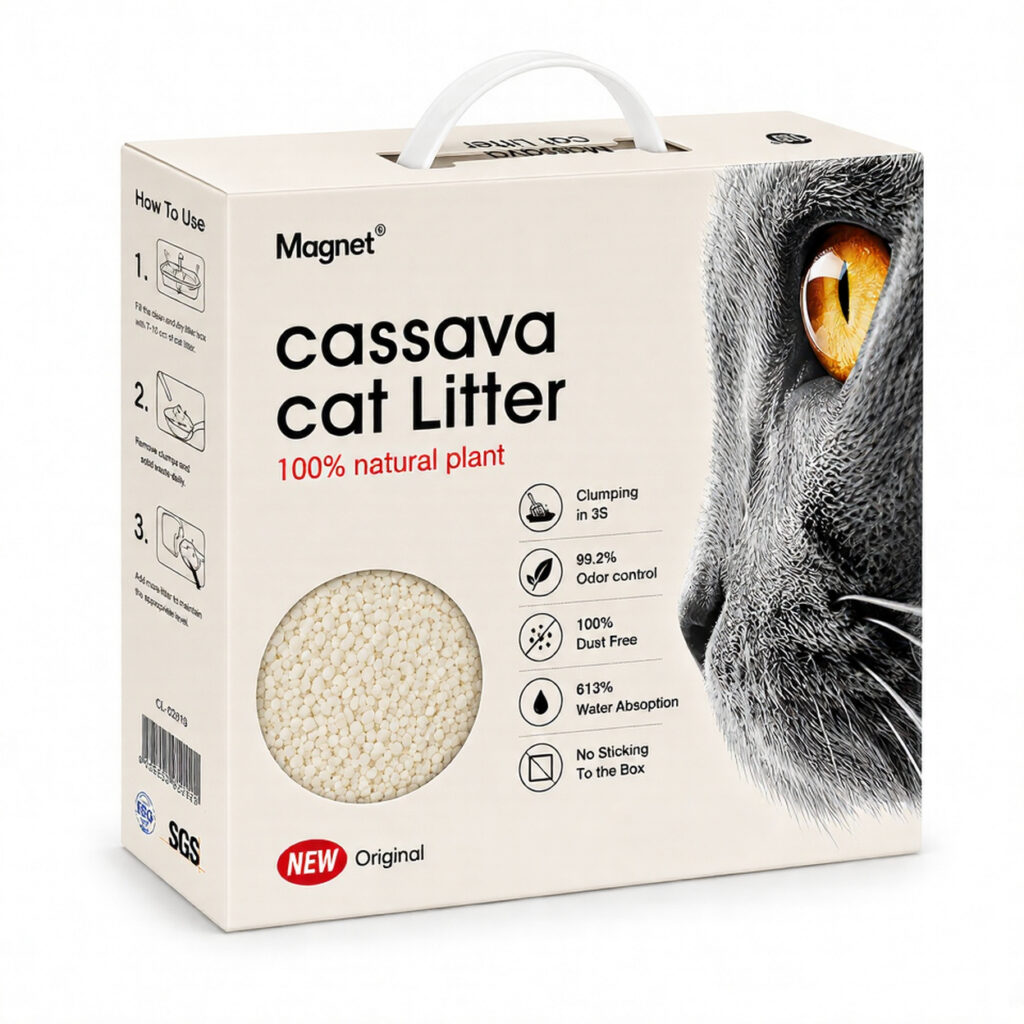
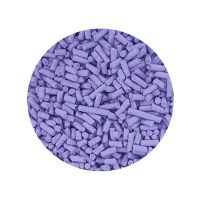
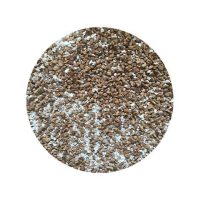
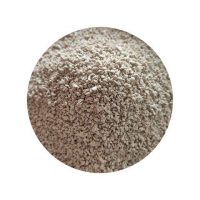
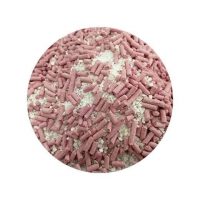
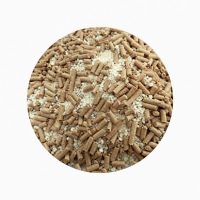

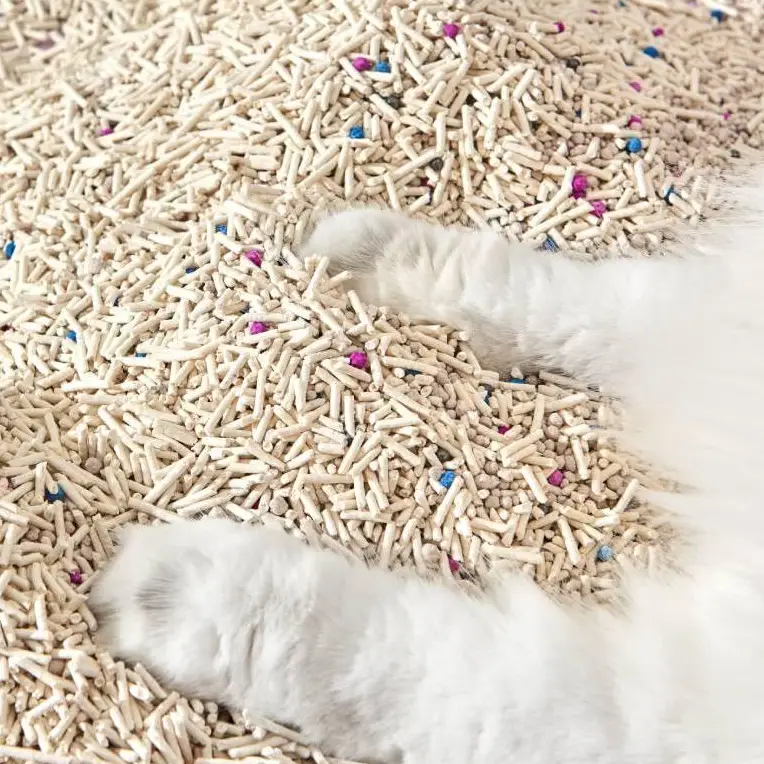
Tofu and cassava cat litter is not simply two popular materials poured into one bag. A useful blend has a specific purpose. Tofu supplies a lightweight, recognizable plant-fibre base. Cassava changes the way the litter absorbs moisture, forms clumps, and releases from the tray.
For brands that like the commercial story of tofu litter but want a stronger performance position, the blend can make sense. The result still needs proper testing. Ratio, particle size, mixing consistency, packaging, and landed cost determine whether the product feels like a genuine upgrade or an unclear compromise.
Why combine tofu and cassava
Single-material tofu litter has several retail advantages. It is light, low in dust, plant-based, and available in recognizable pellets. Depending on the formula, however, buyers may find that clumps are slower to harden, break during scooping, or stick to the tray.
Cassava litter is based on fine starch-rich granules that make quick contact with moisture. In a blend, those smaller particles can fill spaces between tofu pellets and help bind the wet area into a more compact clump.
The aim is not to hide poor tofu litter. It is to design a product with a deliberate balance:
- Lightweight plant-based volume from tofu
- Faster moisture contact from cassava granules
- Stronger, cleaner clumps
- Less wet residue and sticking
- A texture that remains visibly different from clay
When the ratio is right, the blend has a clear reason to exist on the shelf.
The blend ratio defines the product
The words tofu and cassava do not tell the buyer how the formula will behave. A litter with a small amount of cassava may still act mostly like tofu pellets. A higher cassava share can create denser clumps and a finer texture, but it may also change cost, tracking, and package weight.
Magnet lists a 1:1 tofu and cassava blend as a standard starting point. Custom ratios can be developed around a target price or performance brief. Whatever ratio is selected, it should appear in the product specification and remain consistent across production.
Do not approve a sample described only as mixed litter. Ask for the material percentages, granule sizes, and acceptable production tolerance. If the ratio drifts, the customer experience will drift with it.
A mixed texture can improve moisture contact
Tofu pellets create visible gaps in the litter bed. Fine cassava granules settle between them. When liquid reaches the tray, the smaller particles can surround the wet area quickly while the tofu contributes absorbent structure.
This particle balance is one reason a blend may clump more evenly than a large pellet formula alone. It also changes the way the litter pours and settles in the bag.
The mix should look uniform. If heavy fine granules separate to the bottom during transport, the first tray and the last tray poured from the bag will perform differently. Sample testing should include product from the top, middle, and bottom of the pack.
Test clumping at several waiting times
Fast clumping is useful, but customers do not all scoop at the same moment. Test the blend after a short set time and again after a longer period. This shows whether the clump gains strength, becomes sticky, or starts to crumble as moisture moves through it.
Use a metal scoop and lift the clump fully. Check the tray beneath it. A well-balanced tofu cassava cat litter should remove cleanly without leaving a wide wet film or many small pieces.
Measure clean-litter loss as well. A very large clump can look impressive while wasting product around the edges. Retail value depends on how efficiently dirty litter can be removed.
Check whether the blend actually reduces sticking
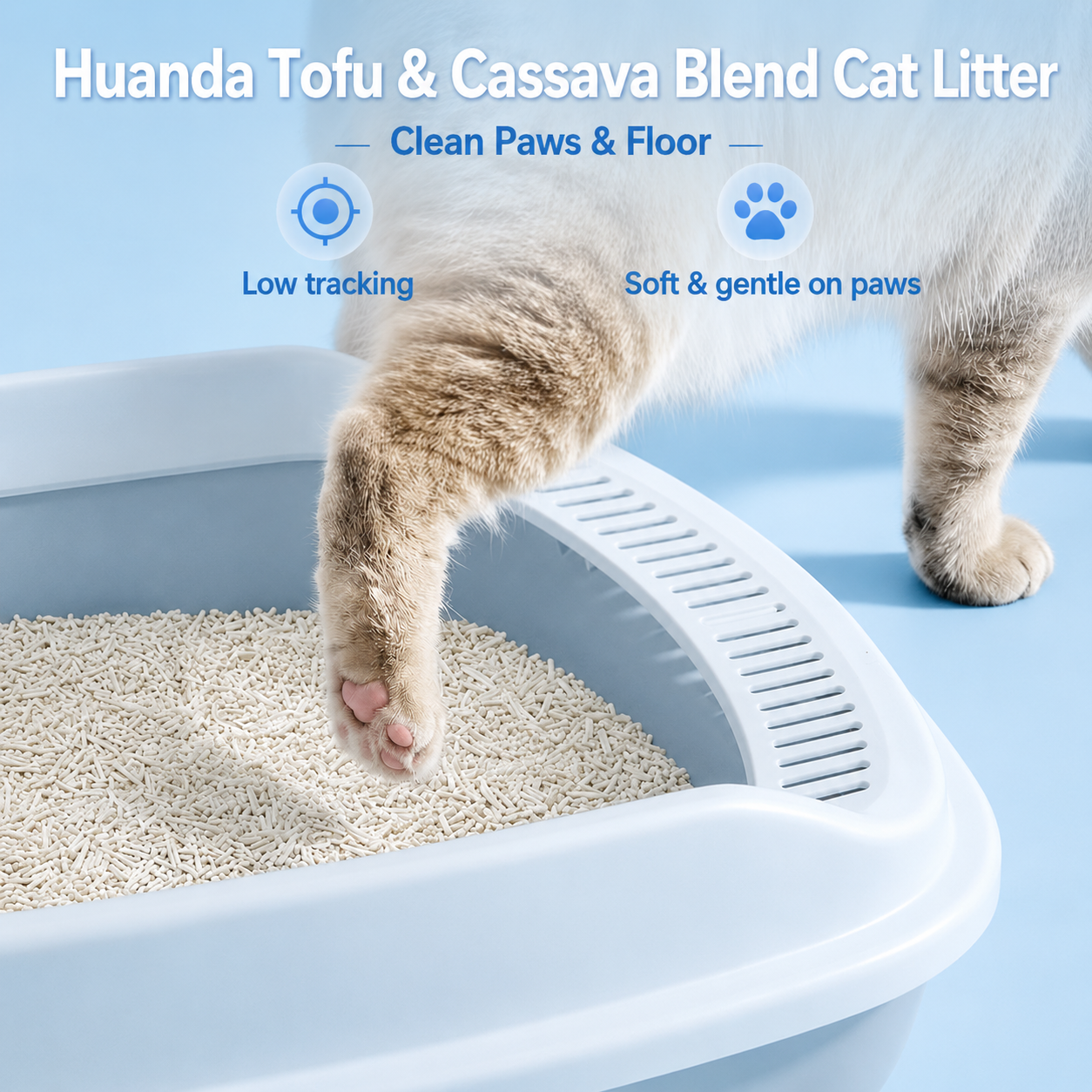
Tray sticking is a common source of frustration. It occurs when moisture reaches the bottom before the litter forms a stable clump, or when a softened formula adheres to the surface.
Test the blend at the normal litter depth recommended on the package. Then repeat at a slightly shallower depth, because customers do not always follow instructions perfectly. Use both plastic and stainless-steel trays if those are common in the target market.
A product should not be marketed as non-sticking after one carefully staged demonstration. The claim should hold across repeated tests and practical litter depths.
Dust can come from either part of the formula
Tofu pellets can create powder if they break. Cassava particles are naturally finer and require effective screening. Mixing the two does not automatically produce a low-dust result.
Check airborne dust during pouring and inspect the powder that settles at the bottom of the bag. Handle the sealed sample to simulate freight, then test again. If separation or breakage appears after handling, packaging density or granule strength may need adjustment.
The final dust specification should apply to the finished blend, not to each raw component before mixing.
Compare tracking with the exact particle distribution
A tofu and cassava blend contains more than one shape and size. Larger tofu pellets may stay near the box, while fine cassava particles can travel farther on paws. The actual result depends on the ratio and particle distribution.
Test the product in a real litter box area with a clean floor or measured mat. Compare how much material leaves the box and whether it is easy to sweep. If tracking is higher than expected, the supplier may be able to adjust the fine fraction without losing the desired clump strength.
This is a better approach than assuming the word tofu guarantees low tracking.
Keep the product story easy to understand
Mixed formulas can be technically useful but difficult to explain. Customers should not need to study a long ingredient panel to understand the benefit.
A clear position might be stronger clumping plant-based litter or lightweight litter with a cleaner scoop. The front of the bag can name both materials, while the supporting copy explains that cassava helps improve clump formation and tray release.
Avoid implying that every blend is automatically superior to pure tofu or pure cassava. Some customers prefer a simple single-material story. The blended product earns its place by solving a performance need at a suitable price.
Decide whether the blend replaces or extends the tofu range
For a small brand, the tofu and cassava formula may become the main plant-based SKU. It can offer a broader balance of texture, clumping, and weight than carrying several specialist products.
For an established distributor, the blend may sit above standard tofu as a performance upgrade. In that case, packaging and pricing should make the difference visible. If both products make the same claims and look almost identical, shoppers may choose only by price.
Another option is to use the blend as a transition product between clay and pure plant-based litter. The fine cassava fraction gives a more sand-like experience, while the tofu pellets keep the plant-fibre identity clear.
Compare price at retail-bag level
Cassava can raise the material cost of a tofu-based formula. Whether the increase is commercially sensible depends on performance, density, bag size, and retail positioning.
Compare the blend with pure tofu using:
- Cost per filled bag
- Litres and kilograms per bag
- Number of bags per carton and container
- Clump waste per use
- Expected retail price
- Distributor and retailer margin
- Customer reason to pay more
If the blend reduces clean-litter waste and supports a premium, the cost difference may be justified. If customers cannot feel the improvement, it will be difficult to defend.
Ask for samples at more than one ratio
A factory may have a standard blend, but your market may need a different balance. Ask for two or three ratios around the likely target rather than evaluating only the most expensive formula.
Keep the particle sizes and scent consistent so ratio remains the main variable. Blind-code the samples if several team members will test them. This reduces the tendency to choose the sample described as premium before seeing the result.
Use the same scorecard for clump speed, hardness, sticking, dust, tracking, odor control, texture, and cost. The cat litter sample order guide provides a practical testing structure.
Confirm mixing consistency in production
A small laboratory sample can be hand-mixed evenly. Commercial production needs equipment and controls that hold the ratio across a full batch.
Ask how each base material is prepared, when the materials are combined, and how the mixture is homogenized. Confirm how batch samples are taken. A single scoop from the top of a finished bag does not prove that the entire run is uniform.
The purchase specification should include ratio tolerance, particle range, dust, moisture, clump performance, bag weight, and packaging. Keep an approved reference sample and request pre-shipment checks.
Review packaging after the blend has settled
Mixed particles can settle during vibration, changing the shape of the retail bag. Fill the intended packaging, stack it, and handle it before approving dimensions and artwork.
If the pack includes a clear window, check how the mixture looks after transport. Separation may be more visible through transparent film. The bag should also protect tofu pellets from crushing and prevent fine cassava granules from escaping through weak seals.
For private label programs, discuss packaging MOQ separately from formula MOQ. A custom ratio may be easy to make, while custom printed film can still determine the real minimum order.
Place the blend inside a wider sourcing plan
Tofu and cassava mixed litter should connect naturally to the rest of the range. Link customers who want regular pellets to the main tofu cat litter line. Show pure cassava to buyers who prioritize the fastest plant-based clumping. Use the blend for shoppers who want a balance.
For wholesale sourcing, compare the supplier’s mixed-formula controls alongside packaging, MOQ, lead time, and repeat-order capacity. The wholesale cat litter supplier guide covers those broader checks.
Magnet’s mixed cat litter range includes tofu and cassava as a standard combination with custom ratio development available. The right starting sample should be chosen from your target price and the weakness you want the formula to correct.
FAQ
What is tofu and cassava cat litter?
It is a mixed plant-based litter that combines tofu fibre granules with cassava-based granules. The blend is designed to keep tofu’s lightweight character while using cassava to improve moisture contact and clumping.
What is a common tofu and cassava blend ratio?
Magnet lists a 1:1 ratio as a standard formula. Other ratios can be developed to change performance, texture, density, and target cost.
Does tofu cassava litter clump faster than pure tofu litter?
The fine cassava component can surround moisture quickly and help create a compact clump. Actual performance depends on ratio, particle size, moisture, production consistency, and the tofu base formula.
Is tofu and cassava mixed litter plant-based?
It can be fully plant-based when both components and all additives are plant-derived. Buyers should confirm the complete ingredient list and avoid making claims based only on the two main materials.
Can a private label buyer customize the blend ratio?
Yes, manufacturers with in-house mixing can develop custom ratios. Buyers should request samples at several ratios and include the approved percentage and tolerance in the production specification.
Article summary: A tofu and cassava blend is designed to retain tofu litter’s lightweight plant-based appeal while improving clumping and reducing sticking. Buyers should test the actual ratio, particle balance, dust, tracking, and consistency.
Develop a Tofu and Cassava Litter Blend
Magnet can prepare standard or custom tofu and cassava mixed cat litter samples for wholesale and private label projects. Share your target cost and performance priorities.
Request Blend Samples