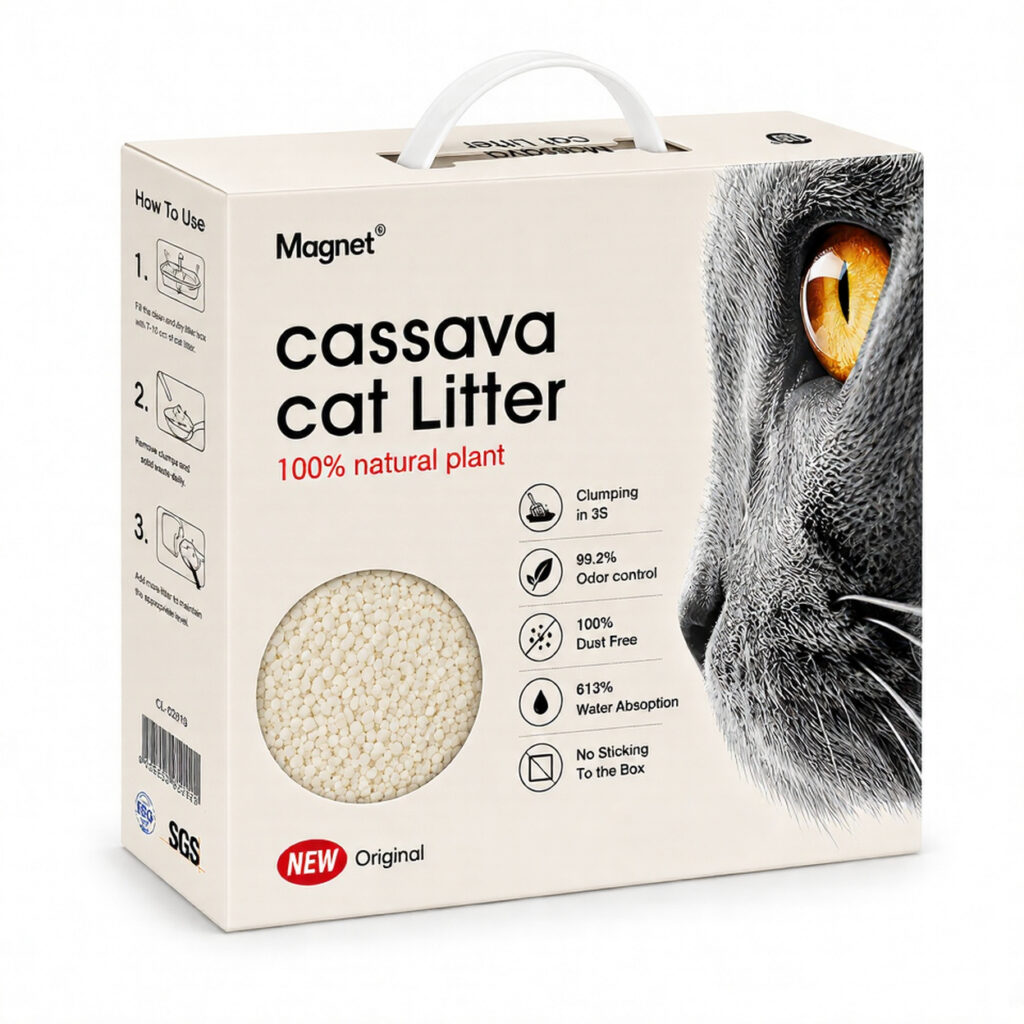
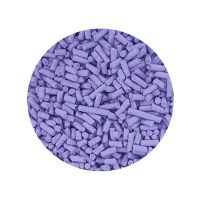
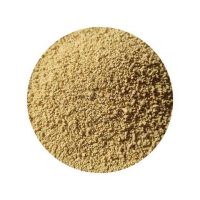
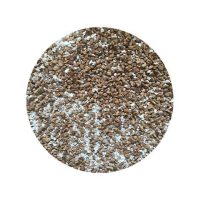
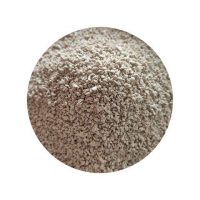
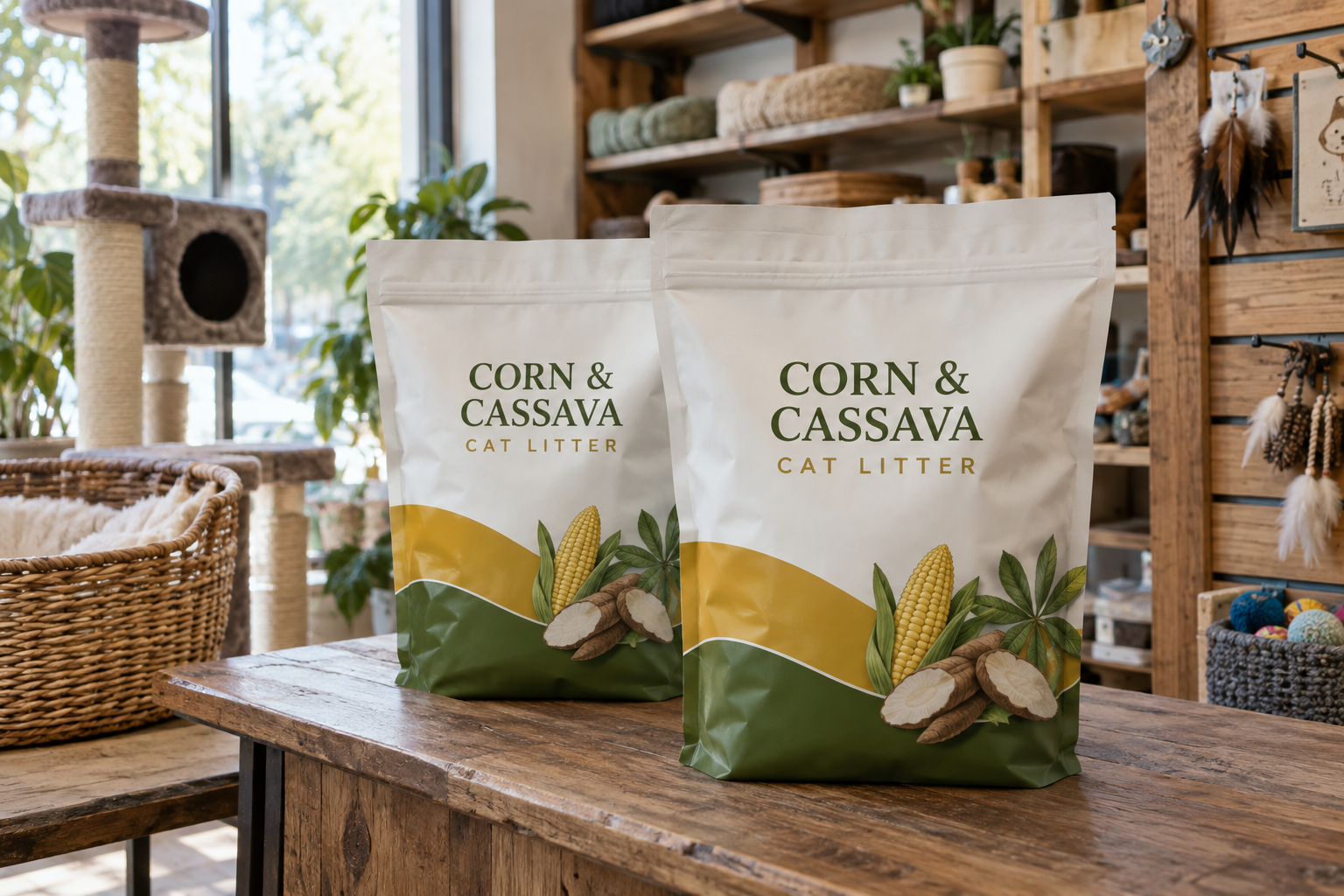
A product sold as cassava cat litter may contain corn-derived material as well. That does not automatically make the description wrong, but it does mean a private label buyer needs to look beyond the largest word on the bag.
Corn and cassava cat litter is worth considering as a specific formulation category, not as a promise that any two plant ingredients will produce the same result. The composition, manufacturing approach and particle format all belong in the enquiry before a buyer compares prices.
Clarify What the Supplier Means by a Blend
There is an important distinction between combining ingredients during production and mixing two finished litter products afterward. A granule made from corn and cassava starch is not the same product as a bag containing separate corn and cassava particles.
Ask which description applies to the proposed sample. Also ask which ingredient fractions are used: starch, flour, fiber and other plant-derived materials should not be treated as interchangeable in the specification.
Magnet’s published fine granule cassava cat litter specification lists a formulation of 60% corn starch and 40% cassava starch. That is a supplier-published composition for that product, not a universal ratio for cassava litter or an independent test result. Confirm the current order-specific specification before using the percentages on your packaging.
Request the Complete Composition
A headline ratio is useful only when you understand what it describes. Is it a proportion of the whole finished formulation, the principal plant ingredients or another stated basis? Are additional ingredients present?
Request enough information to support your product description and market review. If detailed manufacturing information is confidential, agree how necessary disclosures will be handled rather than assuming that an incomplete list means nothing else is included.
Ask specifically about intentionally added fragrance, color, mineral ingredients and any other components relevant to your brand brief. Avoid claiming pure cassava when the approved formula includes corn. Equally, do not call a product filler-free without agreeing what that statement means and whether it can be supported.
Choose the Particle Format for the Customer
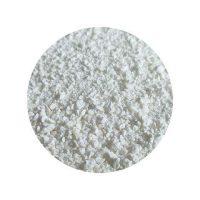
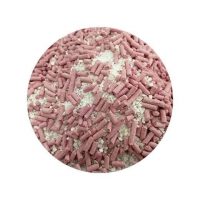
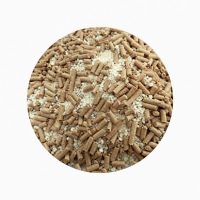
The formulation name does not tell you whether the product will feel like fine granules, coarse particles or pellets. Request photographs and production-format samples of the actual option being quoted.
Think about the customer’s current litter, scoop and tray. A new texture may require a different explanation at retail, while a similar-looking product may need a clearer composition story to distinguish it from an existing SKU.
If automatic-box use is part of the brief, list the relevant models and check their current requirements. Do not extend a general clumping description into compatibility with every machine. That question remains separate even when the formula is entirely plant-derived.
Decide What the New SKU Adds
A corn and cassava product should have an identifiable role alongside your existing tofu cat litter range. That role might be a different texture, a distinct ingredient preference or a commercially justified price tier.
It should not simply be a more expensive bag supported by a longer ingredient story. Ask how a store employee would explain the choice in one sentence without relying on unverified performance claims.
Do not predict demand from the material name alone. Start with the customers and channel you already understand, then decide whether the product deserves a limited launch or a place in the main assortment.
Compare Quotes on the Same Selling Unit
Provide the intended net contents, packaging format, case quantity and delivery basis. If one quote uses liters and another kilograms, request the supporting measurements before treating the quantities as equivalent.
Ask whether quoted dimensions describe an empty bag, a filled bag or an outer carton. Those differences matter to shelf planning and freight. The same formula in different packaging can produce a different cost per saleable unit.
Separate formula minimums from printed-packaging minimums. A supplier may be able to provide a standard product while needing a larger commitment for your artwork. Confirm that distinction before setting a launch budget.
Keep the Claims About the Finished Product
Plant origin does not automatically establish a disposal route, a health benefit or a particular cleaning result. Review proposed claims against the whole formula and package, not one ingredient in isolation.
For an initial enquiry, a precise product description is more useful than asking for the most eco-friendly or best-performing formula. State your composition preferences, required documentation and intended channel, then ask what the supplier can substantiate.
The strongest private label brief connects an accurate ingredient story with a practical retail offer. Once those points are clear, the sample and quotation discussions can focus on the product you actually intend to sell.
Discuss a Corn and Cassava Litter Enquiry
Share your market, particle preference and intended selling quantity with Magnet. Request the current formula specification and matching packaging options.
Enquire About Cassava Cat Litter