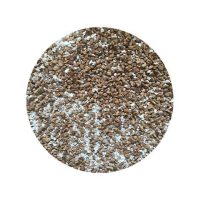
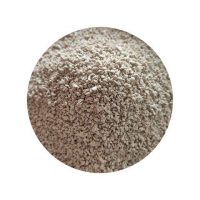
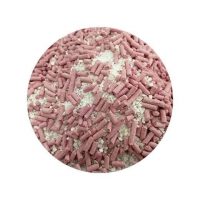
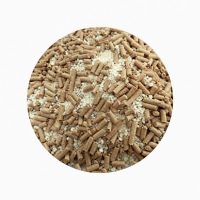

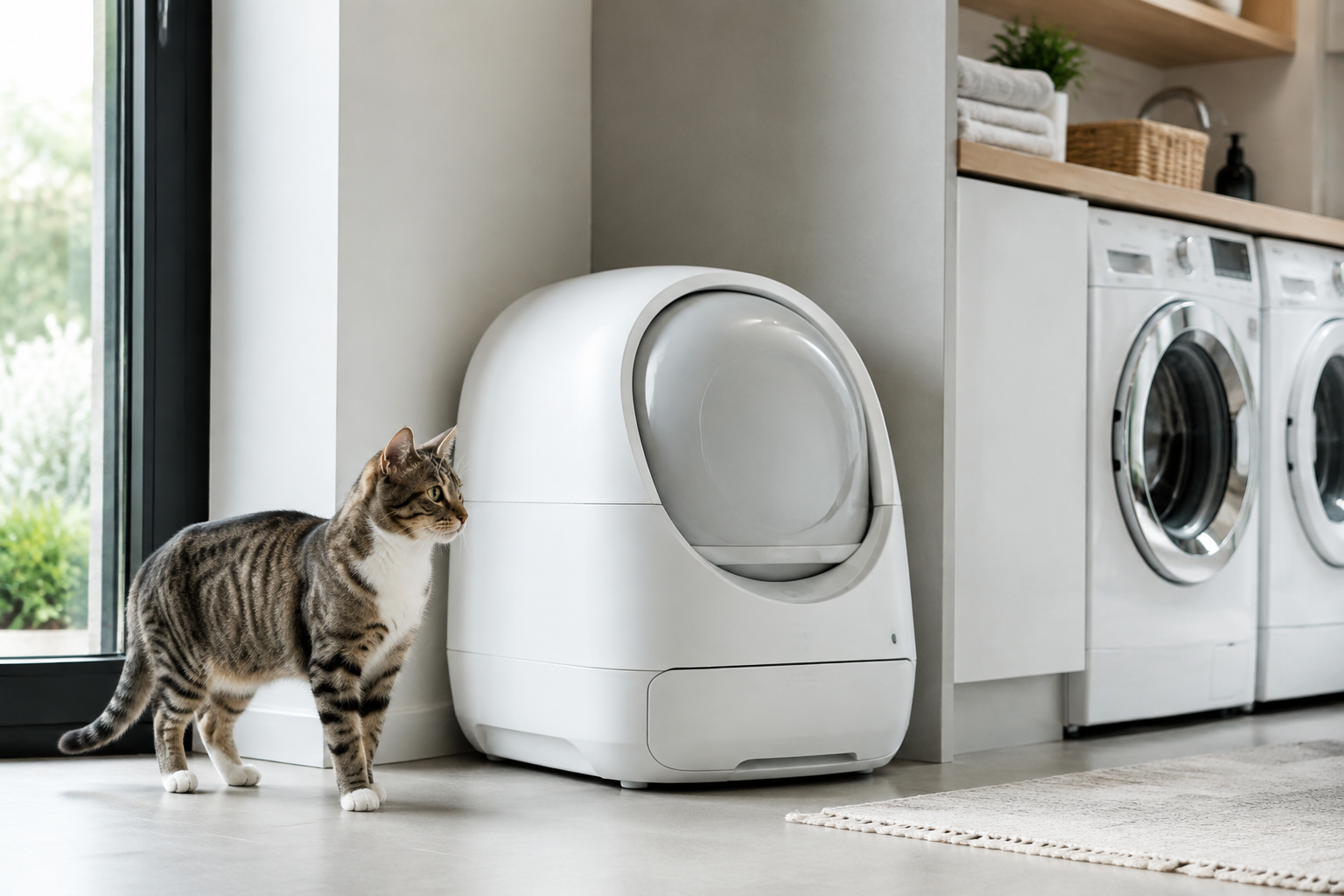
Automatic litter boxes have changed what a good cat litter needs to do. In a traditional tray, an owner can work around a soft clump or an awkward pellet with a different scoop. In a rotating or sifting machine, the litter has to pass through a fixed screen, form a stable clump within the programmed delay, and fall back into the bed without jamming the mechanism.
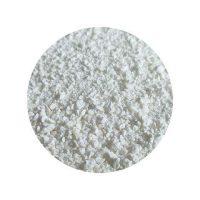
That is why crushed tofu cat litter attracts attention from automatic-box owners and private label buyers. It keeps the lightweight, plant-fiber character of tofu litter but replaces long cylindrical pellets with shorter, irregular particles. The format can improve screening and reduce bridging across narrow openings. It is not automatically compatible with every machine, however. Compatibility belongs to the complete formula and the named device, not to the word “tofu” alone.
The Short Answer
Crushed tofu cat litter can be a strong option for automatic litter boxes when four conditions are met:
- The particle-size range passes through the machine screen without excessive loss.
- Wet clumps become firm before the cleaning cycle starts.
- Clumps do not smear across the drum or stick to the liner.
- The clean litter is heavy enough for the machine’s sensors and sifting design.
Litter-Robot, for example, says its machines work with almost any clumping or scoopable litter, while excluding strictly absorbent, non-clumping, loose-clumping, newspaper, and wood-pellet products. That guidance illustrates why buyers must check the instructions for the exact machine rather than assuming that every plant litter will work. See the current Litter-Robot compatibility guidance before making a device-specific claim.
Why Standard Tofu Pellets Can Cause Problems
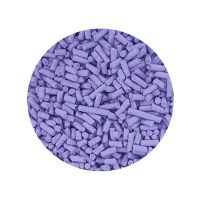
Traditional tofu litter is commonly extruded into long, narrow pellets. Those pellets can be comfortable to handle and relatively low tracking, but their length may work against a fine screen. A pellet can lie across an opening instead of dropping through it. Enough bridging reduces the amount of clean litter returned to the bed and may leave usable material in the waste drawer.
Long pellets can also produce larger voids inside a clump. When the machine rotates, a loosely connected cluster may break into damp fragments. Those fragments return to the clean bed, gradually reducing odor control and making the liner dirty.
Crushing or shortening the pellets addresses the geometry. It does not correct a weak binder, excessive moisture, or slow setting time. A useful automatic-box formula needs both the right particle shape and the right wet performance.
Six Specifications That Determine Compatibility
Particle-size distribution
A supplier should provide a range, not only one nominal size. If the specification says 1.5 mm, ask whether that refers to diameter, screen size, or an average. Also ask how much material falls below and above the accepted range. Excess fines can increase dust; oversized pieces can remain on the screen.
Clumping time
The machine cycle delay matters. A clump that performs well after thirty minutes may smear when a box begins cycling after seven minutes. Test the formula at every delay offered by the target machine, especially the shortest setting that consumers are likely to choose.
Clump strength
The clump must survive lifting, rotation, and the drop into the waste drawer. Test breakage after the actual machine cycle rather than relying only on a hand-scoop test. Record how much wet material returns to the clean bed.
Sticking and liner residue
Fast surface binding is useful only if liquid does not reach the liner first. Use a consistent litter depth and repeat the test in common urination zones near the edge of the globe. Photograph residue after several cycles, not just after one clean run.
Bulk density and sensor response
Some machines measure weight to detect a cat or estimate the litter level. Very light material can behave differently from clay. Do not claim universal sensor compatibility without testing the named model with its current firmware and fill limits.
Dust after mechanical movement
Automatic boxes move litter repeatedly. Even a clean first pour can become dusty as particles rub against one another. Run repeated cycles, then compare visible dust and fines with the unused control sample.
Crushed Tofu Compared With Other Formats
Long tofu pellets usually provide lower tracking but may screen poorly in machines with narrow openings.
Crushed tofu litter generally screens more easily and offers a softer, more familiar texture, although finer particles may track farther.
Tofu and cassava blends can improve binding and flow, depending on the blend ratio and particle profile.
Tofu and bentonite blends may produce harder clumps and greater density, but they are no longer clay-free and should not be marketed as pure tofu litter.
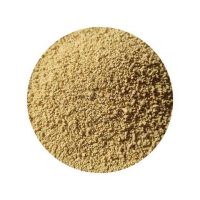
Fine bentonite clay remains the familiar automatic-box benchmark, but it is heavier and may create more mineral dust if poorly processed.
The best format is the one that meets the intended device, retail promise, and target price. A retailer serving automatic-box users may need a different formula from a store selling low-tracking pellets for open trays.
A Practical Compatibility Test
Use the exact automatic box named in the product brief. Fill it to the maker’s line by volume and confirm that the weight remains within instructions. Condition the sample in the same room for at least a day so temperature and humidity are reasonably stable.
Run dry cycles first. Measure how much clean litter enters the waste drawer and check whether particles bridge across the screen. Next, apply a fixed volume of test liquid in three locations: the center, near the wall, and close to a seam or liner curve. Run cycles at short, medium, and long delays.
After every cycle, record:
- Clean litter lost to the waste drawer
- Wet fragments returned to the bed
- Residue on the liner or rake
- Clump breakage during the drop
- Dust visible around the machine
- Noise or mechanical resistance
- Litter level and sensor warnings
Repeat enough cycles to expose abrasion. A sample that passes twice may behave differently after the material has circulated for a week.
Common Reasons Crushed Tofu Litter Fails
The most common mistake is making the particles very fine to improve screening, then discovering that tracking and dust increase. Another is strengthening the binder until wet litter adheres to the machine liner. A third is using a shallow bed, which lets liquid reach the bottom before the formula can surround it.
Moisture during storage also changes performance. Tofu litter is plant based and hygroscopic. A poorly sealed bag can absorb humidity before use, reducing its remaining absorption capacity and weakening the structure.
Finally, some sellers write “works with all automatic litter boxes” after testing only one model. That claim is difficult to support because screen openings, cycle motion, fill depth, sensors, and delay settings differ. Name the tested devices and conditions instead.
What Wholesale Buyers Should Put in the Product Brief
A useful inquiry tells the factory more than “automatic tofu litter.” Include:
- Target automatic litter-box brand and model
- Accepted particle-size range
- Required clump setting time
- Maximum acceptable dust or fines level
- Scented or unscented positioning
- Pure tofu or permitted blend materials
- Retail bag size and target landed cost
- Destination market and labeling language
- Expected order volume and launch date
Ask for pre-production and retained production samples. The approved formula, size distribution, moisture range, bag construction, and test method should appear in the written specification.
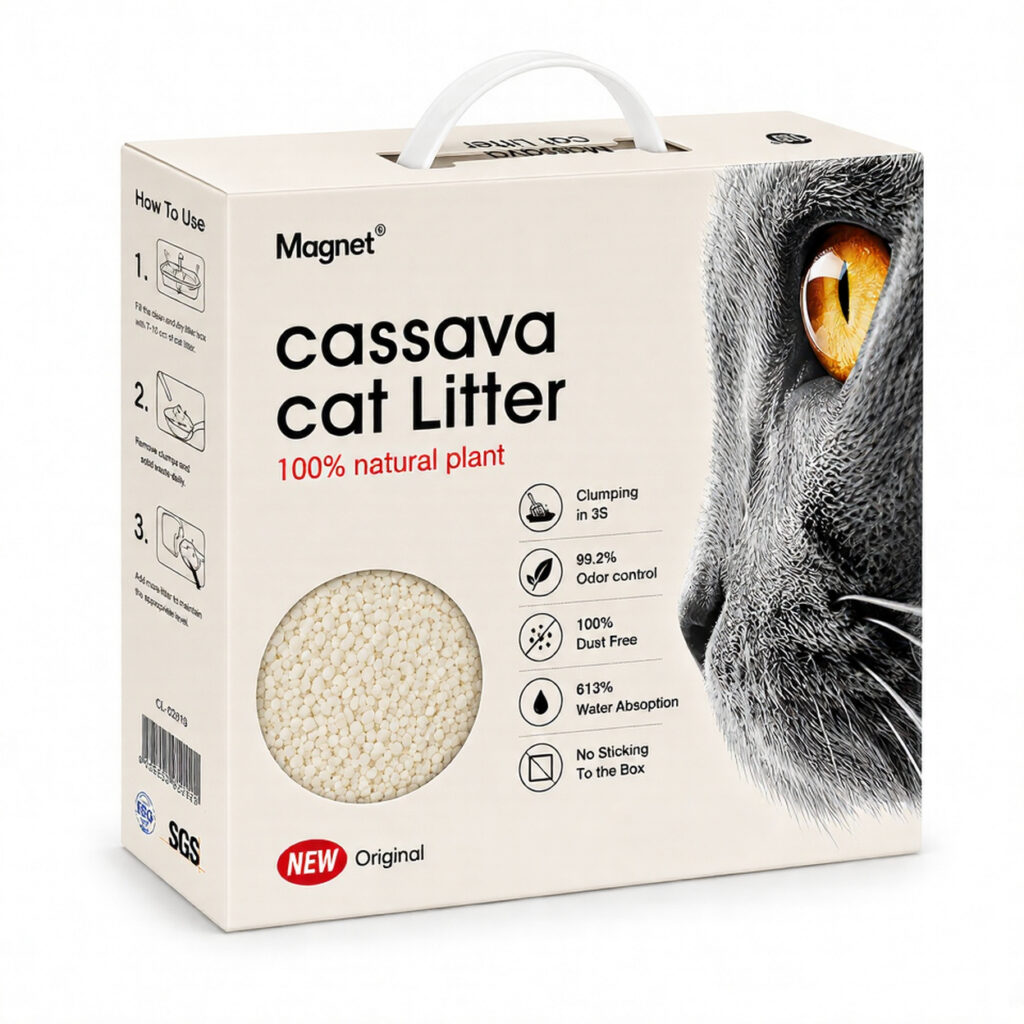
Magnet offers crushed tofu cat litter for buyers who need a shorter plant-fiber format. Buyers comparing additional formats can review the complete tofu cat litter manufacturer range and request device-specific sample testing before production.
How Retailers Should Describe Compatibility
Use precise language such as “developed for compatible rotating and sifting boxes” or “tested with the following models.” Avoid absolute wording unless there is evidence covering every device sold in the market.
The product page should state whether the litter is pure tofu or a blend, give the particle range, explain the recommended cycle delay, and remind owners to follow the machine manual. This reduces returns and creates a more useful listing than a generic automatic-compatible badge.
FAQ
Is crushed tofu litter better than pellets for automatic boxes?
It often passes through screens more easily, but performance depends on the exact particle range, clump strength, density, and machine. Long pellets may still be preferable in an open tray where low tracking is the priority.
Can crushed tofu litter be used in Litter-Robot machines?
Compatible clumping formulas may work, but users should follow the current Litter-Robot instructions and test the specific product. Loose-clumping or oversized material can cause poor sifting and dirty returns.
What particle size is best for an automatic litter box?
There is no universal size. Measure the target machine’s screen and test the full particle distribution. Nominal size alone does not reveal oversized pieces or fines.
Does crushed tofu litter track more than tofu pellets?
It can. Shorter and finer particles are more likely to cling to paws, although box design, mat size, particle weight, and cat behavior also affect tracking.
What should private label buyers test first?
Start with dry screening, clump setting time, breakage, liner sticking, dust after repeated cycles, clean-litter loss, and sensor behavior in the exact target machine.
Article summary: Crushed tofu litter can work well in compatible automatic boxes because the shorter particles pass through screens more easily than long pellets. Buyers still need to test particle size, clump strength, weight, dust, sticking, and the exact machine model.
Develop Crushed Tofu Litter for Automatic Boxes
Magnet can adjust tofu particle size, clumping performance, fragrance, and packaging for wholesale and private label projects.
Request Crushed Tofu Samples