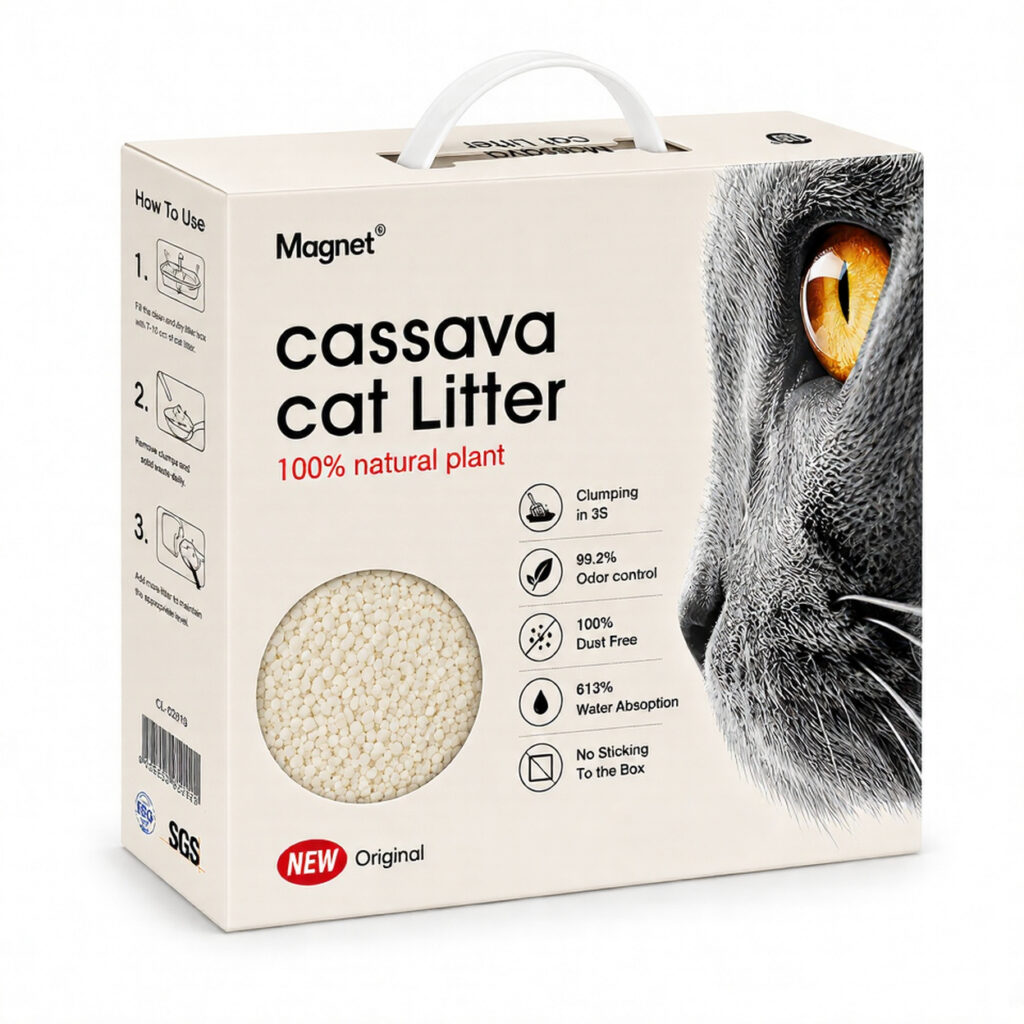


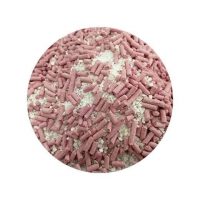
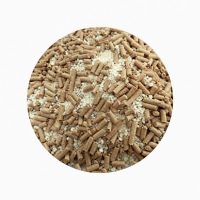

Buyers often ask how many tons of tofu cat litter fit in a 20ft container. The honest answer is that a container does not have one fixed tofu-litter capacity. Lightweight litter is commonly limited by volume, while dense mineral litter is more likely to reach a weight restriction first. Retail bag shape, carton size, pallet use, compression, and the shipping route can change the final quantity by thousands of bags.
A reliable supplier should calculate the packout from the approved package, not quote a convenient round number before the bag dimensions are known.
Start With the Container Limits
A standard 20ft dry container is commonly called a 20GP or 20DC. Hapag-Lloyd lists an example internal capacity of 33.2 cubic meters and a maximum payload of approximately 28,130 kilograms for one equipment type. It also warns that specifications vary by container manufacturer. Check the assigned equipment and route limits before loading. See the carrier’s current 20ft standard container specifications.
Those figures are physical maximums, not a promise that 33.2 cubic meters of retail bags will fit. Corrugated walls, door clearance, cartons, pallets, void spaces, load bracing, and safe handling all reduce usable space.
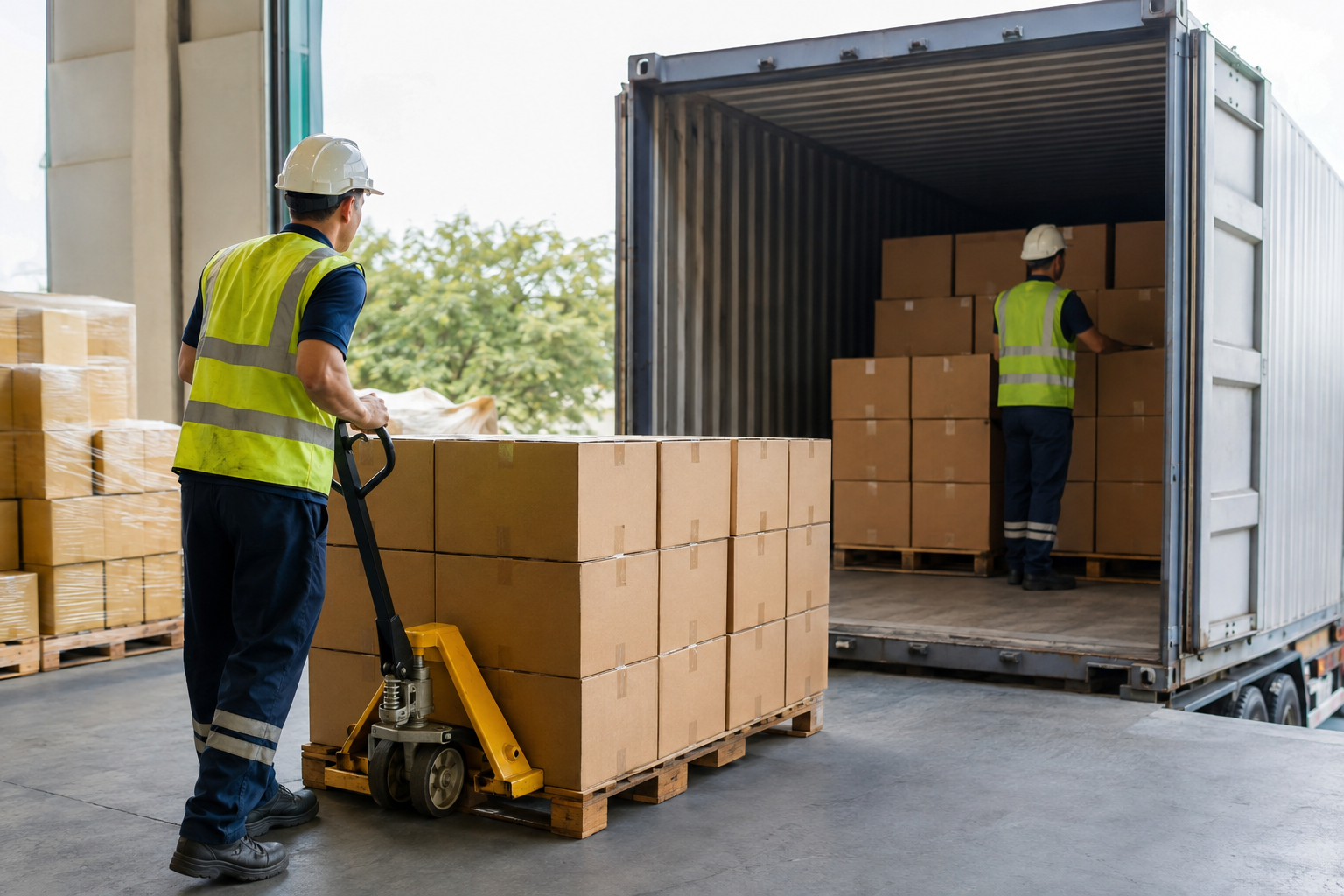
The Two Calculations Every Buyer Needs
First calculate the volume limit:
Volume-limited quantity = usable container volume divided by packed unit volume
Then calculate the weight limit:
Weight-limited quantity = permitted cargo payload divided by gross unit weight
The lower result is the workable ceiling. A loading plan must also round down to complete cartons, pallet layers, or bag rows.
For tofu litter, the volume result is often lower because the material and retail package occupy more space per kilogram than bentonite. For dense clay, the weight result may become the controlling limit even while open space remains.
Why Bag Weight Does Not Tell You the Answer
Two 2.5 kg bags can have very different dimensions. A tightly vacuumed rectangular pack may stack with little wasted space. A pillow bag with a large gusset, handle, and trapped air can require substantially more room. A carton adds protection but introduces board thickness and empty space around flexible bags.
The calculation therefore needs the finished package dimensions under normal production conditions. A flat bag drawing is not enough. Measure filled bags after sealing and allow for natural expansion.
Floor Loading and Pallet Loading
Floor loading
Floor-loaded cartons or bags use more of the container cube because there are no pallet decks or gaps between pallet footprints. It can provide the highest unit count, especially for stable cartons.
The tradeoff appears at destination. Unloading takes more labor, and some warehouses or retailers will not accept loose floor-loaded cargo. Bags also need careful bracing to prevent movement near the doors.
Pallet loading
Pallets speed unloading, support warehouse handling, and can reduce individual-package damage. They also consume height and floor area. Pallet dimensions, overhang rules, maximum stack height, and destination warehouse standards must be confirmed before production.
Wood packaging may need to meet applicable treatment and marking requirements. Ask the customs broker and freight forwarder before selecting pallet material.
A Worked Volume Example
Consider a hypothetical private label order packed four retail bags per carton. Suppose the measured carton is 0.030 cubic meters and the loading team allows 27 cubic meters of usable packing volume after accounting for door clearance and practical voids.
The first estimate is:
27 divided by 0.030 = 900 cartons
If each carton has a gross weight of 11 kg, the estimated cargo weight is:
900 multiplied by 11 kg = 9,900 kg
In this example, the shipment is clearly volume limited. The legal payload is not the problem. The team must still verify that 900 cartons form workable rows inside the actual container.
This example is illustrative, not a standard Magnet loading quantity. Change the carton dimensions, bag compression, or pallet plan and the answer changes.
A Worked Weight Example
Now consider a hypothetical dense litter packed in 10 kg bags. If the route and equipment allow 27,000 kg of cargo after all restrictions are considered, the theoretical weight limit is 2,700 bags.
The loading team must then test whether those bags physically fit. If only 2,300 bags fit by volume and safe stacking, 2,300 is the usable count. Container calculations always need both checks.
Information a Supplier Needs Before Calculating
Send the following details with the quotation request:
- Cat litter formula and expected bulk density
- Net weight per retail bag
- Filled bag dimensions
- Bags per carton or master sack
- Filled carton dimensions and gross weight
- Floor-loaded or palletized requirement
- Pallet dimensions and maximum height
- Desiccant, liner, slip sheet, and bracing requirements
- Destination port and inland delivery country
- Any road-weight or warehouse restrictions
If the packaging has not been produced, ask for a provisional estimate and mark it as provisional. The final purchase order should use the confirmed packout after a physical packing trial.
How Packaging Changes Freight Per Bag
A small reduction in filled-bag depth can create another complete row. A carton redesign can remove empty space without weakening the package. Vacuum packing may improve cube efficiency for tofu litter, but excessive compression can damage pellets or make the retail pack look misshapen after opening.
The best package therefore balances five things:
- Container utilization
- Product protection
- Shelf presentation
- Consumer handling
- Packing-line efficiency
Do not optimize only for the number of bags in a container. A package that leaks, crushes, or arrives with unreadable printing destroys the apparent freight saving.
Mixed SKU Container Planning
Mixed containers can help a distributor test several formulas, but they complicate loading. Different carton footprints create voids, and heavier SKUs must be placed so the load remains stable. The unloading order also matters when different products go to separate warehouses.
Ask the supplier for a row-by-row plan showing carton count, net weight, gross weight, and cubic volume by SKU. Confirm that the commercial invoice and packing list use the same quantities.
Common Loading Mistakes
One mistake is using nominal bag dimensions before the filled pack exists. Another is multiplying the container’s full cubic capacity by product bulk density without allowing for packaging and void space. Buyers also overlook carton gross weight, pallet tare, door opening height, and destination road limits.
A final mistake is treating the supplier’s previous container as proof. The previous order may have used a different bag, formula, carton, pallet, carrier, or destination.
How Magnet Builds a Loading Estimate
For a tofu cat litter wholesale project, Magnet starts with formula density and filled-package dimensions, then compares floor-loaded and palletized configurations. The quotation can separate product quantity, packaging, cartons, pallets, and estimated shipment weight so buyers can model landed cost accurately.
Importers needing several formulas can discuss a loading plan with a wholesale cat litter supplier before approving artwork. Early packout work prevents a bag design from creating an avoidable freight penalty.
FAQ
How many tons of tofu cat litter fit in a 20ft container?
There is no universal tonnage. Tofu litter is often volume limited, and the result depends on formula density, filled bag dimensions, cartons, pallets, and route restrictions. Request a packout based on the approved package.
What is the internal volume of a 20ft container?
One Hapag-Lloyd standard-container example lists 33.2 cubic meters. Equipment varies, and usable packing volume is lower than the published internal cube.
Is floor loading better than pallet loading?
Floor loading usually fits more units. Pallet loading makes handling faster and may reduce package damage. The buyer’s warehouse requirements should decide.
Does vacuum packing increase the quantity?
It may reduce package volume and improve stacking, but compression must not damage the litter or retail presentation. Confirm the result with a physical packing test.
When should the final loading quantity be confirmed?
Confirm it after the formula, net weight, bag construction, sealing method, carton, pallet plan, and destination restrictions are fixed.
Article summary: A 20ft container has about 33 cubic meters of internal capacity, but tofu litter is usually limited by usable packing volume before maximum payload. The final quantity depends on bag dimensions, cartons, pallets, compression, and route limits.
Request a Container Loading Plan
Share your formula, bag size, carton specification, destination port, and pallet requirements. Magnet can prepare a practical tofu litter packout and quotation.
Get a Loading Estimate