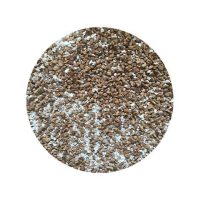
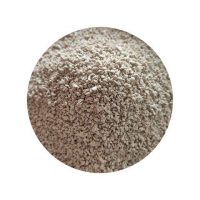
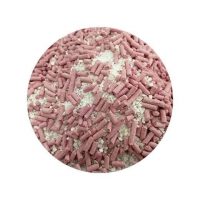
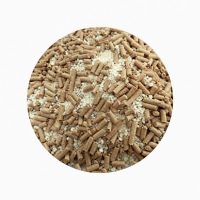

Low tracking tofu cat litter is designed to keep more product in the box and less on the floor. Cylindrical pellets help because they are larger and easier to separate from paws than very fine clay particles. That is only part of the result.
Pellet diameter, length, hardness, dust, litter depth, box entrance, paw shape, and coat length all affect what leaves the tray. A responsible product claim should come from testing the finished litter in realistic conditions.
What customers mean by tracking
Tracking includes any litter carried or kicked outside the box. Fine dust around the tray, particles caught between toes, and pellets thrown during digging may all be described in the same review.
This matters to product development because each problem has a different cause. A larger pellet may reduce material caught in paws but will not stop an energetic cat from kicking litter over a low box wall. Better screening can reduce dust but may not change whole-pellet movement.
When reading reviews or testing samples, separate powder, paw carryout, and digging scatter. That makes improvement possible.
Pellet size is the main design choice
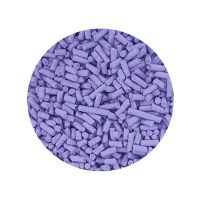
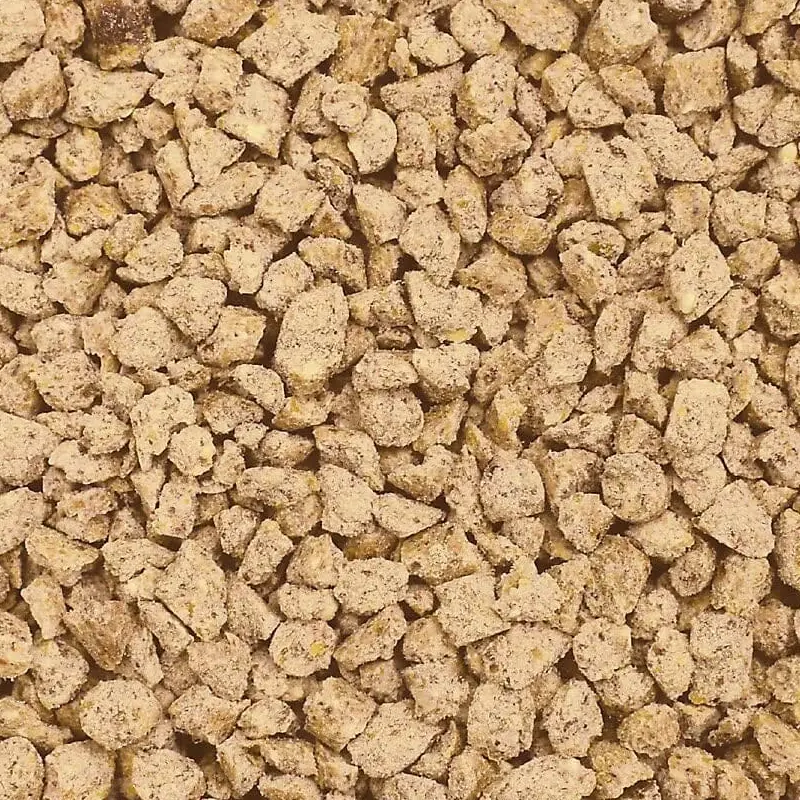
Tofu litter is commonly produced in diameters such as 1.5 mm, 2 mm, and 3 mm. Larger cylinders are less likely to fit between toe pads and are easier to see and sweep. Smaller pellets create more surface contact, which can help clumping and paw comfort.
There is no universal best size. A 3 mm pellet may support a strong low-tracking claim but feel unfamiliar to a cat moving from fine clay. A 1.5 mm pellet may form a compact clump but travel more easily.
For many broad retail programs, 2 mm provides a useful middle point. Buyers should still compare all likely sizes with the same formula because diameter changes more than appearance.
Pellet length and broken pieces matter
Diameter is easy to specify, but length distribution also affects tracking. Very short broken pellets behave more like coarse granules. Powder and fragments at the bottom of the bag can travel farther than intact cylinders.
Check the sample before and after handling. If many pellets break during ordinary transport, the retail product may perform differently from the fresh factory sample.
Set limits for fines and breakage in the purchase specification. Low tracking depends on the condition of the product when the customer opens it.
Hardness must be balanced with absorption
Pellets need enough strength to survive packing and shipping. If they are too brittle, they create dust and small tracked particles. If they are excessively hard or dense, liquid uptake and clump formation may change.
Test hardness indirectly by handling a sealed bag, pouring repeatedly, and checking the fines. Then run absorption and clumping tests on the same handled sample.
The right formula holds its shape in transit and still responds quickly in the tray. A hardness number alone does not prove that balance.
Low dust supports low tracking
Dust is the smallest form of tracking. It settles near the box, clings to surfaces, and can create a visible film on dark floors.
Tofu litter should be screened and de-dusted after drying. Buyers should inspect the bottom of the bag and pour from normal height under consistent light. Repeat after transport simulation.
A low-dust claim and a low-tracking claim reinforce each other, but both should be measured on the packed product. Factory-line samples taken before shipping are not enough.
The litter box changes the result
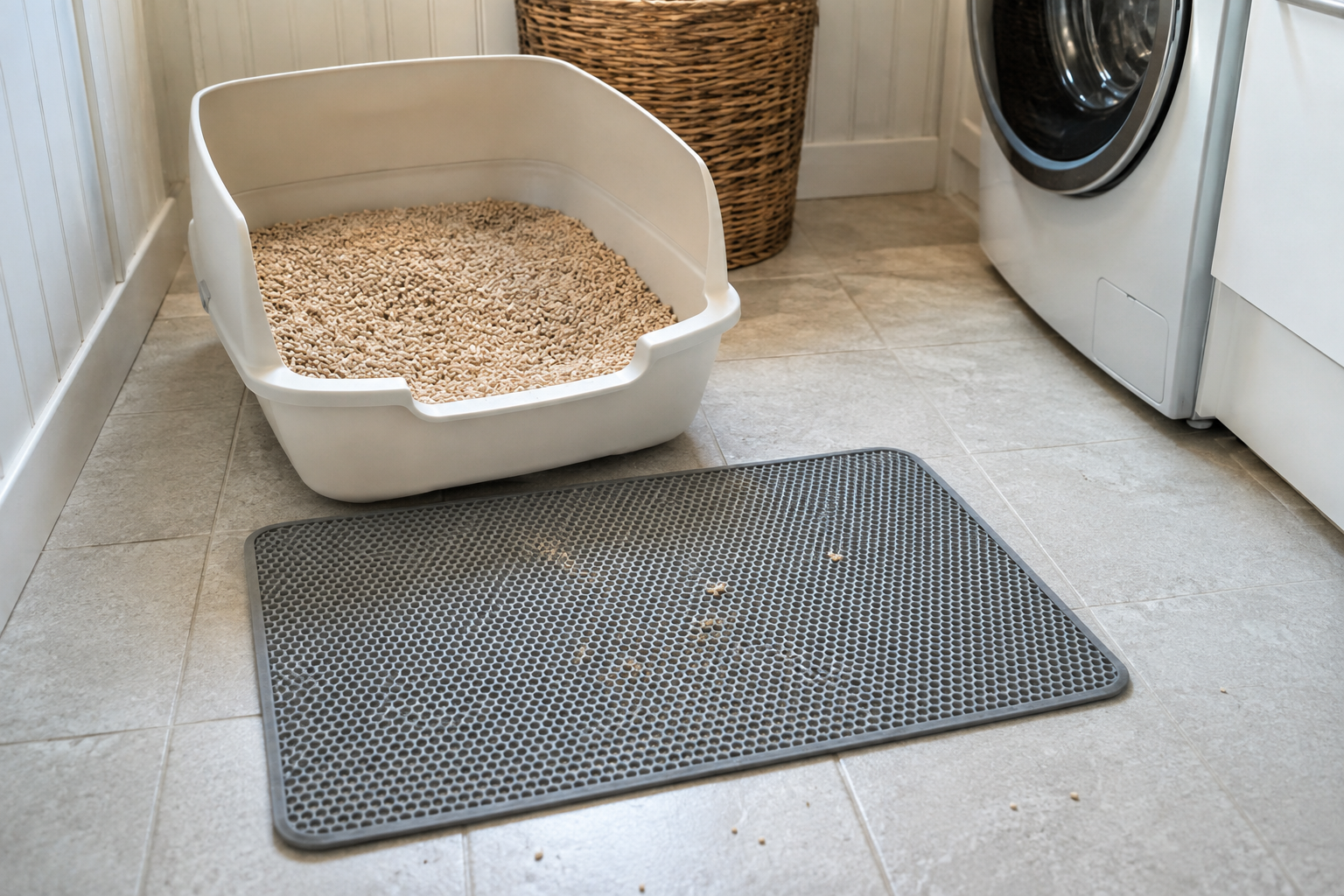
A high-sided box contains digging scatter better than a shallow tray. A top-entry box changes how the cat exits. An automatic litter box may require granules small enough to pass through its sifting system.
Large pellets that track very little in an open tray may not work well with every automatic machine. Buyers selling into a market with high automatic-box ownership should test compatibility separately and avoid broad claims.
Packaging can recommend a suitable box setup without suggesting the litter will eliminate tracking in every home.
Cat size and coat type create variation
Long-haired cats can carry litter in the fur around their paws. Cats with wide toe spaces may pick up a different particle size from smaller cats. Digging style also varies.
Use more than one cat and household when validating a consumer claim. A controlled tray test shows material differences, while home-use testing reveals behavior.
This is why honest language matters. Low tracking is supportable. Zero tracking is difficult to guarantee across every cat and litter box.
Compare tracking without weakening clumping
Increasing pellet size can reduce carryout, but the product still needs to form a clean scoopable clump. Test tracking and clumping together.
Use identical boxes and mats for different pellet sizes. Weigh or count the litter collected outside each box over a defined period. At the same time, record clump breakage, sticking, and clean-litter loss.
The winning sample is the best balance for the target customer, not simply the one that leaves the fewest visible pellets.
Consider crushed tofu as a different product
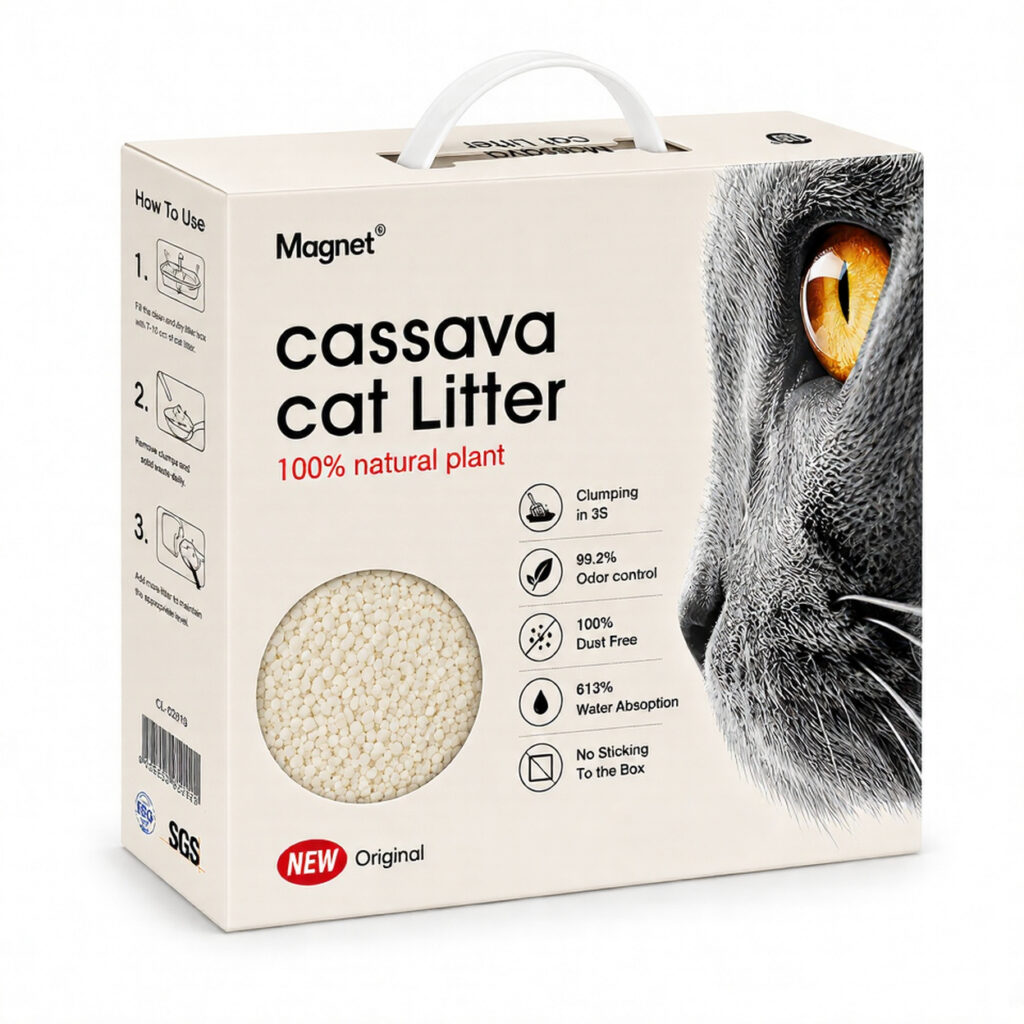
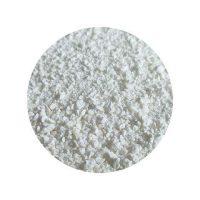
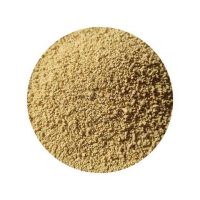
Crushed tofu litter has a finer sand-like texture and can help cats transition from clay. It should not be expected to produce the same tracking pattern as cylindrical pellets.
If a brand sells both, assign different roles. Cylindrical litter can lead with lower tracking and recognizable pellets. Crushed tofu cat litter can lead with fine texture, absorption, and easy transition.
Clear positioning prevents the two products from competing only on price.
Test with a simple tracking protocol
Place an identical clean mat outside each test box. Add the same depth of litter and use the boxes for the same period. Collect the particles on the mat and nearby floor.
Record:
- Whole pellets on the mat
- Broken fragments
- Fine powder
- Distance travelled from the box
- Ease of sweeping or vacuuming
- Clumping performance during the same period
Photograph the area from the same angle. If possible, weigh the collected material. The number does not need to become a package claim; it helps buyers compare formulas objectively.
Package the product to preserve low tracking
Strong pellets can still break in an overfilled bag or poorly supported carton. Test the full pack through stacking and parcel handling.
Bag dimensions should allow the product to settle without excessive compression. Seals must contain fine particles, and cartons should limit movement during ecommerce shipping.
If low tracking is a primary promise, package damage that creates powder directly undermines the product position.
Explain the benefit without overpromising
Customers understand concrete language. Larger tofu pellets help reduce carryout and are easy to spot around the box. That is clearer than a large absolute claim.
Product images should show the real pellet size. Avoid macro photography that makes 1.5 mm and 3 mm pellets look identical. If the bag lists a diameter, keep production within the agreed tolerance.
The tofu cat litter range from Magnet includes cylindrical formats in several diameters, allowing buyers to compare tracking, clumping, and texture before selecting a private label specification.
Add low tracking to the wholesale specification
The order should define pellet diameter, length range, fines, dust, moisture, clump performance, and packaging tolerance. Keep the approved sample and test production after shipping simulation.
For a first order, request matched samples rather than comparing different sizes with different scents or binders. The tofu cat litter bulk buying guide covers the wider MOQ, freight, and packaging decision.
Low tracking is a valuable product benefit because customers see it every day. The strongest version of the claim comes from a durable pellet, a realistic test, and clear guidance about litter box setup.
FAQ
What size tofu cat litter tracks the least?
Larger pellets often reduce paw carryout, but tracking also depends on pellet length, breakage, dust, cat behavior, and box design. Compare finished 1.5 mm, 2 mm, and 3 mm samples.
Is 2 mm tofu cat litter low tracking?
Two-millimetre pellets can offer a practical balance between lower tracking, comfortable texture, and clumping contact. Performance still depends on the full formula and particle durability.
Does crushed tofu litter track more than pellets?
Fine crushed granules may travel differently from larger cylinders, though particle weight and box setup matter. Treat crushed and pellet formats as separate products and test both.
Can tofu pellets be used in automatic litter boxes?
Compatibility depends on the machine’s sifter opening and cycle. Some large pellets may not pass through correctly. Brands should test specific machines before making compatibility claims.
How can wholesale buyers test cat litter tracking?
Use identical boxes and mats, the same litter depth, and a defined test period. Collect whole pellets, fragments, and dust outside the box, then compare weight, distance, and clean-up effort.
Article summary: Low tracking is influenced by pellet size, particle weight, breakage, dust, paw and coat type, and the litter box setup. Brands should test the finished product instead of treating pellet shape as proof.
Develop a Low Tracking Tofu Litter
Magnet offers cylindrical tofu pellets in several diameters for wholesale and private label programs. Request matched samples to compare tracking, clumping, and cat acceptance.
Request Pellet Samples