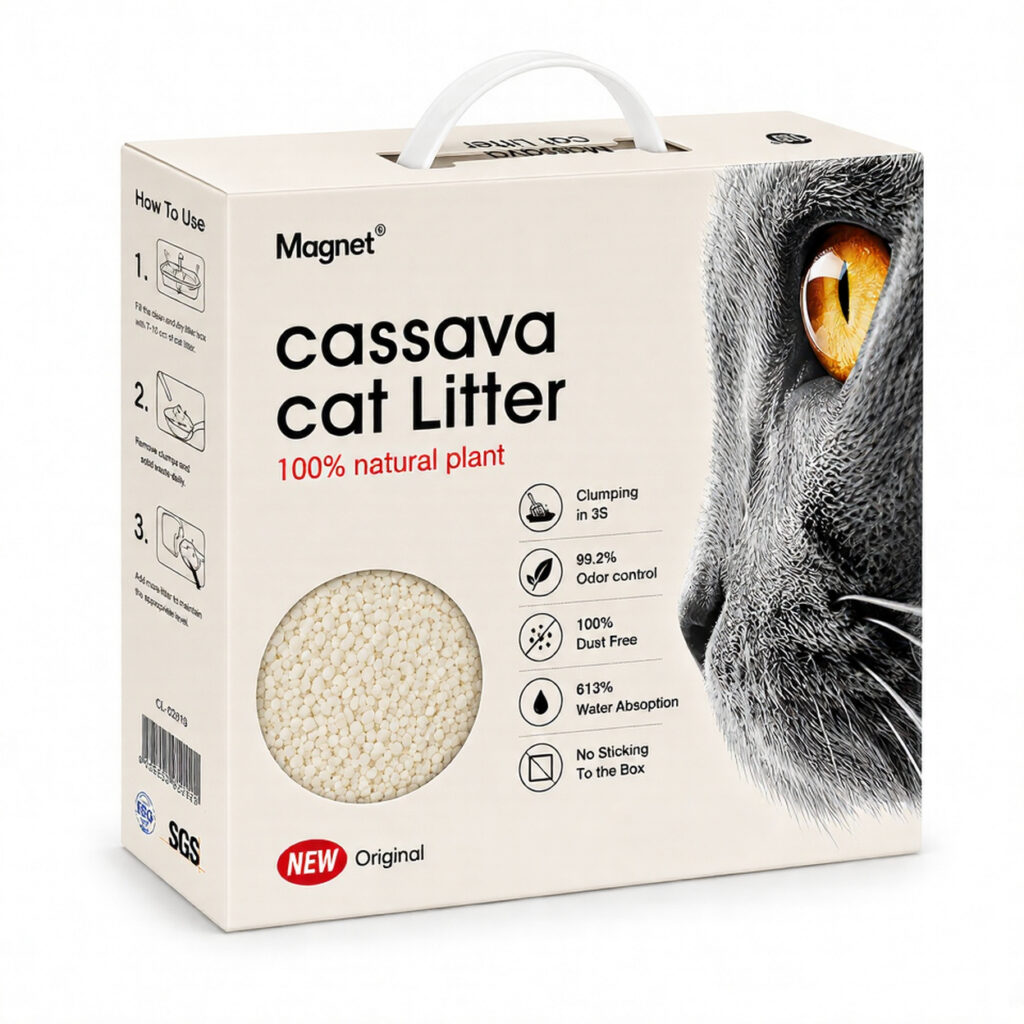
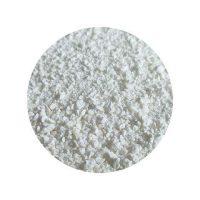
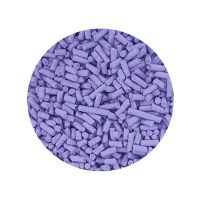
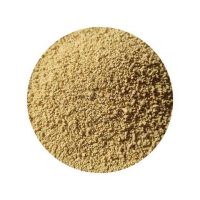
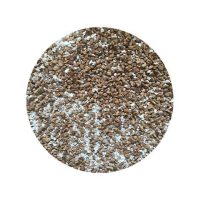
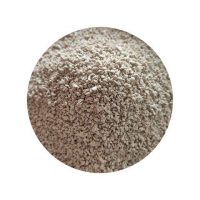
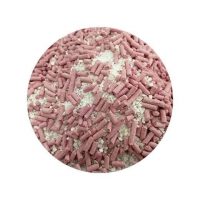
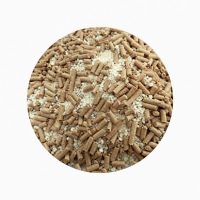
The choice between scented and unscented tofu cat litter looks simple until a buyer has to put both on a retail shelf. Fragrance can make a product feel fresh when the bag is opened, but it can also divide customers. Unscented litter has a clean, sensitive-cat position, yet shoppers may still expect strong odor control.
For a retail brand, the answer is not which option is universally better. The answer is which option fits the market, the sales channel, and the job of each SKU. A good range gives customers a clear choice without turning the shelf into a row of nearly identical bags.
Fragrance and odor control are different product decisions
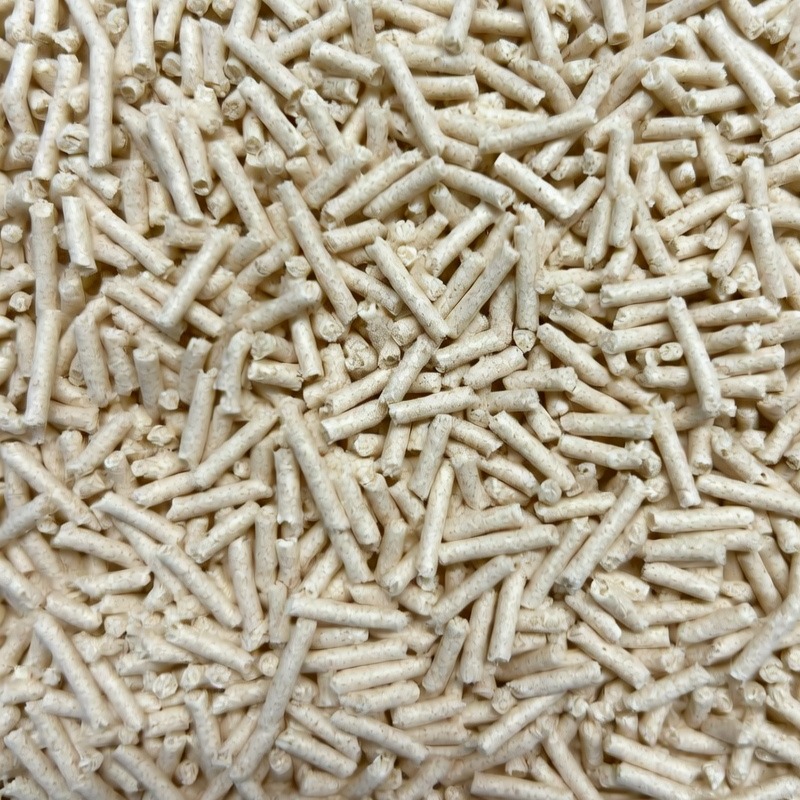
The first rule is to separate fragrance from odor control. Fragrance adds a noticeable smell. Odor control reduces or contains unpleasant litter box odors. One can support the other, but they are not interchangeable.
A scented tofu cat litter may smell pleasant when poured, then lose that fragrance after several days. If clumps break and wet particles remain in the tray, perfume will not solve the underlying problem. An unscented formula can control odor well when it absorbs quickly, forms clean clumps, and allows contaminated litter to be removed completely.
When reviewing samples, test odor control before judging the fragrance. If the base formula performs well, scent becomes a preference and positioning choice rather than a cover for weak performance.
Why some markets prefer scented tofu cat litter
In many retail markets, shoppers connect a light fragrance with cleanliness. A familiar scent can make the first product trial easier, especially when the customer is moving from a perfumed clay litter.
Scent also gives brands a simple way to create variety. Lavender, green tea, peach, lemon, vanilla, rose, and coffee can be produced from the same core tofu formula. Different packaging colours make the range easy to recognize, and retailers can add a new variant without explaining a new litter material.
However, more choice is not always better. If the store has room for two tofu litter facings, seven fragrances do not create seven times the opportunity. They split sales across small volumes and make replenishment harder. Start with one fragrance that fits local habits, then expand only when sales data supports it.
Why unscented tofu cat litter deserves its own SKU
Unscented tofu cat litter serves customers who dislike perfume, live in smaller spaces, or want fewer added ingredients in the products used around their pets. It also gives retailers a clear alternative when shoppers say a previous litter smelled too strong.
The packaging message should be direct. Unscented does not mean no odor control. It means no added fragrance. The product still needs to manage moisture and waste odor through absorption, clumping, and clean removal.
An original tofu formula can fill this role. An activated charcoal version can offer another unscented direction, using the charcoal component as part of the odor-control formula rather than adding a perfume. These two products should not be described as identical. The customer should understand why charcoal is present and what practical benefit it is intended to provide.
Activated charcoal is not a fragrance
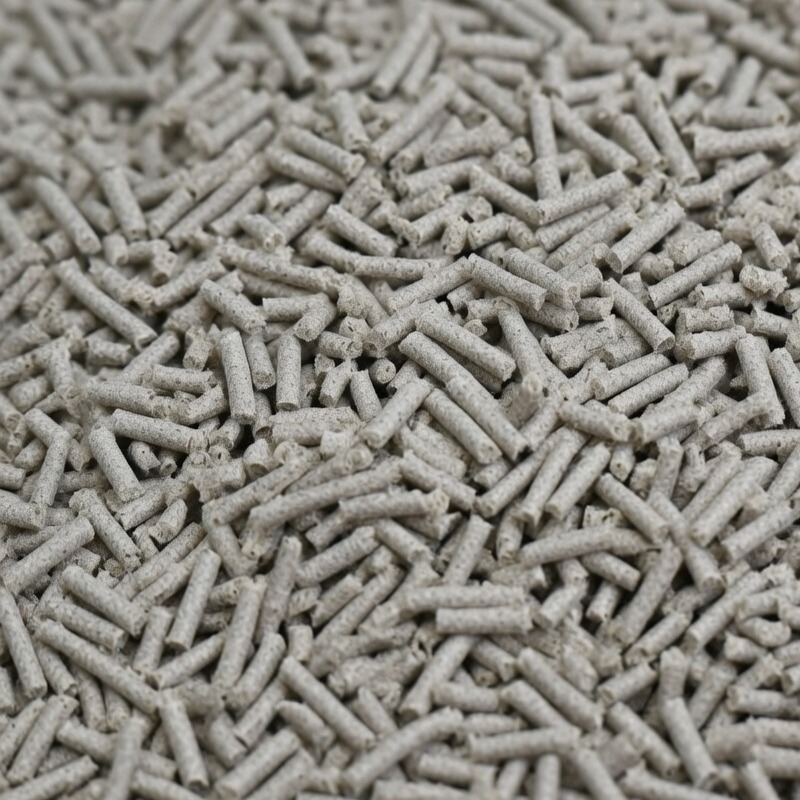
Activated charcoal tofu litter is sometimes grouped with scented varieties because the granules look different and the product has a stronger odor-control story. In reality, it belongs more naturally beside unscented litter.
Charcoal is used to adsorb odor compounds. It should not create a perfume in the room. For shoppers who want fragrance-free litter but worry about odor, this can be an attractive middle position.
For wholesale buyers, the important question is whether the charcoal is part of a stable formula. Check how evenly it is distributed and whether performance remains consistent from the top to the bottom of the bag. Dark particles used only for visual effect will not build repeat purchase.
Test fragrance after moisture contact
A dry sample can be misleading. Fragrance changes when litter becomes wet, sits in a closed room, or mixes with normal waste odor. A scent that feels gentle in the supplier’s sample cup may become much stronger in a litter box.
Use a filled tray and test the product over several days. Evaluate the scent when first poured, after moisture contact, after clumps are removed, and when the bag has been open for a while. Ask several people to assess it because fragrance preference is personal.
Keep notes specific. Instead of writing good or bad, record whether the scent is too strong, fades too quickly, changes after wetting, or remains balanced. That feedback gives the manufacturer something useful to adjust.
Keep the scent light enough for the product category
Cat litter is used in an enclosed space and is poured close to the user. A scent that works in detergent or room fragrance may be too heavy in litter. Strong perfume can also make it harder for shoppers to judge whether the product is actually controlling odor.
For a new private label product, begin with a moderate fragrance level and test downward as well as upward. A light, stable scent often has broader acceptance than a dramatic scent that performs well only in a showroom sample.
The brand promise matters here. A natural, plant-based package paired with a very artificial fragrance can feel inconsistent. If the product is positioned around simple ingredients and low dust, the scent should support that impression.
Select fragrances according to the customer, not the factory list
Manufacturers may offer many standard fragrances because they can produce them efficiently. That does not mean every option belongs in your range.
Green tea and lavender are familiar cat litter choices in many markets. Lemon can communicate freshness but may feel sharp if the dosage is high. Peach, vanilla, rose, and coffee can help a brand stand apart, yet they need stronger local validation because customer reactions may vary.
Ask retailers what shoppers already request. Review customer comments on competing products. If possible, run a small blind scent test without showing the colour or fragrance name. People often respond differently when they smell a sample than when they react to a name on a presentation slide.
Build a focused first assortment
Most new brands do not need a large fragrance range. A practical launch could include:
- One original unscented tofu litter
- One activated charcoal unscented litter
- One lightly scented option for customers who prefer fragrance
If shelf space or MOQ is tight, start with two SKUs: original unscented and one proven scent. This creates a meaningful choice without weakening inventory turnover.
The range can expand later. Add a fragrance when it reaches a new customer segment, not simply because another colour looks attractive in the catalogue.
Use packaging to make the choice obvious
Scented and unscented bags need to be distinguishable at a glance. The fragrance name should be easy to find, while the unscented claim should not be hidden in small copy.
Avoid making health promises that the product cannot support. Words such as hypoallergenic can carry regulatory or evidentiary expectations in some markets. Clearer language such as no added fragrance or original unscented is often easier for shoppers to understand and easier for brands to substantiate.
For activated charcoal, explain its purpose plainly. Do not let customers assume the black granules are a scent or a decorative colour. Good packaging reduces questions for store staff and lowers the chance of disappointed reviews.
Confirm the same base performance across every scent
Fragrance variants should not clump, dust, or break differently from the original formula. In practice, additives and production adjustments can affect moisture, granule strength, and scent distribution.
Test each SKU rather than approving one base sample and assuming the rest are identical. Compare:
- Pellet size and uniformity
- Dust during pouring and scooping
- Clump speed and clump strength
- Fragrance consistency throughout the bag
- Odor control over time
- Pellet breakage after shipping
- Bag seal and product weight
Agree on a specification that applies to all variants, then list any approved differences for colour or fragrance. This keeps the range recognizable in use, not only in packaging.
Plan MOQ around the number of SKUs
Every additional fragrance can create a separate minimum for formula preparation or printed packaging. A supplier may accept several scents in one container, but each bag design and each production change still affects the practical order size.
Ask how many tons or bags are required per fragrance, whether the same printed film can be adapted with labels, and whether neutral bags are available for a market test. Also confirm whether the packaging MOQ is higher than the litter MOQ.
The tofu cat litter bulk buying guide covers the larger landed-cost and loading decisions. For an early launch, fewer stronger SKUs usually create a healthier reorder cycle.
Give retailers a reason to stock both
Two products earn their shelf space when they answer two different customer requests. The unscented SKU is for shoppers who want no added perfume. The scented SKU is for shoppers who enjoy a light freshness cue. If both packages make the same promise, one will usually sell while the other gathers dust.
Sales materials should explain the distinction in one sentence. Store staff do not need a long ingredient lesson. They need to know which bag to recommend when a customer says they are sensitive to fragrance or when they ask for a fresher-smelling litter.
Link both products back to the broader benefits of tofu cat litter, such as lightweight handling, low dust, plant-based materials, and clumping convenience.
Choose the range with repeat purchase in mind
The first smell of a newly opened bag can win attention, but repeat purchase comes from daily performance. Clumps must scoop cleanly, dust must stay low, the scent must remain comfortable, and the bag must arrive intact.
For private label buyers, approve scented and unscented samples in real use before committing to printed packaging. Keep the first assortment focused and let customer behavior guide expansion.
A clear two- or three-SKU tofu range will usually outperform a crowded fragrance collection. Customers understand the choice, retailers can replenish it, and the supplier can reproduce it with fewer production changes.
FAQ
Is scented tofu cat litter better at controlling odor?
Not necessarily. Fragrance changes how the litter smells, while odor control depends on absorption, clumping, moisture containment, and the formula. Test the base performance over time rather than judging the dry fragrance alone.
What is the best tofu litter option for fragrance-sensitive customers?
An original unscented formula is the clearest choice. Activated charcoal tofu litter can also suit customers who want no added perfume but prefer an additional odor-control component.
Which scented tofu cat litter fragrances are available from Magnet?
Magnet lists lavender, vanilla, green tea, peach, lemon, rose, coffee, and custom fragrance options. Buyers should sample fragrances in the target market before choosing a private label range.
Can scented and unscented tofu litter ship in one wholesale order?
Mixed-SKU and mixed-container options may be available, subject to the minimum for each formula and packaging design. Confirm the SKU-level quantity before approving artwork.
Should a new brand launch several tofu litter fragrances?
Usually, a focused launch is easier to sell and replenish. Start with one unscented product and one locally familiar scent, then add variants when sales data shows a clear opportunity.
Article summary: Retail brands should choose scented or unscented tofu litter according to local preference, customer sensitivity, and shelf strategy. Fragrance can support freshness, but it should never be used to hide weak odor control.
Develop Your Tofu Cat Litter Range
Magnet supplies scented, unscented, and activated charcoal tofu cat litter for wholesale and private label programs. Ask for samples based on your market and channel.
Discuss Your Product Range