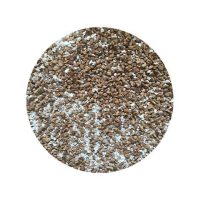
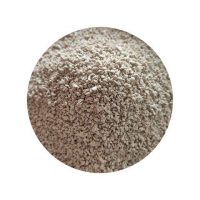
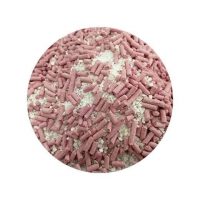
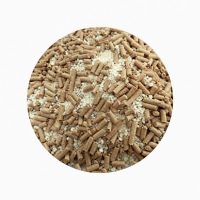

Cat litter looks like a straightforward repeat-purchase product, but it is a demanding item to sell online. It is heavy, packaging failures are expensive, and customer reviews quickly expose weak clumps, excessive dust, inaccurate weight, or a bag that leaks inside the shipping carton.
A successful Amazon launch therefore starts before the logo is printed. Sellers need to select a formula with a clear reason to exist, calculate the complete delivered cost, validate the retail bag, and confirm the current requirements for their marketplace and fulfillment route.
Start With the Customer Problem
“Premium cat litter” is not a useful manufacturing brief. Decide which buyer and use case the product serves. Examples include low-dust clumping litter for small apartments, lightweight tofu litter for customers who struggle with heavy bags, or a mixed plant formula developed for compatible automatic boxes.
The product does not need to win every performance category. It needs a credible promise that can be demonstrated in images, listing copy, samples, and repeat use. A narrow positioning also makes keyword selection and advertising more efficient than competing only for the broad phrase “cat litter.”
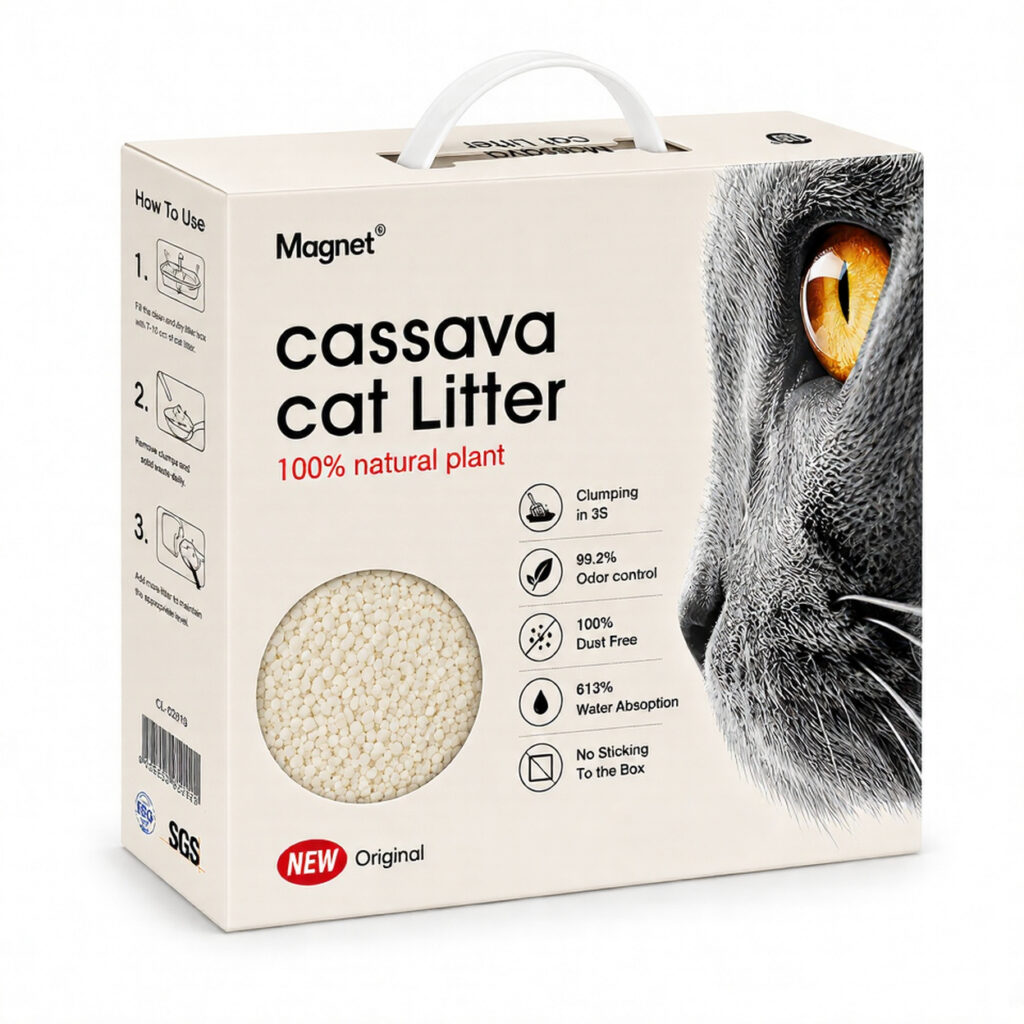
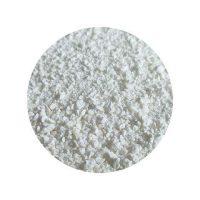
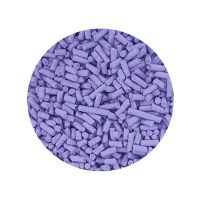
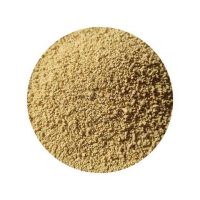
Buyers can compare available formats in Magnet’s wholesale cat litter range before choosing a sample direction.

Choose the Formula Before Designing the Bag
The formula affects bag volume, fill weight, barrier requirements, storage behavior, claims, and landed cost. Final artwork created around an assumed bag size can become unusable when the approved product has a different bulk density.
Request samples with written specifications. Test clumping, dust, tracking, odor control, absorption, fragrance acceptance, and performance after transport simulation. If the listing will mention automatic-box compatibility, run the sample in the named machines and record the conditions.
Once the formula is approved, ask the factory to confirm the target net weight, filled-bag dimensions, seal area, and expected case pack. Those measurements belong in the FBA cost model and shipping plan.
Calculate Amazon Economics by Sellable Unit
The factory price is only one part of the cost. Build a per-unit model that includes:
- Product and retail packaging
- Printed film setup or other packaging charges
- Inspection and laboratory testing
- Inland transport at origin
- Export documentation and terminal charges
- Ocean or air freight and insurance
- Duty, tax, brokerage, and destination fees
- Delivery to the fulfillment network or prep warehouse
- Amazon referral and fulfillment fees
- Storage, returns, damage, advertising, and promotions
Use the final packaged dimensions and weight, not a preliminary estimate. A small change in bag or carton dimensions can change freight utilization and marketplace fees. Test several selling prices and advertising-cost scenarios before approving production.
Design Packaging for Parcels Rather Than Shelves Alone
A retail shelf bag may be handled gently. An ecommerce bag may move through conveyors, drop into a carton with other products, and experience pressure at several orientations. The seal and film have to contain a dense product through that journey.
Test filled bags for seal strength, puncture resistance, compression, vibration, and drops. Check the handle and zipper if included. Inspect the bag after temperature changes, because the air volume and film behavior can change during transport.
The front panel should communicate the product type, net contents, and core benefit quickly. The back panel should carry the required use, storage, disposal, company, and market information. Claims such as “dust free,” “flushable,” “natural,” or “odor eliminating” need evidence and must suit the destination market.
Confirm Current Amazon Preparation Rules
Amazon requirements can differ by marketplace, category, fulfillment method, and packaging condition. They also change. Do not print a production run from an old blog checklist.
Before final artwork, confirm current rules in Amazon Seller University and the relevant Seller Central help pages for the exact marketplace. Check at least:
- Product identifier and barcode eligibility
- Whether an Amazon barcode such as an FNSKU is required
- Placement and scan quality of unit labels
- Whether other scannable barcodes must be covered
- Bag, box, bundle, and case-pack preparation
- Suffocation warnings or other bag rules where applicable
- Expiration-date treatment if any component requires it
- Master-carton weight, dimension, and labeling rules
Amazon’s own seller guidance notes that individual units need a scannable barcode and that variants require the correct unique identifier when Amazon barcodes are used. Verify the current workflow in your account before mass printing because eligibility and commingling options can differ.
Build Listing Evidence During Sampling
The sample stage can produce useful listing material. Photograph the bag, pour, scoop, clump, and cleanup under consistent conditions. Record the test method behind claims. Keep the approved sample and production sample so customer complaints can be compared with known material.
Avoid creating a listing that promises more than the specification. If dust is measured using a controlled pour test, describe the product as low dust rather than inventing an absolute percentage. If automatic compatibility covers three models, name those models instead of claiming every automatic box.
Specific, supportable copy is more persuasive and safer than a wall of superlatives.
Plan a Launch Quantity Around Reorder Time
A low opening order is attractive, but running out of stock can damage momentum. An oversized order ties up cash and increases storage exposure. The launch quantity should reflect production time, packaging lead time, inspection, shipping, customs, appointment delays, and Amazon receiving.
Map the reorder point before placing the first purchase order. Include a buffer for a slower shipment or a stronger launch, but do not treat every delay as a reason to fill a container. Standard packaging can be useful for early validation; custom printed packaging becomes more economical when demand and artwork are stable.
Quality Control for Repeat Orders
The approved sample is the beginning of quality control, not the end. Attach the signed specification to the purchase order and define the production sampling plan. Important checks include:
- Formula and appearance against the approved sample
- Particle-size distribution and fines
- Moisture and bulk density
- Clump setting time and strength
- Dust and odor-control method
- Net weight and count
- Bag film, print, zipper, seals, and coding
- Carton strength and shipping marks
Ask for a lot-specific COA where appropriate and keep retained samples from production. If a formulation or packaging material changes, require approval before shipment.
What to Send a Manufacturer
A serious inquiry for private label cat litter should include the target Amazon marketplace, product type, bag weight, desired claims, expected selling price, launch quantity, fulfillment route, and target date. Share reference products for performance, not for copying protected branding.
Ask the supplier to separate formula MOQ, packaging MOQ, setup costs, sample costs, production lead time, and loading assumptions. This makes competing quotes much easier to compare.
FAQ
Can I sell private label cat litter through Amazon FBA?
Yes, provided the product, packaging, identifiers, labels, and shipment meet the current rules for the marketplace and fulfillment program. Confirm those rules in Seller Central before production.
What is the best cat litter for an Amazon private label?
There is no universal winner. The best choice has a clear customer use case, defensible performance, reliable supply, parcel-resistant packaging, and enough margin after fulfillment and advertising costs.
Should the FNSKU be printed on the retail bag?
That can reduce relabeling when the product is eligible and the identifier is final. Verify the current barcode requirement in the seller account before printing because the correct setup depends on marketplace and product configuration.
How should sellers test cat litter packaging?
Test filled bags for seals, drops, vibration, compression, punctures, handles, zippers, and leakage. Test the full unit and master carton that will actually enter the fulfillment network.
How many units should a first order contain?
Base it on realistic sales velocity, complete replenishment time, packaging MOQ, cash flow, storage exposure, and a delay buffer. A supplier’s minimum is not automatically the right launch quantity.
Article summary: Amazon sellers need a private label cat litter that survives parcel handling, fits the marketplace cost model, and delivers repeatable performance. Formula approval, leak-resistant packaging, scannable unit identification, current FBA requirements, landed cost, and production consistency all matter.
Build a Private Label Cat Litter for Amazon
Tell Magnet your marketplace, formula, package size, positioning, and launch volume to discuss samples, packaging, and a production plan.
Request a Private Label Quote