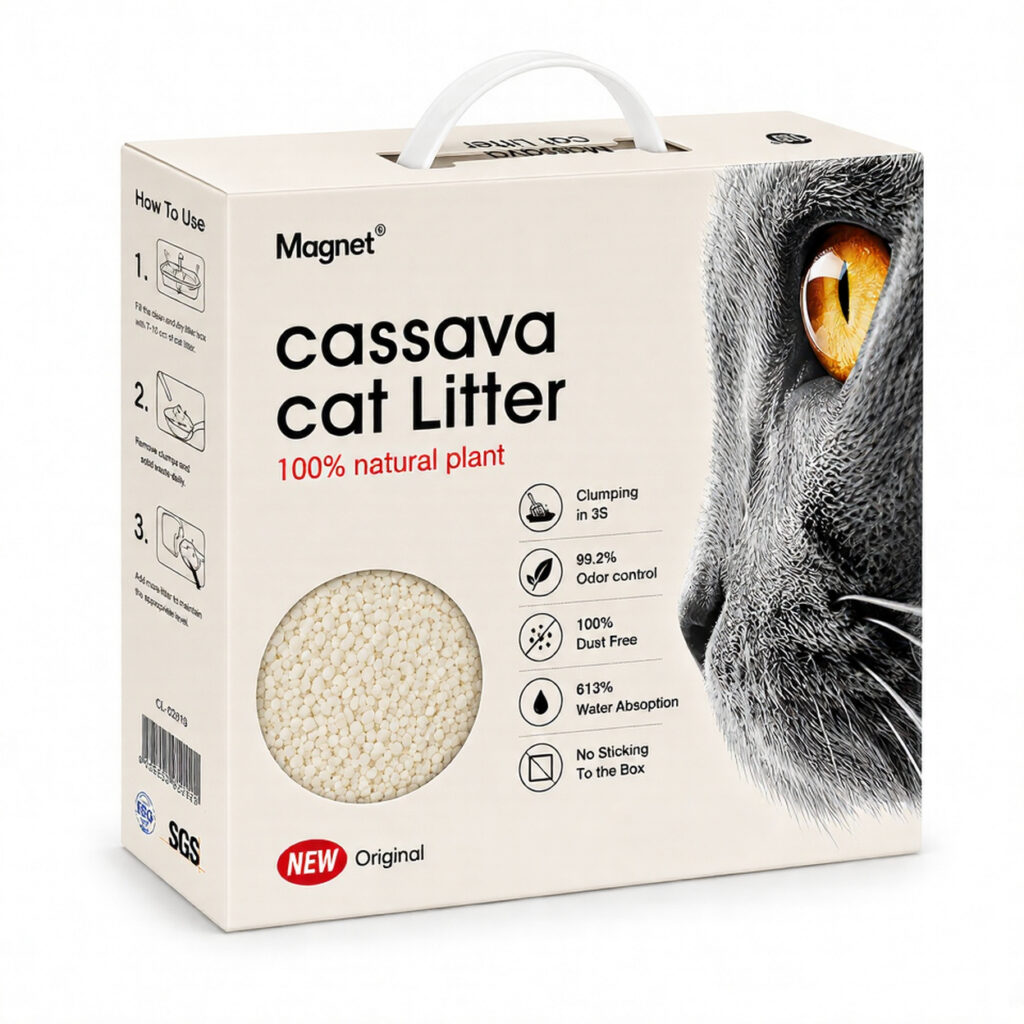
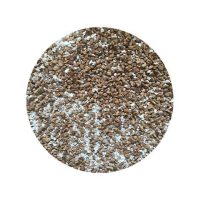
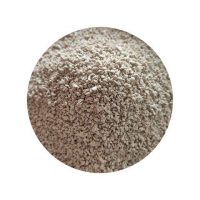
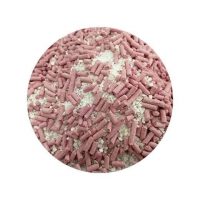
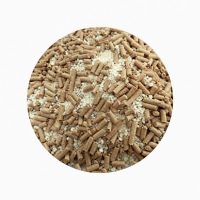

A mixed litter should solve a specific problem for the customer. If the only explanation for combining walnut shell and cassava is that both sound natural, the product brief is not finished.
For a private label buyer, the real questions are more practical. Does the blend clean up well? Does its appearance fit the market? Does the mixture remain consistent from the first scoop to the last? And is there a reason for a retailer to stock it beside the products already selling?
Give the Blend a Job
Before asking for a custom ratio, name the commercial objective. You might be trying to improve the cleaning experience of an existing walnut-based line, create a different shelf proposition or meet a target selling price without losing an agreed level of performance.
Those are development goals, not guaranteed benefits of adding cassava. Compare the proposed walnut shell and cassava mixed cat litter with your current benchmark and ask the supplier to explain the intended contribution of each component.
If the blend costs more but customers cannot identify a useful difference, reconsider its role before ordering printed packaging.
Define the Mixture Precisely Enough to Reorder
A blend ratio should state whether it is measured by mass or volume. Those descriptions are not interchangeable. Ask whether the production controls cover only the initial mixing stage or also the consistency of filled bags.
Discuss particle size distribution and the method used to assess composition. Components that differ in size, shape or density may separate during handling; whether that becomes a meaningful issue in your product needs to be tested.
Examine material from different parts of several delivered bags using an agreed sampling approach. Do not rely on a single scoop taken from the top. Where components cannot be reliably distinguished by sight, ask for an appropriate analytical or production-control method rather than guessing percentages from color.
Check Residue Against the Trays Customers Own
The appearance of the product matters after use as well as in the bag. Test with the tray surfaces and colors common in your sales channel. Look for visible marks, loose residue and material left behind during routine cleaning.
This is not an assumption that a walnut blend will stain. It is a purchasing check that should happen before launch. Record whether any mark is easily removed using the tray manufacturer’s recommended cleaning method.
Photograph the same tray under the same lighting before and after each comparison. Heavily edited product photos are not useful evidence for an internal approval decision.
Compare Cleanup Without Cherry-Picking Clumps
Use the same depth, test liquid, dose and waiting periods across candidates. Assess the whole wet area, including fragments that remain after scooping. Record clean litter discarded along with the clump.
A blend can have a higher purchase price and still be commercially attractive if it delivers a useful, repeatable improvement. It can also produce a beautiful demonstration clump while wasting too much clean material in ordinary use. The comparison needs to capture both possibilities.
Keep factory screening separate from household feedback. Buyers should not describe a controlled bench result as proof of universal odor control or cat acceptance.
Make the Ingredient Story Accurate
Use a product name that reflects the actual mixture. Do not present a multi-material formula as pure walnut or pure cassava, and do not assume that plant-based content makes the product suitable for flushing or every composting route.
Ask for the information needed to review proposed packaging claims in the destination market. A supplier’s broad environmental statement is not a substitute for evidence covering your finished formula and packaging.
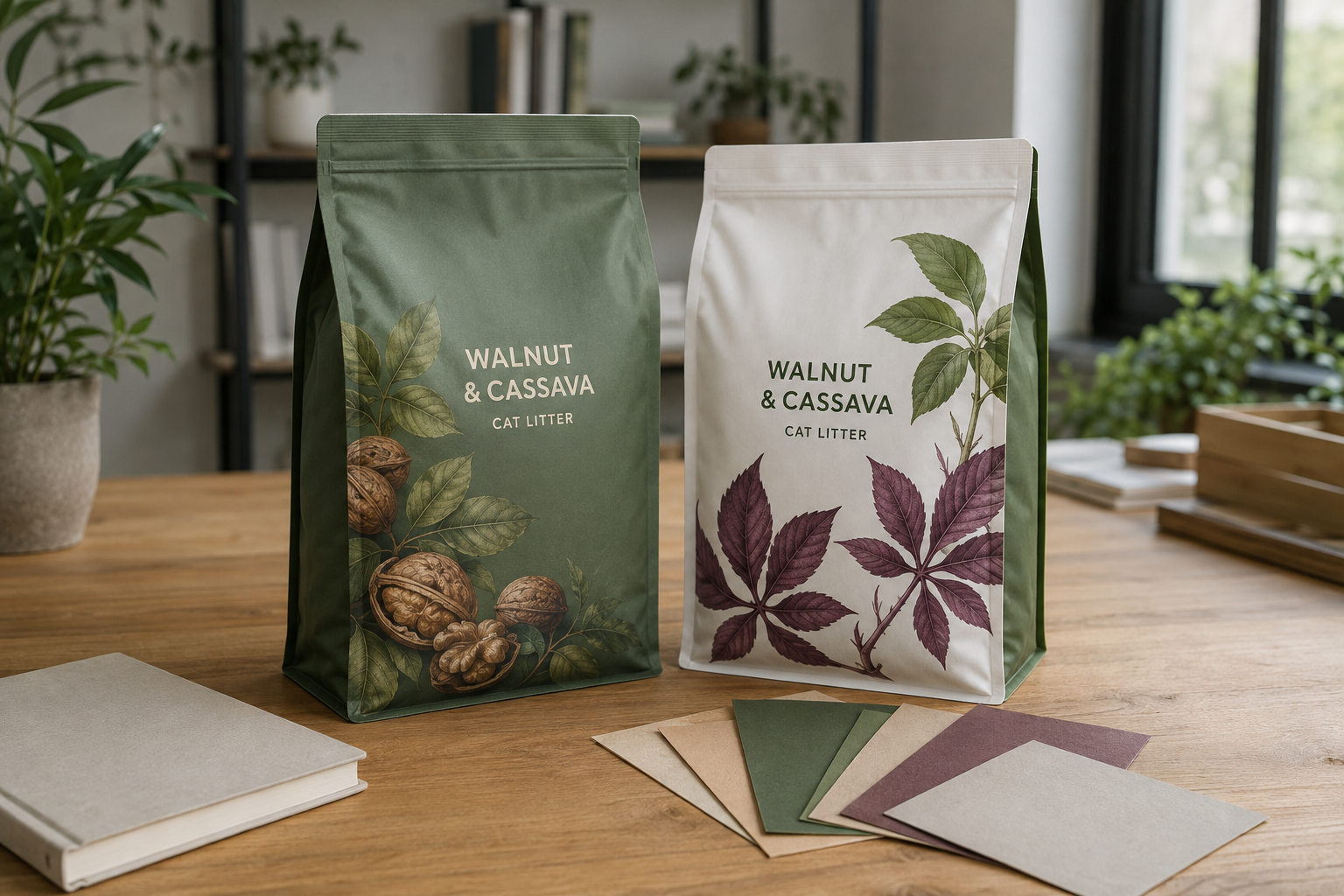
On the shelf, the blend should have a clearer explanation than premium natural innovation. A defined texture, tested cleanup characteristic or specific price tier is easier for a buyer and store employee to discuss honestly.
Approve a Product, Not Just a Ratio
The final specification should connect composition, particle distribution, moisture criteria, packaging and performance checks to the approved sample. Agree what happens if a raw material or process changes.
Reviewing the wider mixed cat litter range can help establish whether this blend fills a genuine assortment gap. The best reason to launch it is a customer need that the rest of your range does not already meet.
Review a Walnut and Cassava Blend
Send Magnet your benchmark litter, planned pack size and target price position to discuss samples and a written blend specification.
Request a Blend Discussion