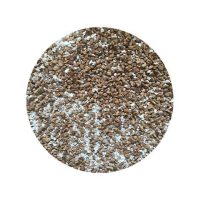
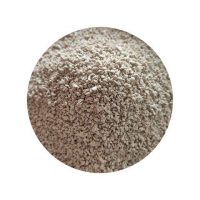
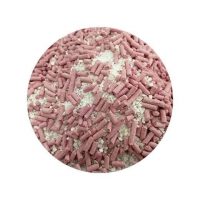
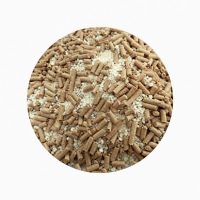

Most sourcing conversations treat cat litter as a single-material decision: tofu or cassava, corn or clay. But a large share of what actually moves through retail is blended — two materials combined in a deliberate ratio to hit a performance and price target that neither one reaches alone.
Blends are often misunderstood as a way to cut costs by diluting a premium material with a cheaper one. That’s one possible use, but it’s not what a well-designed blend is for. This covers how mixed formula cat litter actually works, the three most common blend types, and how to decide whether a blend or a single material fits your product line.
What Is Mixed Formula Cat Litter?
Mixed formula cat litter combines two base materials into one finished product at a controlled ratio. The materials aren’t simply poured together at the end — the blend ratio is set during production so that clumping behavior, absorption, and granule distribution stay consistent from bag to bag.
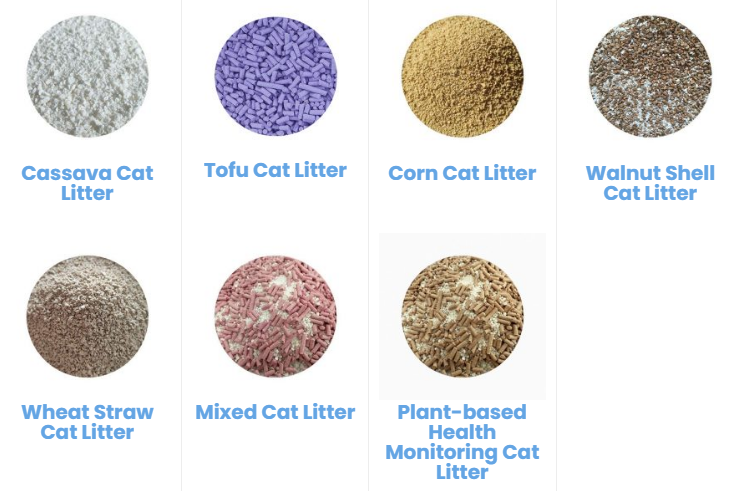
The logic behind blending is that no single litter material is best at everything. Tofu is the lightest but clumps softly. Cassava clumps densely but weighs more than tofu. Walnut shell tracks the least but has a coarser texture. Bentonite clumps hardest and costs least but is heavy and doesn’t biodegrade. A blend lets a manufacturer combine two of those profiles and land somewhere neither material reaches by itself.
Tofu Cassava Mixed Cat Litter: Light Weight Plus Dense Clumping
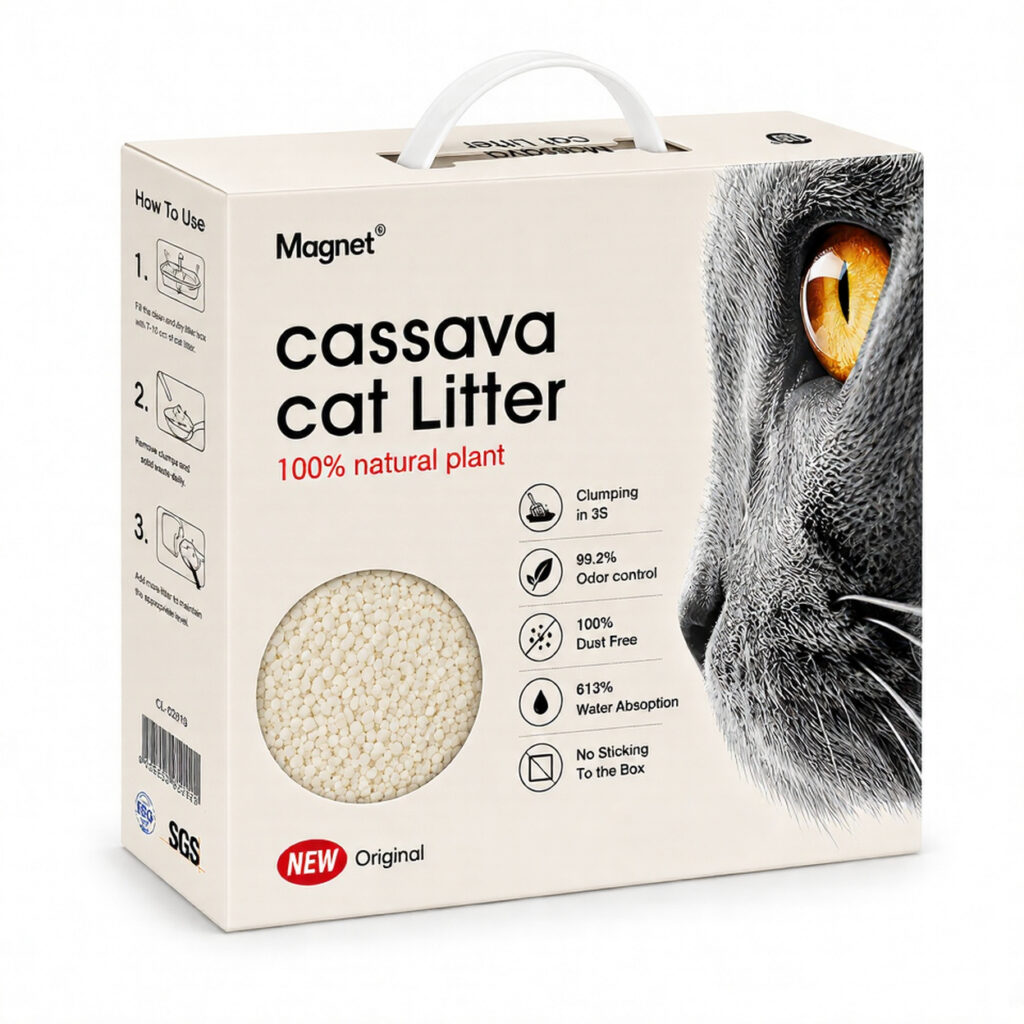
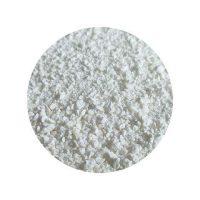
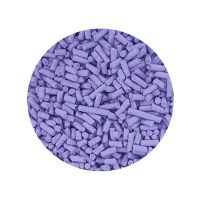
This is the most common plant-based blend, and it exists to solve a specific conflict. Tofu cat litter is the lightest material available, which is a real advantage for shipping cost and for customers carrying bags upstairs — but its clumps are bound soy fiber and lift lighter and softer than clay. Cassava cat litter clumps densely because of its starch content and fine granule structure, giving it a feel much closer to clumping clay.
Blending them produces a litter that stays substantially lighter than clay while delivering a firmer clump than pure tofu. For a brand converting customers off bentonite, that combination removes the two most common objections at once — weight and clump feel — without going fully to either extreme.
Both components are plant-based, so a tofu-cassava blend keeps its biodegradable positioning intact.
Walnut Cassava Mixed Cat Litter: Low Tracking Plus Fast Clumping
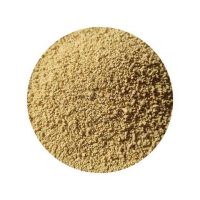
Walnut shell cat litter is the strongest performer on tracking — its granules are naturally dense and less prone to sticking to paws and being carried out of the box. What it doesn’t do as well is form the tight, fast-setting clump that cassava produces.
A walnut-cassava blend targets households where litter scatter is the primary complaint, without sacrificing the clumping quality that makes daily scooping quick. This blend also runs darker in color than pure plant-based formulas, since walnut shell is naturally deep brown — a visual signal that some brands lean into for an “activated” or odor-control shelf story, and others avoid because customers associate light color with cleanliness.
Bentonite Cassava Blend: Bridging Clay and Plant-Based
This blend serves a different purpose from the two above. Bentonite clay still dominates global volume and delivers the hardest clump on the market at the lowest raw material cost, but it’s heavy and doesn’t biodegrade. Blending clay with cassava lowers the total weight and adds a plant-based component while keeping clay’s clumping strength and cost advantage.
It’s a practical transition product for a distributor with a customer base still buying clay who wants a step toward natural positioning without a full price jump. Our article on bentonite litter and clay-cassava blends covers this category in more depth from a wholesale sourcing angle.
Important for packaging claims: A clay-containing blend is not biodegradable and not flushable, because the clay component doesn’t break down. Any eco claim on the bag must reflect what’s actually in the formula — describing a clay blend as “natural” without qualifying the composition is the kind of claim that generates customer complaints and, in some markets, regulatory attention.
Mixed Cat Litter vs Single Material: Comparison
| Blend | Solves For | Biodegradable | Relative Cost | Best-Fit Buyer |
|---|---|---|---|---|
| Tofu + Cassava | Light weight with firmer clumping | Yes | Mid-to-high | Premium plant-based brands converting clay users |
| Walnut + Cassava | Low tracking with fast clumping | Yes | Mid | Multi-cat and tracking-sensitive households |
| Bentonite + Cassava | Clay clumping at lower weight | No | Low-to-mid | Value-tier lines transitioning toward natural |
Why Blend Ratio Matters More Than the Blend Itself
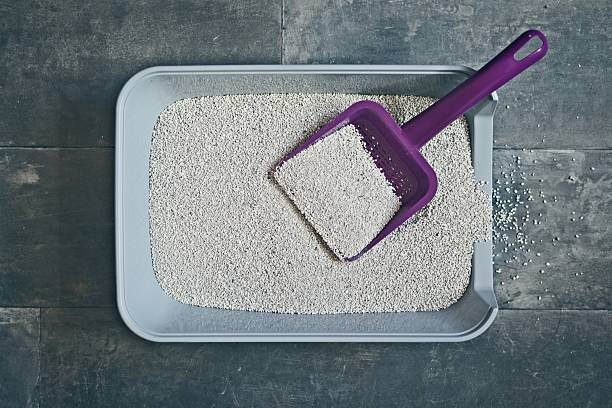
Two factories can both sell “tofu-cassava blend” and deliver noticeably different products, because the ratio is the actual formulation decision. A blend that’s mostly tofu with a small cassava fraction behaves close to pure tofu; shift the ratio and the clump firmness and weight change accordingly.
This has a practical consequence when you’re comparing suppliers: asking for “your tofu-cassava blend” isn’t a complete specification. Ask what the ratio is, and test the sample against your own criteria rather than assuming two suppliers’ blends are equivalent. The same applies to consistency over time — a factory that controls blend ratio tightly during production will deliver the same clump performance across batches, which is what generates repeat purchases at retail.
Practical tip: When requesting a blend sample, ask for two or three ratio variations rather than one. Testing a 70/30 against a 50/50 tells you far more about which direction suits your customer than a single sample does, and it costs almost nothing extra at the sampling stage.
Should Your Product Line Use a Blend or a Single Material?
- A blend makes sense when your target customer has two competing priorities that no single material satisfies — light weight and firm clumping, or low tracking and fast clumping.
- A blend makes sense when you’re building a mid-tier SKU that sits between a premium single-material line and a value clay line in your own catalogue.
- A blend makes sense when you’re launching and unsure which material profile your customers prefer — a blend lets you learn from one SKU instead of committing to two separate lines.
- A single material is better when your entire brand story rests on one specific claim, such as flushability or a pure single-ingredient positioning, where a blend complicates the message.
If you’re building a private label line around any of these, the formula and ratio can be customized to your specification — see our guide to private label cat litter manufacturing for how the OEM process works, or our overview of premium versus budget cat litter positioning for where a blend fits in a multi-tier catalogue.
Frequently Asked Questions
What is mixed formula cat litter?
Mixed formula cat litter blends two base materials into a single product — common combinations include tofu with cassava, walnut shell with cassava, and bentonite clay with cassava. The goal is to combine the strengths of each material and land at a performance and price point that neither single material reaches on its own.
Is mixed cat litter worse than single-material cat litter?
No — a blend is a deliberate formulation choice, not a diluted version of a single material. A well-designed blend can outperform either component on the specific attribute it was built around, such as clump firmness at a lower cost point. Quality depends on the blend ratio and production control, not on whether the litter is blended.
Can mixed formula cat litter still be flushable or biodegradable?
Fully plant-based blends such as tofu-cassava or walnut-cassava remain biodegradable, and flushability depends on the specific ratio. Blends containing bentonite clay are not biodegradable or flushable, since clay does not break down, so any eco claim on the packaging must reflect the actual composition.
Article summary: Mixed formula cat litter combines two materials to resolve a tradeoff no single material solves — tofu-cassava for light weight with firm clumping, walnut-cassava for low tracking with fast clumping, bentonite-cassava for clay performance at lower weight. The blend ratio, not the blend itself, is the real specification to ask about.
Request Blend Samples at Multiple Ratios
Test tofu-cassava, walnut-cassava, and bentonite-cassava blends against your own clumping, tracking, and cost criteria.
Request Blend Samples →