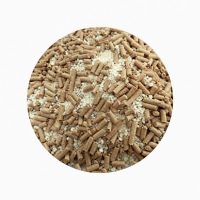
Low Dust Cat Litter Manufacturer & Wholesale Supplier
Dust is the complaint that ends a purchase. A cat owner tolerates mediocre clumping and lives with average odor control, but a cloud rising out of the tray every time the bag is poured is visible, immediate and impossible to unsee. It is the single most common reason buyers leave clay litter, and the most common reason they leave one plant-based brand for another.
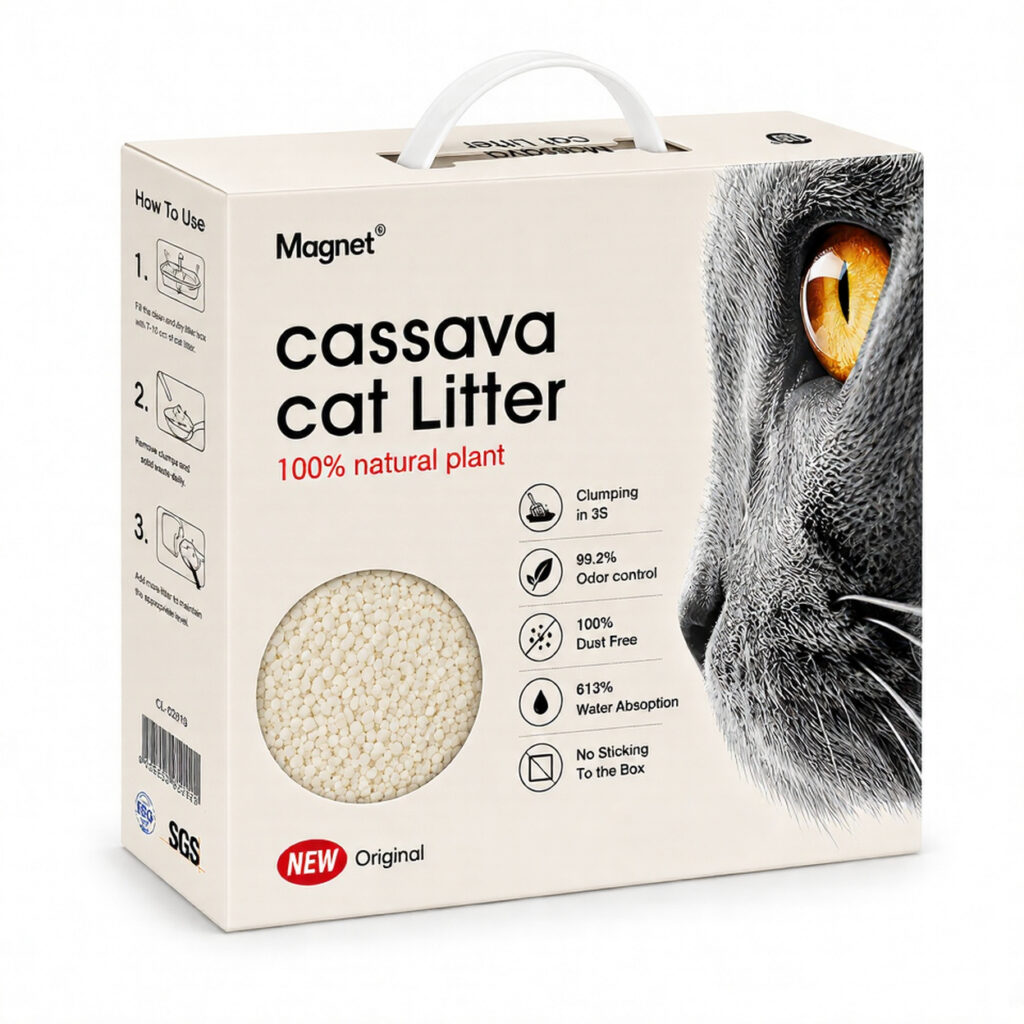
Our cassava formula tests at 100% dust-free with SGS verification — not "low dust", not "99%". Every other material in our range is screened and de-dusted in line before packing and holds at 1% or below. This page explains where dust actually comes from, why most of it is avoidable, and how to tell a real figure from a marketing one.
A description, not a measurement. It commits the supplier to nothing and cannot be checked. Most of the category stops here.
A real figure, but ask where it was measured. Dust counted at the granulator is not dust in the bag the customer opens.
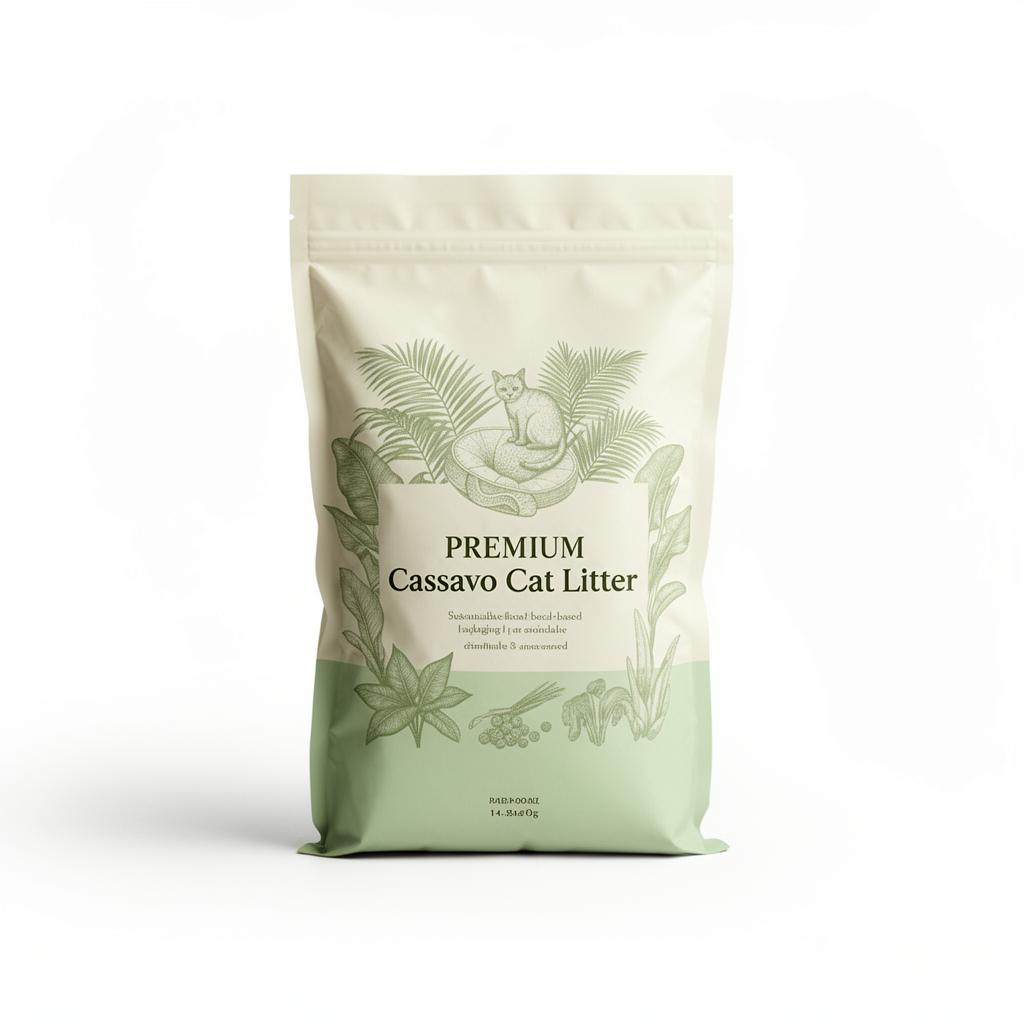
Our cassava formula, tested by a third party. The report ships with your order, so the claim on your pack is documented rather than asserted.
Where Cat Litter Dust Actually Comes From
Dust is not an unavoidable property of cat litter. It is the result of four specific decisions made during formulation and production, and every one of them can be made differently. Understanding which one a supplier has taken tells you more about their product than any number on the bag.
Mineral fillers
Calcium carbonate and stone powder are cheap. They add weight, they bulk out a formula, and they cost a fraction of what real litter material costs. They are also powder. A litter carrying 10% filler by weight cannot be dust-free, no matter how well it is screened afterwards, because the filler is the dust.
This is the most common hidden cause, and the hardest for a buyer to detect from a spec sheet. Fillers rarely appear in an ingredients list under their own name.
Our cassava formula contains no calcium carbonate, no stone powder and no filler of any kind. The ingredient list is two starches.
The material itself
Sodium bentonite is mined clay. Grinding it produces fines as a matter of physics, and those fines include respirable crystalline silica. No amount of processing removes the tendency entirely, which is why clay litter and dust are permanently linked in consumer reviews.
Plant materials behave differently. Starch gelatinises into a coherent granule rather than fracturing into powder, which is why the ceiling for a plant litter sits far higher than for clay.
Where a buyer needs the clay price point, our clay bentonite and cassava blend cuts dust by half against straight bentonite.
Binders and abrasion
Litters that need guar gum or a synthetic binder to clump tend to shed powder as granules rub together in transit. Every container journey, every pallet shift, every warehouse handling adds abrasion. A litter measured as low dust at the factory can arrive noticeably dusty eight weeks later.
Cassava starch gels on contact with liquid, so the clump forms from the material itself. No binder is added, and there is less to shed.
Where de-dusting happens
This is the one nobody talks about. Many producers screen immediately after granulation, then dry, then pack. Drying and conveying both generate fresh fines, so the dust removed at stage three returns before stage five.
A figure measured at the granulator and a figure measured at the filling head can differ substantially. When a supplier quotes a dust percentage, the useful question is not what the number is but where it was taken.
We screen and de-dust in line, immediately before packing. The figure we quote is the figure in the bag the customer opens.
How We Remove Dust in Production
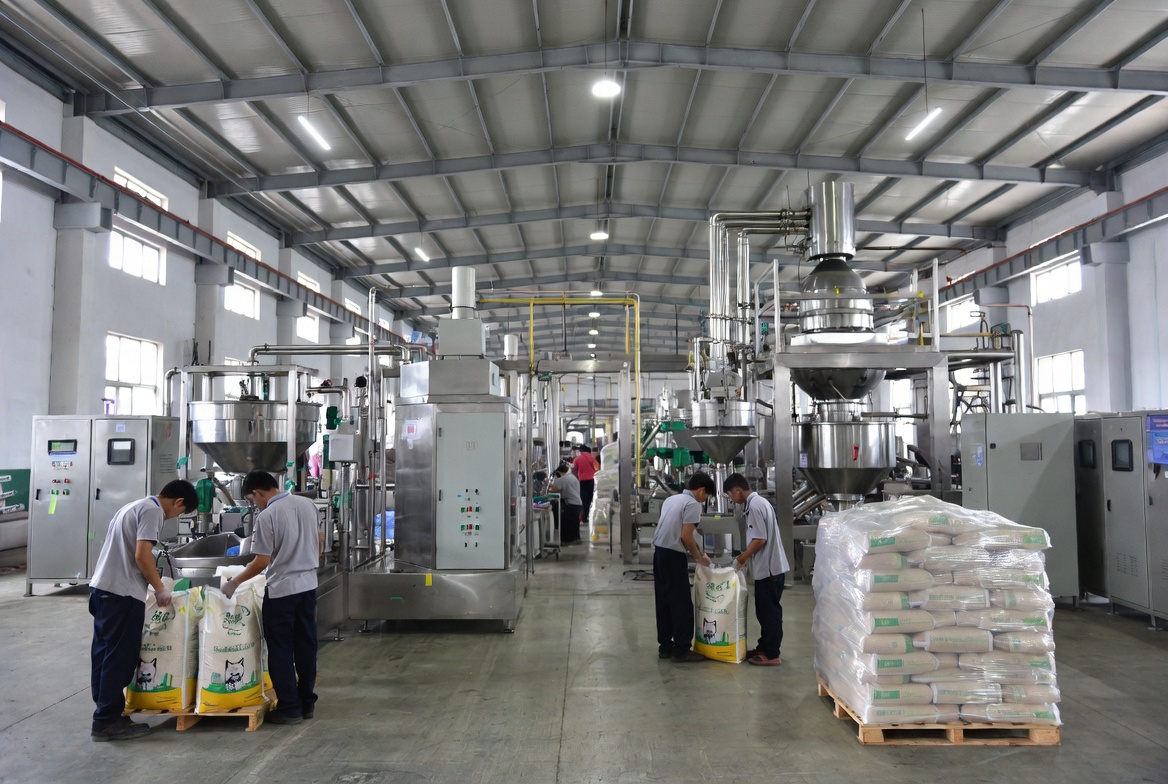
Low dust is not a stage added at the end of a process. It is a series of choices made from raw material intake onward, and reversing any one of them undoes the rest. The sequence below is why a cassava dust figure holds through a container journey.
The decisive step is the last one before packing. Screening earlier is easier and cheaper, and it produces a better number on a test taken at that moment. It does not produce a better product in the customer's hands.
Material selection
Food-grade starches rather than mined mineral, so the base does not fracture into powder.
No fillers
No calcium carbonate or stone powder enters the mix. Nothing is added that is already dust.
Gelatinisation
Starch forms a coherent granule that holds together under abrasion instead of shedding fines.
Controlled drying
Moisture brought to target without over-drying, which is what makes granules brittle.
In-line de-dusting
Screened at the filling head, after every stage that could generate fresh fines.
What Dust Costs You
Dust is usually framed as a consumer comfort issue. For a distributor or a brand it is a margin issue, and it shows up in four places on a P&L.
Reviews
Dust is visible and immediate, so it dominates one-star reviews. On marketplaces a dust complaint pattern suppresses ranking long after the batch has sold through.
Returns
Unlike odor or clumping, dust is obvious at the moment of first pour. That makes it one of the few litter faults that generates returns rather than just non-repurchase.
Retail rejection
Buyers at pet chains open a bag in the meeting. A dusty pour in front of a category manager ends a listing conversation faster than any spec sheet can rescue it.
Warehouse handling
Dusty product means dusty pallets, dusty racking and complaints from your own staff at unloading. It quietly raises the cost of holding the stock.
None of this is recoverable once the container has landed. It is decided at formulation, which is why dust belongs in the specification conversation rather than in the complaints one.
Our Low Dust Cat Litter Range
Ranked by measured dust content. Every one is available wholesale, in bulk and under private label.
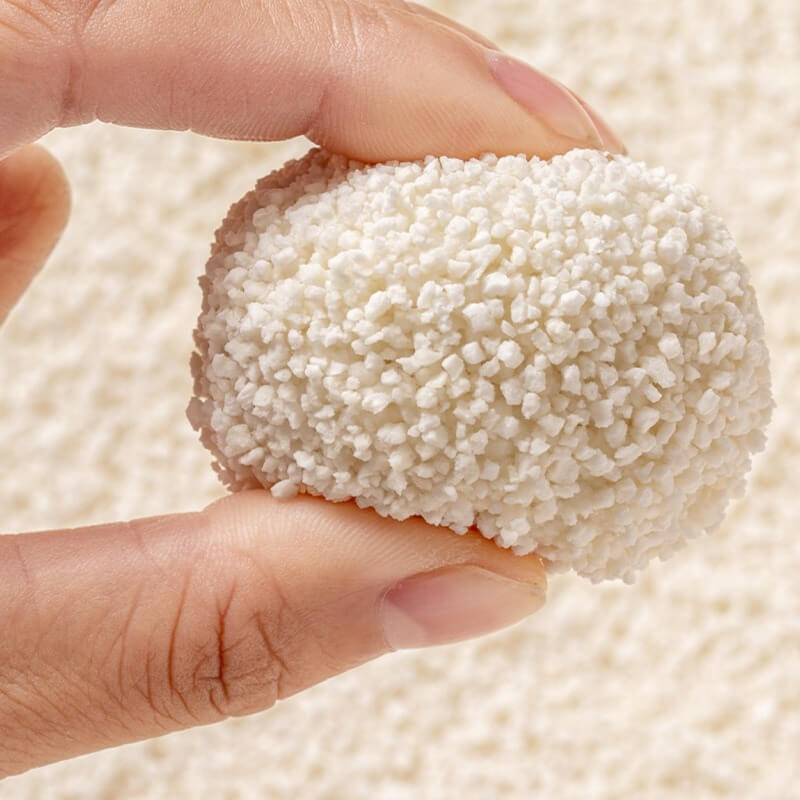
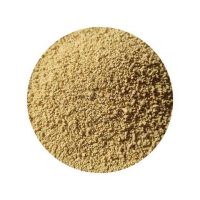
Cassava Cat Litter
The only formula in our range that reaches dust-free rather than low dust, and it does so because there is nothing in it to shed — two food-grade starches, no binder, no filler. Ash content 1.5%. Third-party verified.
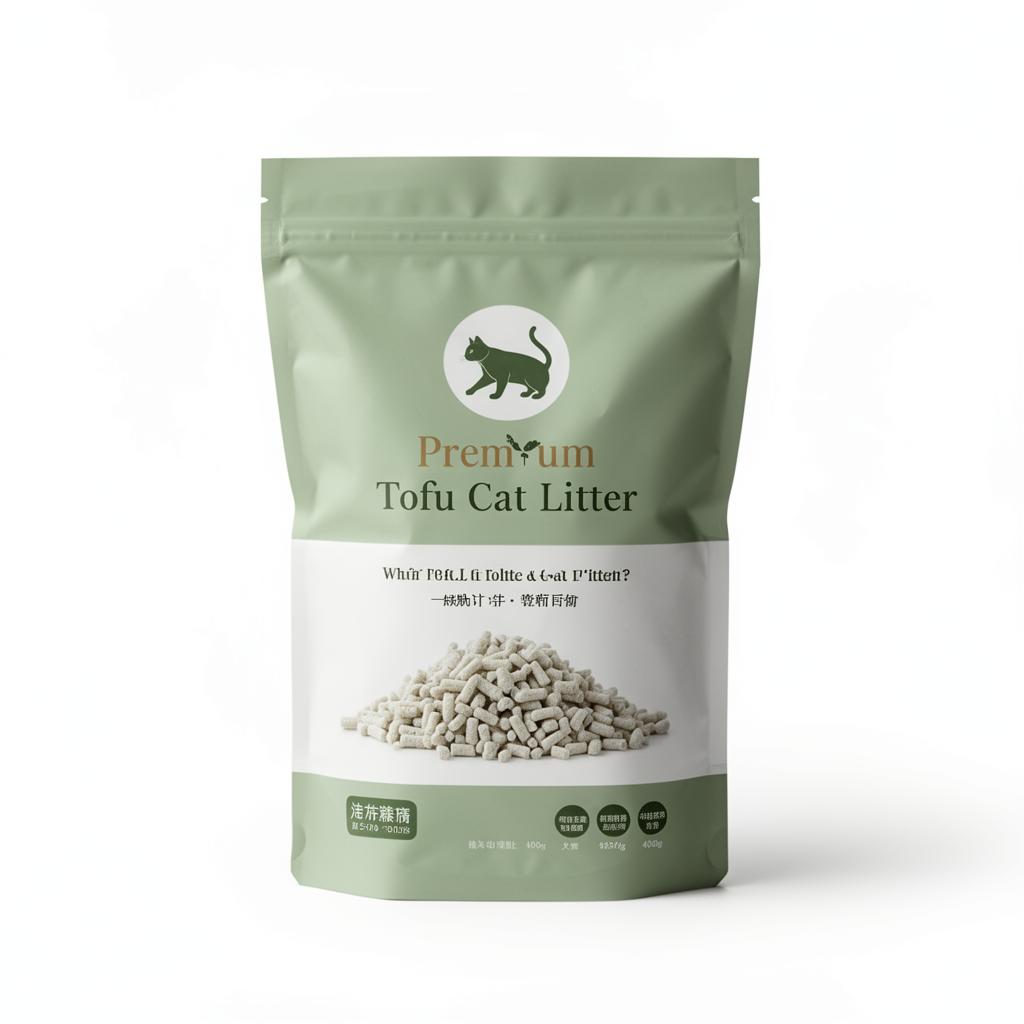
Tofu Cat Litter
Pea fibre screened and de-dusted in line before packing. The volume material in plant-based litter, at a third of clay's weight per litre, in cylindrical or crushed granules.
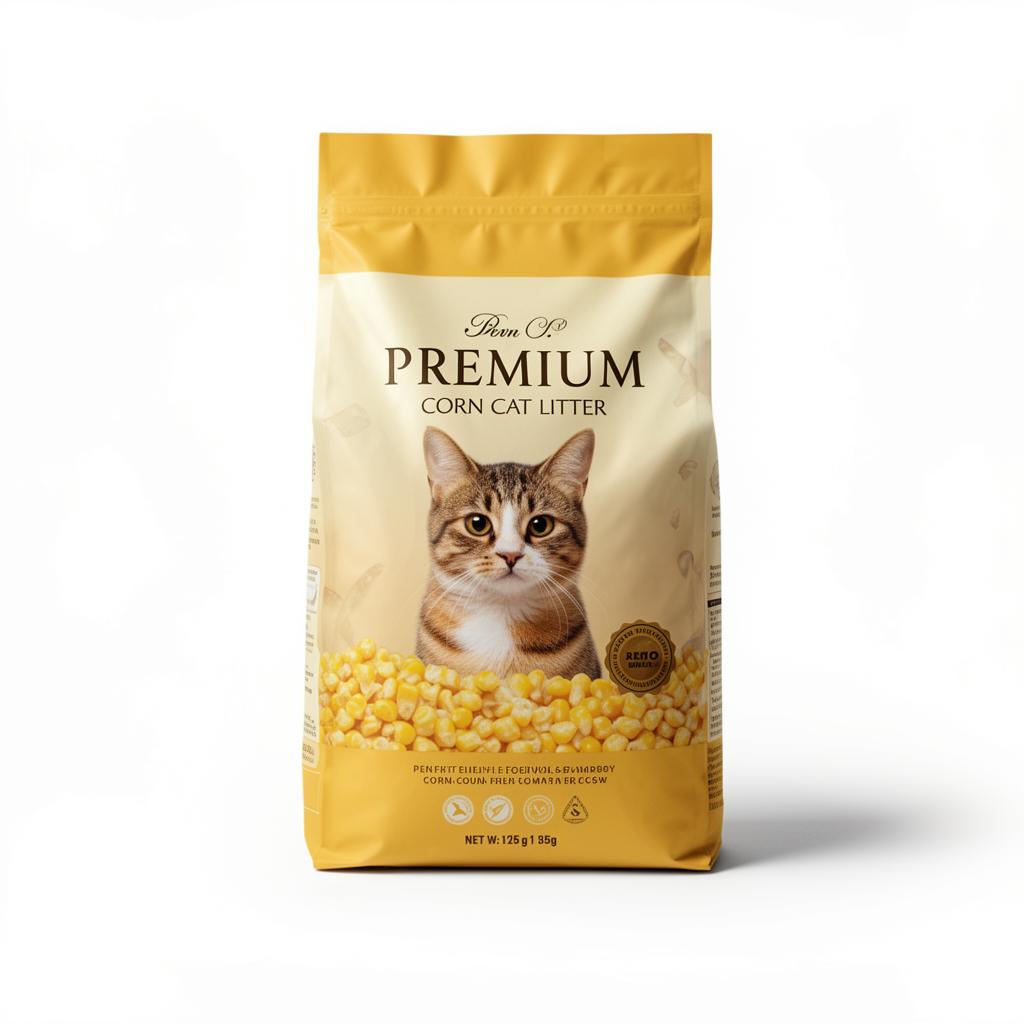
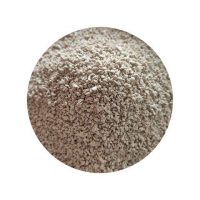
Corn Cat Litter
Crushed corn granules at 400% absorption, screened to 1% dust or below. Familiar enough on shelf that a low dust claim lands without consumer education behind it.
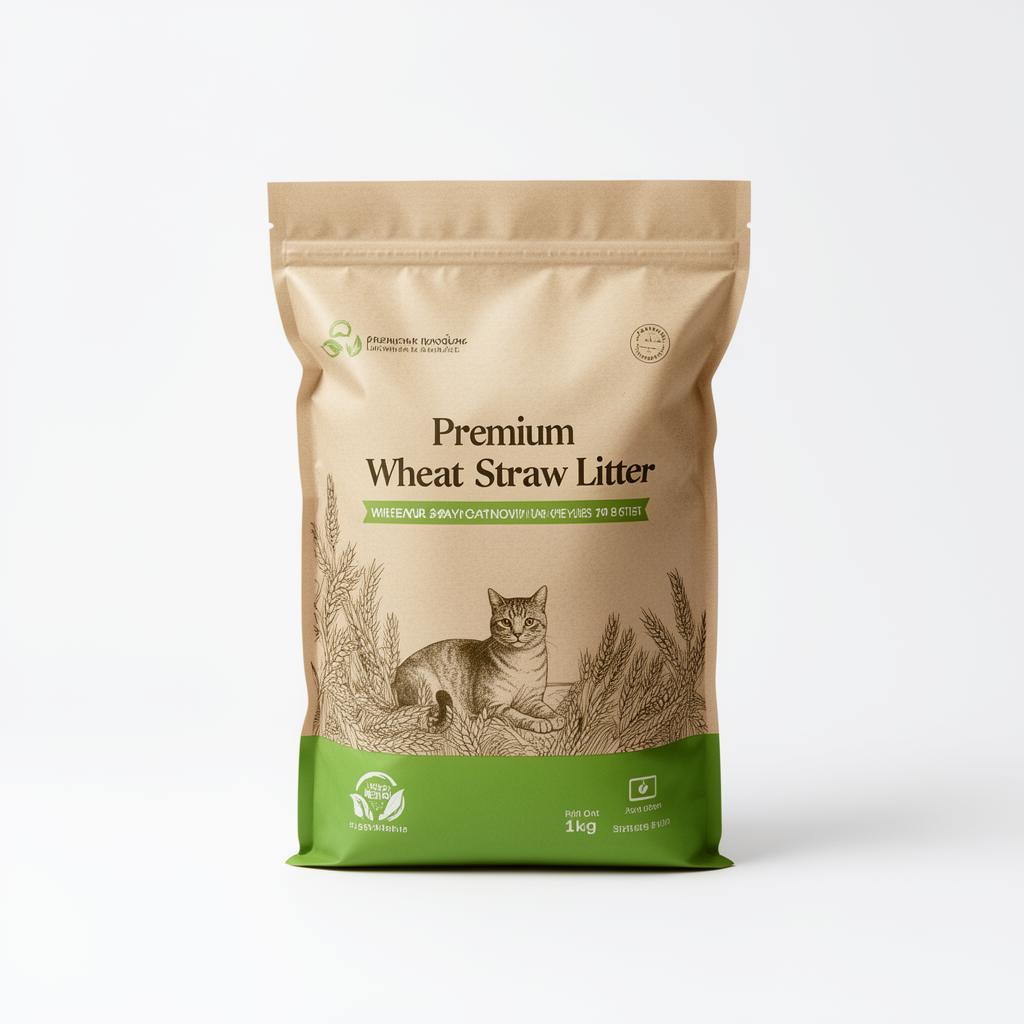
Wheat Straw Cat Litter
6 mm pellets are too large to become airborne easily, which makes the format inherently low dust as well as low tracking. Single-ingredient straw with nothing added.
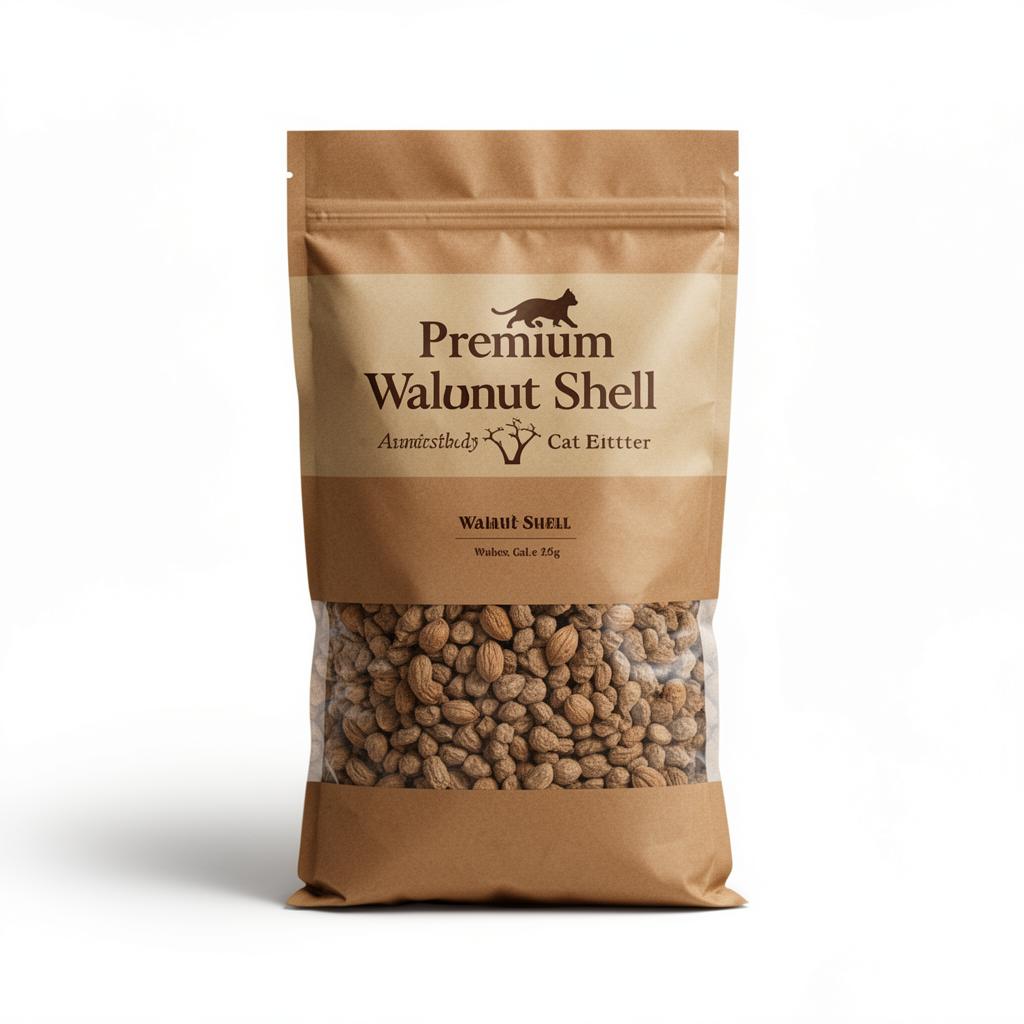
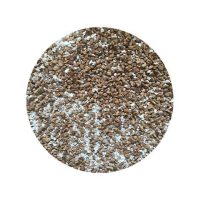
Walnut Shell Cat Litter
Polished after pulverisation, which removes both the sharp edges and the loose fines that unpolished shell carries. A premium clean-label option with nothing added.
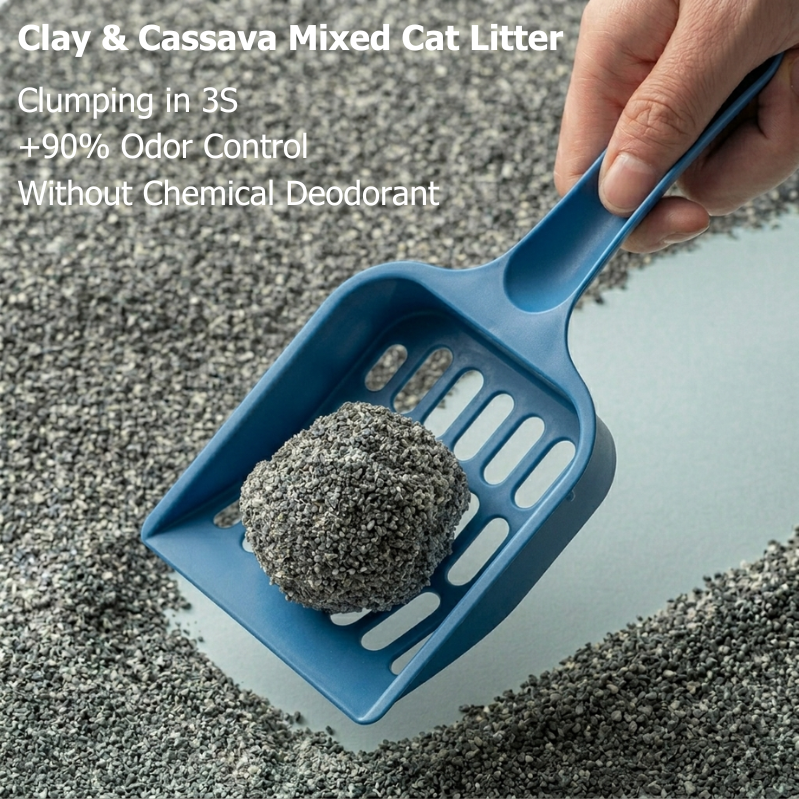
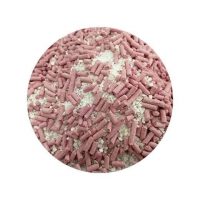
Clay Bentonite & Cassava
For buyers who must hold a clay price point. Blending cassava in at 1:1 halves the dust against straight bentonite and removes the sticking, without moving the product out of its tier.
Dust Levels by Material
Read the Basis column before the Dust column. An absolute figure and a relative improvement are different claims, and only one of them belongs on a pack unqualified.
| Material | Dust | Basis | Fillers | Binder | |
|---|---|---|---|---|---|
| Cassava | 100% dust-free | SGS verified, absolute | None | None | View |
| Tofu | ≤ 1% | In-house, absolute | Calcium carbonate | Guar gum | View |
| Corn | ≤ 1% | In-house, absolute | Calcium carbonate | Guar gum | View |
| Wheat straw | ≤ 1% | In-house, absolute | None | None — lignin | View |
| Walnut shell | ≤ 1% | In-house, absolute | None | None | View |
| Clay + cassava | −50% | Relative to straight clay | Clay fines | None added | View |
| Walnut + cassava | −70% | Relative to straight walnut | None | None | View |
| Straight bentonite | High | Industry baseline | Clay fines | None | — |
Only the cassava row carries third-party verification. The rest are our own production measurements, taken at the filling head rather than at the granulator. We state which is which because a retail buyer will eventually ask, and the answer is easier to give in advance.
Three Questions That Reveal a Dust Claim
Any supplier will tell you their litter is low dust. These three questions take under a minute and separate a measured product from a described one. They work on us as well as on anyone else.
1. What is in it, by name?
Ask for the full ingredient list, not the marketing description. If calcium carbonate or stone powder appears, or if the list is vague enough to hide them, a dust-free claim is not achievable regardless of screening.
2. Where is dust measured?
At the granulator, or at the filling head? Drying and conveying both create fresh fines. A figure taken before those stages describes a product the customer never receives.
3. Who measured it?
In-house or third party? Both are legitimate, but only one can be shown to a retail buyer during a listing review. Ask whether the report can travel with the shipment.
A supplier who cannot tell you where the dust figure was measured has told you where it was measured.
Which Low Dust Formula Fits Your Market
By buyer
- Premium and pet specialty. Cassava. A verified dust-free claim is the strongest available in the category and survives a retail buyer's scrutiny.
- Mass retail. Corn or tofu at 1% or below, where the claim needs to be honest and the price needs to stay competitive.
- Clay price points. The clay-cassava blend. Half the dust of straight bentonite without leaving the value tier.
- E-commerce. Cassava or wheat straw. Dust complaints hit marketplace ratings hardest, and ratings are the whole channel.
By end user
- Households with respiratory sensitivity. The segment driving this category. Cassava, with documentation to back the claim.
- Multi-cat homes. More pours, more scooping, more airborne exposure. Dust compounds with use rather than staying constant.
- Small apartments. The tray sits in living space, so dust is noticed daily rather than weekly.
- Owners leaving clay. Dust is usually the specific reason they are switching. It is the first thing they will test.
Wholesale & OEM Low Dust Cat Litter
Buying low dust cat litter wholesale direct from the factory is what makes the documentation available. Any low dust cat litter supplier can pass on a figure; only the producer can tell you where it was taken and send the report with the shipment.
Wholesale supply
- MOQ 10 metric tons, roughly one 20GP, with mixed loads accepted so you can compare dust levels across materials in one order.
- Bulk low dust cat litter in woven sacks or neutral bags, or retail-ready printed packaging.
- 25–45 days from PO to port, FOB, CIF or DDP to 60+ countries.
- SGS dust report supplied with the shipment for the cassava formula.
OEM & private label
- OEM low dust cat litter on any base material — your logo, granule spec, bag size and artwork.
- Custom low dust formulas. Granule size and blend ratio tuned to the dust figure you need to print.
- Claim wording support. We help phrase the dust claim so it matches the verification behind it.
- Free packaging design, including the spec panel where the figure appears.
As a low dust cat litter factory we hold CE, FDA, ISO 9001, ISO 14001, SGS, TÜV, CTI and MSDS documentation, and have supplied distributors, retail chains and private-label brands since 2008. More about the factory →
Frequently Asked Questions
What causes dust in cat litter?
Four things: mineral fillers such as calcium carbonate that are themselves powder; materials like mined clay that fracture into fines when ground; binders and abrasion that shed powder during transit; and de-dusting carried out too early in the process, before drying and conveying create fresh fines.
Is 100% dust free cat litter a real claim?
It is when it is verified. Our cassava formula is tested by SGS and the report ships with the order. The claim is achievable because the formula contains only two food-grade starches, with no filler and no binder to shed, and because screening happens at the filling head rather than earlier in the line.
What is the difference between low dust and dust-free?
Low dust is a description with no number behind it. Dust-free should mean a measured figure with a stated basis. In practice most of the category uses the two interchangeably, so the useful question is what the figure is, where it was measured and who measured it.
Why is clay cat litter so dusty?
Bentonite is mined and ground, and grinding mineral produces fines as a matter of physics. Plant starches gelatinise into a coherent granule instead of fracturing, which is why plant-based litter reaches dust levels clay cannot. Where a clay price point is required, blending cassava into bentonite halves the dust.
Does low dust cat litter still clump well?
Yes, and in our range the lowest-dust product is also the fastest clumping. Cassava clumps in about three seconds with no binder at all. The two properties are not a trade-off; both come from the same gelatinising starch structure.
Do fillers affect dust levels?
Substantially. Calcium carbonate and stone powder are used to add weight and reduce cost, and they are powder by nature. A litter carrying a significant proportion of filler cannot be dust-free no matter how well it is screened, because the filler is the dust.
Can you supply the dust test report?
Yes. The SGS report for the cassava formula is available on request and can travel with your shipment, which matters when a retail buyer asks for verification during a listing review.
What is the MOQ for bulk low dust cat litter?
Wholesale MOQ is 10 metric tons, roughly one 20GP container. Mixed containers are accepted, so you can compare dust levels across two or three materials within a single order before committing a range.
Can you produce private label low dust cat litter?
Yes — full OEM and ODM on any formula here. Your logo, granule spec, bag size and artwork. We will also help word the dust claim so it matches the verification standing behind it.
Can I get samples to test dust myself?
Yes, and for this claim we encourage it. Pour two samples from the same height against a dark background in good light and the difference is obvious in seconds. Tell us which materials you want to compare and we will send them together.
Test our dust claim yourself
Tell us your market, target price and the dust figure you need to print. We'll recommend a formula, send samples and include the test report.
Request a wholesale quoteOr message us on WhatsApp